

How to Build Systems for Success: Turn Your Goals into Automatic Progress
Goals don’t fail from lack of ambition. They fail because you build them on the most unreliable resource you have: how you feel on any given day. That’s exactly why learning how to build systems for success matters more than setting bigger goals ever will.
Think about it. You set a big goal, get promoted, pay off debt, get in shape, learn a new skill, and for the first two weeks you’re unstoppable. Then work gets busy. Life throws a curveball. Your motivation, the thing you were counting on to carry you through, quietly disappears. And so does the goal.
Here’s what separates people who actually hit their targets from people who just talk about them: they stopped relying on motivation altogether. They built systems instead, repeatable processes that make the right action the easy action, even on the days they don’t feel like doing anything.
This isn’t just a career hack or a business trick. The same principle works whether you’re trying to save money, get healthier, learn a language, or just get your family’s mornings to stop feeling like chaos. Career, finances, fitness, relationships, systems apply everywhere goals live.
You can’t control your motivation. You never really could. But you CAN control your systems, and that changes everything.
One thing before we go further: systems don’t replace hard work. They organize it, automate the boring parts, and make the important stuff repeat itself, on purpose, not by accident.
1. What Is a System for Success?
1.1 The Definition of a Success System
A success system is simple: it’s a repeatable structure that makes you consistently perform the actions your goal actually requires. Not once. Not when you feel inspired. Every time.
Here’s the basic shape every system follows:
Goal → Actions → Schedule → Environment → Tracking → Review → Improvement
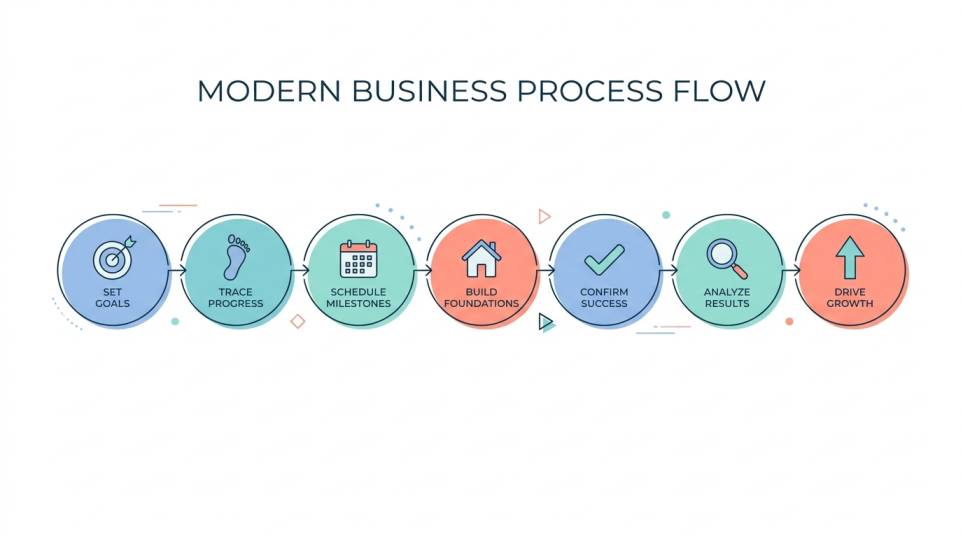
Say your goal is “I want to write a book.” That’s a wish, not a plan. Here’s what the system looks like:
- Write 500 words every morning
- Block 45 minutes on the calendar
- Keep the manuscript open and ready to go
- Track weekly word count
- Review progress every Sunday
- Adjust the process when something isn’t working
See the shift? The goal stayed the same. But now there’s a machine behind it, quietly doing the work whether you’re feeling motivated or not.
1.2 Goals Define the Destination; Systems Create the Progress
I like to think of goals and systems as two completely different jobs.
| Goals | Systems |
| Define the outcome you want | Define what you do regularly |
| Provide direction | Create consistency |
| Establish a target | Reduce reliance on motivation |
| Create a vision of success | Make progress measurable |
| Answer “where am I going?” | Turn desired behaviors into habits |
Key insight: Goals tell you where you want to go. Systems determine whether you actually move.
2. Systems vs. Goals: Why Goals Alone Are Not Enough
2.1 The Problem With Goal-Only Thinking
Most goals sound great on paper. Lose 20 pounds. Earn more money. Start a business. Learn a new skill. Get promoted. Write a book. Build a website that actually makes sales.
But notice what’s missing from every single one of those. They don’t say:
- What you’ll do today
- When you’ll do it
- How often you’ll repeat it
- How you’ll measure progress
- What happens the day you don’t feel like it
Without those answers, a goal is just a wish with a deadline attached.
2.2 The Better Approach: Turn Every Goal Into a System
Run every goal through this framework before you commit to it:
| Framework Element | Question to Ask |
| Goal | What result do I actually want? |
| Process | What repeated action creates that result? |
| Schedule | When will I perform that action? |
| Environment | How can I make the action easier? |
| Measurement | How will I track progress? |
| Review | When will I evaluate and improve? |
Pro Tip: Write this framework out for your top goal right now, before reading further. A goal you’ve run through this table sticks differently than one you haven’t.
2.3 Example: From Goal to System
Goal: “I want to become more productive.”
Weak approach: “I will work harder.” (This isn’t a plan — it’s a hope.)
Better system:
- Identify the three most important tasks each morning
- Block time for deep work
- Eliminate unnecessary notifications
- Use AI to reduce repetitive tasks
- Review completed work at the end of each day
- Conduct a weekly productivity review
3. How to Build a System for Success From Scratch
This is the part you came for. Let’s build one, step by step.
3.1 Step 1: Define the Outcome You Want
Start with a result you can actually picture. Ask yourself:
- What exactly do I want to achieve?
- Why does this matter to me?
- What would success actually look like?
- How will I know when I’ve achieved it?
Skip vague statements like “I want to be successful.” That’s not a destination — it’s a mood. Instead, get specific: “I want to acquire a new professional skill and complete three portfolio projects within six months.”
3.2 Step 2: Identify the Actions That Produce the Result
Ask yourself one question: what has to happen repeatedly for this to become possible?
Take “Learn Data Analytics” as an example. The required actions might include:
- Study three hours per week
- Complete practical projects
- Analyze real datasets
- Practice Excel, SQL, or Power BI
- Build a portfolio
- Review and improve skills regularly
3.3 Step 3: Convert Actions Into Repeatable Routines

Vague intentions never survive a busy week. Specific ones do.
Instead of “I will study more,” try: “I will study SQL from 7:00 p.m. to 8:00 p.m. on Monday, Wednesday, and Friday.”
The more specific your system, the less willpower it demands from you.
3.4 Step 4: Design Your Environment to Support the System
Your environment shapes your behavior more than your willpower ever will. Make the good action:
- Visible
- Convenient
- Easy to begin
- Scheduled
- Accessible
And make the unwanted behavior:
- Less visible
- Less convenient
- Harder to reach
Want to read more? Keep a book beside your bed, put your phone in another room, set a fixed reading time, and track pages completed.
3.5 Step 5: Track the Behavior, Not Just the Outcome
Outcomes take time. You won’t lose weight, earn more, get promoted, or become an expert overnight — and that’s fine. What you CAN track right away:
- Hours worked
- Pages read
- Tasks completed
- Workouts completed
- Sales calls made
- Articles published
- Skills practiced
Pro Tip: If you’re tracking multiple habits or goals at once, a dedicated productivity dashboard makes this ten times easier than a scattered notes app or a sticky note on your monitor. Track the actions. The outcome follows.
3.6 Step 6: Review and Improve the System
No system is permanent. Review yours weekly and ask:
- What worked?
- What didn’t work?
- Where did I lose consistency?
- What created unnecessary friction?
- What can I simplify?
- What can I automate?
- What should I stop doing?
This is where continuous improvement comes in — and it’s what separates a system that fades after two weeks from one that actually gets you where you’re going.
4. How to Build Systems for Success Around Your Work
Personal development matters, but let’s be honest — most of your day happens at work. So let’s build systems there too.
4.1 Stop Relying on Memory
Your brain is for having ideas, not storing them. Yet so many professionals burn hours every week trying to remember:
- Tasks
- Deadlines
- Follow-ups
- Meetings
- Ideas
- Processes
- Important information
A real work system captures and organizes all of it, so nothing depends on you “just remembering.” Use:
- Task management tools
- Calendars
- Checklists
- Standard Operating Procedures
- Project dashboards
- Automated reminders
4.2 Create Repeatable Workflows
Here’s a question worth asking about anything you do more than once: can this be documented, simplified, delegated, automated, or improved?
Run it against tasks like:
- Weekly reporting
- Email follow-ups
- Meeting preparation
- Content creation
- Data analysis
- Project management
- Customer onboarding
You’ll usually find at least one step you’re doing manually that doesn’t need to be.
4.3 Build Standard Operating Procedures
A repeatable task shouldn’t live entirely in one person’s head. That’s fragile — and it doesn’t scale. Write it down instead. A solid SOP includes:
- Purpose
- Trigger
- Required inputs
- Step-by-step process
- Responsible person
- Expected output
- Quality checks
- Review frequency
Key Principle: If you do it repeatedly, it deserves a system.
Pro Tip: This is quality management thinking, and it works whether you’re running a five-person team or managing your own workload. I lean on this exact structure daily in ISO 9001 environments, and honestly, it translates just as well to a solo freelancer’s invoicing process as it does to a manufacturing line.
4.4 Use the “Capture, Organize, Execute, Review” Workflow
Four moves, on repeat:
| Stage | What Happens |
| Capture | Collect tasks, ideas, and information as they show up |
| Organize | Place them in the right system |
| Execute | Complete the highest-value work |
| Review | Evaluate progress and improve |
5. How to Build Systems for Success Around Your Life
Work systems matter. But your life needs one too — otherwise the rest of your day runs on autopilot and leftovers.
5.1 Create a Personal Operating System
Think of this as the master system that organizes everything else: goals, calendar, tasks, habits, finances, learning, health, projects, and personal reviews. It’s the container everything else lives inside.
5.2 Build a Daily System

Morning:
- Review priorities
- Identify the three most important tasks
- Check the calendar
- Begin with the highest-value work
During the Day:
- Work in focused blocks
- Minimize unnecessary distractions
- Use productivity tools strategically
- Capture new tasks instead of trying to remember them
Evening:
- Review accomplishments
- Record unfinished work
- Prepare for tomorrow
- Identify one improvement
5.3 Build a Weekly Review System
Every week, sit down and ask yourself:
- What did I accomplish?
- What did I fail to complete?
- What consumed unnecessary time?
- What should I prioritize next week?
- What should I stop doing?
- What should I automate?
- What should I delegate?
Fifteen minutes here saves you hours of drifting later.
6. Use AI and Productivity Tools to Work Smarter
6.1 AI Should Amplify Effort—Not Replace It
AI is a genuinely useful part of a modern system. It can help you:
- Research faster
- Brainstorm ideas
- Summarize information
- Draft content
- Analyze data
- Automate repetitive tasks
- Organize information
- Create workflows
- Generate reports
- Identify patterns
But it doesn’t replace your judgment, critical thinking, creativity, expertise, responsibility, or execution. Those are still on you.
Core Principle: Use AI to cut low-value friction so you can spend more time on the work that actually moves the needle.
6.2 Examples of AI-Powered Productivity Systems
| Audience | Example Uses |
| Professionals | Meeting summaries, automated email drafting, document analysis, research assistance, task prioritization |
| Entrepreneurs | Content ideation, customer research, marketing workflows, data analysis, support automation |
| Students & Learners | Personalized explanations, study plans, practice questions, research organization, feedback |
6.3 The Best Productivity Tool Is the One You Actually Use
Don’t overbuild this. A complicated system you abandon in three weeks isn’t a system — it’s a hobby. In most cases, you only need:
- One calendar
- One task manager
- One notes system
- One habit tracker
- One weekly review
Complexity isn’t productivity. Consistency is.

7. Hard Work Still Matters: Systems Do Not Replace Effort
Let’s clear something up before we go further, because I don’t want you walking away with the wrong idea.
7.1 Smart Work Is Not an Excuse to Avoid Hard Work
“Work smarter, not harder” gets thrown around a lot, and honestly, it’s often misused. Working smarter does NOT mean:
- Looking for shortcuts instead of developing real skills
- Avoiding difficult work
- Expecting automation to do everything for you
- Believing success should require no sacrifice
If a system promises you results without effort, that’s not a system. That’s a sales pitch.
7.2 The Best Formula Is Hard Work Plus Better Systems
Here’s the actual formula:
Direction + Effort + Systems + Consistency = Compounding Progress
Hard work supplies the effort. Systems supply everything else:
- Structure
- Focus
- Repeatability
- Efficiency
- Measurement
- Improvement
Take either one away and the formula breaks. Effort without structure burns you out. Systems without effort just sit there looking organized.
7.3 Do the Work—Only Smarter
The goal was never to work less for its own sake. The goal is to:
- Eliminate unnecessary work
- Reduce avoidable mistakes
- Automate repetitive tasks
- Prioritize high-value activities
- Use technology intelligently
- Protect your energy for the work that actually matters
Strong takeaway: You can’t automate your way to every meaningful achievement. But you CAN build systems that make sure more of your effort actually turns into progress, instead of leaking out through inefficiency.
8. How to Make Progress Almost Automatic
Now for the fun part — the mechanics of making your system run itself.
8.1 Create Clear Triggers
A trigger links an action to something that already happens in your day, so you stop having to decide.
- After breakfast, I study for 30 minutes.
- After every meeting, I record the next actions.
- Every Sunday evening, I review my week.
- After receiving income, I transfer money to savings.
Notice the pattern: “After X, I do Y.” Simple, but it works.
8.2 Reduce Friction
The easier a behavior is to start, the more often it happens. Period.
- Prepare your workspace in advance
- Keep essential tools accessible
- Automate recurring payments
- Create templates
- Use checklists
- Schedule recurring tasks
Pro Tip: If you’re managing several recurring processes — reports, reviews, payments, deadlines — a structured dashboard removes a lot of this friction in one move, since everything lives in a place you already check.
8.3 Create Feedback Loops
A feedback loop just answers one question: what happened, and what should I change next?
Action → Result → Review → Adjustment → Better Action
This loop, running quietly in the background, is how systems get sharper over time instead of going stale.
8.4 Use Defaults and Automation
Set it once, and let it run:
| Automate This | Why It Helps |
| Recurring payments | Removes a manual step you’d otherwise forget |
| Recurring meetings | Protects time without renegotiating it weekly |
| Recurring tasks | Keeps routine work from slipping through |
| Templates | Cuts decision fatigue on repeated work |
| Default workflows | Standardizes quality without extra thought |
| Repetitive data entry | Frees up time for judgment-based work |
| AI for repetitive cognitive tasks | Speeds up drafting, summarizing, and research |
9. How to Stay Consistent When Motivation Disappears
Here’s the part nobody wants to admit: motivation WILL disappear. Not might. Will. So let’s plan for it.
9.1 Motivation Is Unreliable
Some days you’ll feel tired. Distracted. Discouraged. Overloaded. Some days your confidence just won’t show up. That’s not a character flaw — it’s being human.
A strong system doesn’t fight this. It anticipates it.
9.2 Create a Minimum Viable Action
On the hard days, don’t abandon the habit completely. Shrink it instead. Define the smallest version you can still call a win:
- Read one page
- Write 100 words
- Exercise for 10 minutes
- Study for 15 minutes
- Complete one important task

The point isn’t intensity. The point is continuity — because a chain you never break is easier to keep going than one you’re constantly restarting from zero.
9.3 Design Systems for Your Worst Days
If your system only works when you’re highly motivated, it isn’t actually a system — it’s a good mood with extra steps.
Ask yourself: what’s the minimum version of this habit I can maintain during a genuinely difficult week? Build around that answer, not around your best day. Your best days will take care of themselves.
10. Organize Your Life to Protect Your Attention
Your systems can only work as well as the environment they live in. Let’s tighten that up.
10.1 Organize Your Physical Environment
Your surroundings either support your system or quietly sabotage it. Keep it simple:
- Keep important tools accessible
- Remove unnecessary clutter
- Create dedicated workspaces
- Prepare in advance
A cluttered desk isn’t just an eyesore — it’s friction standing between you and starting.
10.2 Organize Your Digital Environment
Your inbox and desktop deserve the same discipline as your physical space. Set up:
- Clear folders
- Naming conventions you’ll actually stick to
- Fewer unnecessary notifications
- An organized email system
- One central task system
Pro Tip: If your work involves recurring reports, deadlines, or metrics, a single organized dashboard beats five scattered spreadsheets every time. One home base for your numbers means one less place your attention has to travel.
10.3 Organize Your Time
Time is the one resource you can’t get back, so protect it deliberately with:
- Time blocking
- Priority lists
- Calendar scheduling
- Deep work sessions
- Recurring tasks
- Weekly planning
11. Common Mistakes People Make When Building Systems
Even good systems fail — usually for the same handful of reasons. Watch for these.
| Mistake | The Fix |
| Building an overly complicated system | More apps don’t automatically create more productivity |
| Tracking too many things | Track what actually matters, not everything you can measure |
| Changing systems too frequently | Give a system real time to work before replacing it |
| Confusing planning with progress | Planning is valuable — but it’s not the same as execution |
| Expecting systems to eliminate hard work | A system is a structure for action, not a replacement for it |
| Failing to review the system | An unreviewed system quietly becomes outdated |
11.1 Building an Overly Complicated System
Adding another app rarely fixes the real problem. It usually just adds another thing to check.
11.2 Tracking Too Many Things
If you’re tracking fifteen metrics, you’re not tracking anything — you’re just generating noise.
11.3 Changing Systems Too Frequently
Jumping to a new system every two weeks means you never find out if the last one actually worked.
11.4 Confusing Planning With Progress
A beautifully color-coded plan that never gets executed produces exactly zero results.
11.5 Expecting Systems to Eliminate Hard Work
We covered this earlier, and it’s worth repeating: systems organize the work. They don’t do it for you.
11.6 Failing to Review the System
Life changes. Your system should change with it — but only on purpose, not by neglect.
12. A Simple Personal Success System You Can Start Today
Here’s the whole thing, distilled into a framework you can start using in the next ten minutes.
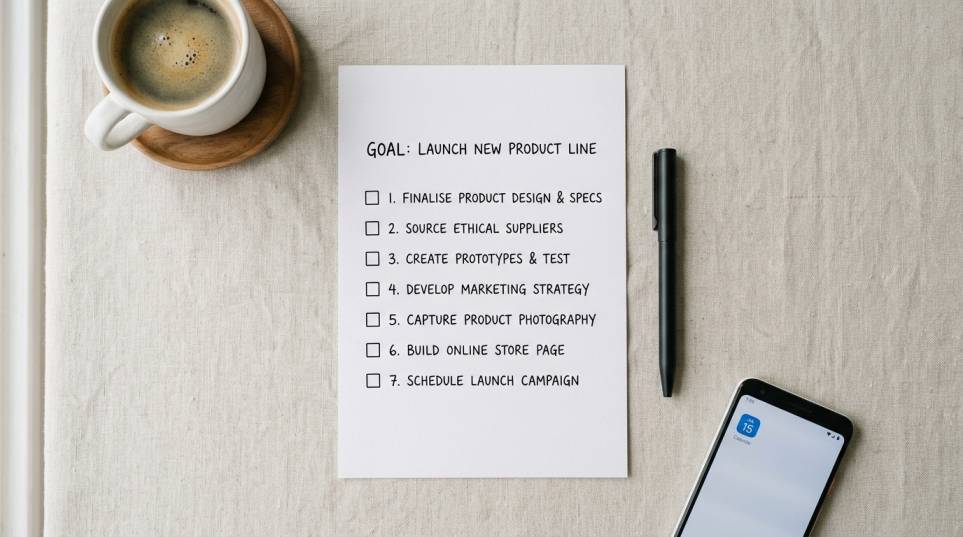
12.1 Step 1: Choose One Important Goal
Not ten. One. Trying to systemize everything at once is how most people quit in week two.
12.2 Step 2: Identify the Weekly Actions
Ask yourself: what must I do every week to move closer to this goal? Write down two or three specific actions. No more.
12.3 Step 3: Schedule Those Actions
An action without a time on the calendar is just a suggestion. Put it on the calendar.
12.4 Step 4: Create a Tracking Method
Pick one and stick with it:
- A spreadsheet
- A notebook
- A task manager
- A habit tracker
Pro Tip: This is exactly where a ready-made productivity dashboard saves you the setup headache — instead of building a tracking system from scratch, you’re filling in one that’s already built for it.
12.5 Step 5: Automate What Can Be Automated
Use:
- Recurring tasks
- Calendar reminders
- Templates
- AI tools
- Workflow automation
12.6 Step 6: Review Every Week
Ask yourself:
- Did the system work?
- Did I actually follow it?
- Where did it fail?
- What needs to change?
12.7 Step 7: Keep Doing the Work
This is the step people skip, and it’s the one that matters most. A system only produces results when you actually run it — week after week, especially the weeks you don’t feel like it.
That’s the whole game. Not motivation. Not perfect discipline. Just a system, run consistently, one week at a time.
13. Frequently Asked Questions
13.1 What Is a System for Success?
It’s a repeatable set of actions, routines, tools, and processes designed to consistently move you toward a desired outcome. It’s the machine behind the goal.
13.2 Are Systems Better Than Goals?
They’re not competing — they’re doing different jobs. Goals define the destination. Systems create the repeated actions that actually get you there.
13.3 How Do I Build a System for Success?
Define a clear outcome, identify the actions that create it, schedule those actions, remove friction, track progress, and improve the system regularly. That’s the whole loop.
13.4 How Do I Stay Consistent Without Motivation?
Build predictable routines, cut friction wherever you can, schedule the important actions, use reminders, and set a minimum version of the habit for your worst days.
13.5 Can AI Make Success Automatic?
No, and be skeptical of anyone who tells you otherwise. AI can automate repetitive tasks and speed up productivity, but it can’t replace judgment, skill development, or consistent execution. Those still belong to you.
13.6 How Do I Build a Productivity System?
Start small: one calendar, one task-management system, clear priorities, scheduled work blocks, and a weekly review. Add complexity only if you actually need it.
13.7 What Is a Personal Operating System?
It’s the integrated framework that manages your goals, tasks, habits, time, information, and progress reviews — basically, the container that holds all your smaller systems together.
13.8 How Do Systems Help With Procrastination?
Procrastination usually comes from too many decisions standing between you and starting. Systems remove them. Clear triggers, scheduled tasks, prepared environments, and smaller actions all make beginning easier.
13.9 How Long Does It Take to Build a Successful System?
You can put a first draft together in an afternoon. But a system that genuinely fits your life takes a few weeks of testing and adjusting to get right. Don’t expect version one to be perfect.
13.10 Can Systems Replace Hard Work?
No. And I want to be straight with you on this one — effective systems make hard work more focused, organized, efficient, and consistent. They don’t remove the need for effort. Nothing does.

Conclusion
Let’s bring this all the way back around.
You don’t need to depend on motivation every day. You never really did — that was the trap all along. What you actually need is:
- A clear direction
- A repeatable process
- A supportive environment
- Organized tools
- Consistent action
- Regular reviews
- A willingness to improve
The most effective systems don’t make success effortless. Nothing does that, and I’d be lying if I told you otherwise. What they do is make the right effort easier to repeat, day after day, even on the days you’d rather not.
Final message:
Set goals for direction. Build systems for execution. Use technology to remove unnecessary friction. Work hard on what actually matters. Review your process. Improve continuously.
The goal was never to make success completely automatic — that’s not realistic, and honestly, you wouldn’t want it to be. The real goal is to build a life and work environment where consistent progress becomes the natural result of the systems you’ve put in place. Not luck. Not a burst of motivation you’re waiting to feel. A system, quietly doing its job.
That’s it. That’s the whole shift — from hoping you’ll feel like it, to building something that works whether you feel like it or not.
So now I want to hear from you: what’s one goal you’ve been chasing with willpower alone, and what would a real system look like for it? Drop your thoughts in the comments below — I read every one, and I’d genuinely love to know where you’re starting.