
15 Bad Money Habits That Keep You Broke (And How to Stop Living Paycheck to Paycheck)
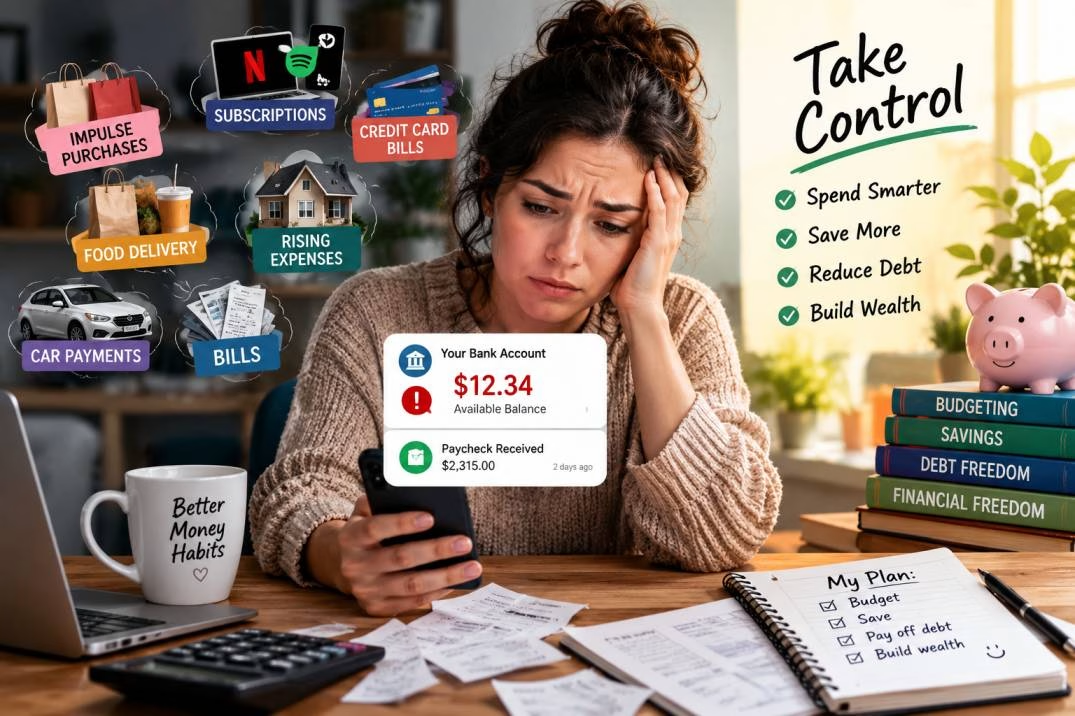
You get paid on Friday. By Friday night, you’ve covered rent, tossed something into savings (maybe), and picked up a few things you’ve been putting off — new shoes, a night out, that subscription you keep meaning to cancel. Two weeks later, payday still feels like it’s a country away, and your bank balance is already making you nervous. That’s not bad luck talking. That’s bad money habits, quietly doing their work.
Sound familiar? If you’ve ever caught yourself wondering, “Why am I always broke even when I make decent money?” — you’re not broken, and you’re not bad with money. You’re just running on habits nobody ever taught you to question. Habits aren’t personality. They’re patterns, and patterns can change.
How much you earn barely matters if your spending habits are working against you. A $5 coffee here, a “just this once” order there — those add up, sure, but they’re rarely the real damage. The REAL damage happens when your raise quietly disappears into a nicer apartment or a fancier car before you even notice it’s gone. That’s lifestyle inflation, and it’s sneaky. Add a minimum debt payment or two, zero system for budgeting or saving, and you’ve got a paycheck that’s spent before it finishes its job.
Living paycheck to paycheck isn’t just a low-income problem, either. I’ve watched six-figure earners get just as stuck as someone making half that, because bad money habits don’t check your salary before they take hold. Good news — habits can be swapped out. In this guide, I’m walking you through 15 bad money habits that keep people broke, and exactly what to do instead, starting now.
1. What Does It Mean to Be “Broke” or Live Paycheck to Paycheck?
Before you dive into the habits, let’s get clear on what we’re actually talking about. “Broke” gets thrown around loosely — sometimes it means dead broke, sometimes it just means “I don’t feel like I have any breathing room.” Those are two very different problems, and knowing which one you’re dealing with changes everything.
1.1 What Does Living Paycheck to Paycheck Actually Mean?

Living paycheck to paycheck means your income and your expenses are running neck and neck, with little or nothing left over once the dust settles. You’re not necessarily poor. You’re just… tight. All the time.
Here’s what it usually looks like:
- Little or no money left before the next paycheck lands
- Real dependence on that next paycheck showing up on time
- One flat tire or ER visit away from a financial spiral
- Zero breathing room to save, invest, or even relax about money
If any of that sounds like your monthly rhythm, you’re not alone — and you’re definitely not stuck there forever.
1.2 Can You Earn a Good Salary and Still Live Paycheck to Paycheck?
Yes. Absolutely, unquestionably, yes. I’ve talked money with friends pulling six figures who were just as broke as friends making a third of that. Why am I always broke even when I make decent money? Because a bigger paycheck doesn’t automatically mean bigger margin — it just means bigger numbers moving in both directions.
| What’s Draining It | How It Shows Up |
| Lifestyle inflation | Every raise gets absorbed by a nicer apartment, car, or wardrobe |
| High housing costs | Rent or mortgage eats 40–50% of take-home pay instead of the recommended 30% |
| Debt | Credit cards, personal loans, and “buy now, pay later” plans stack up fast |
| Car payments | A $600/month lease on a $70K income disappears before it’s even spent |
| Family expenses | Kids, aging parents, or supporting extended family |
| Discretionary spending | Takeout, subscriptions, and “small” purchases that never get tracked |
| Lack of savings | No buffer means every emergency becomes a crisis, not a hiccup |
Money management isn’t about how much lands in your account. It’s about what happens to it after that.
1.3 Are Bad Money Habits Always the Reason Someone Is Broke?
Honest answer? No. Not always.
Some financial struggles are behavioral — spending patterns you can change starting today. Others come from things a habit tracker can’t fix: low income, a high cost-of-living city, a medical emergency, a layoff, or debt you took on just to survive.
This article focuses on the first category — the financial behaviors you can realistically change. If your situation is more structural, some of these tips will still help at the margins, but I’m not going to pretend a budget spreadsheet fixes everything. That wouldn’t be honest, and honest is the whole point here.
2. What Are the 15 Bad Money Habits That Keep You Broke?
Now for the main event. Below are 15 habits that quietly drain bank accounts every single month. You probably don’t have all 15 — most people have three or four repeat offenders. Fixing even those can move the needle fast.
Let’s start with the big one.

Money Habit 1: Are You Spending More Money Than You Earn?
This is the habit underneath most of the other habits. If you’re spending more than you bring in, you’re not managing money — you’re managing a slow-motion deficit, and credit is just hiding the math from you.
These are the bad spending habits that usually give it away:
- Your credit card balance never hits zero
- You’re not sure what you actually spent last month
- Your savings balance hasn’t moved in months
- You cover shortfalls with “just this once” credit
How to calculate your monthly financial gap: Add up your take-home pay. Subtract every expense, including the ones you forget about (subscriptions, I’m looking at you). If the number’s negative, that’s your gap — and now it has a number attached to it instead of just a bad feeling.
How to break the habit:
- Calculate your true monthly income (after tax, not your salary headline number)
- Separate needs from wants — on paper, not in your head
- Set a spending ceiling for the month and stick to it
- Stop funding lifestyle upgrades with debt; if you can’t pay cash, it waits
Pro Tip: A simple tracker makes this far easier than trying to remember everything. Something like the Clever Fox Budget Planner works well if you want a physical, no-app-required way to see exactly where your gap is.
Money Habit 2: Are You Living Beyond Your Means?
This is one of the clearest money habits that keep you broke, because it’s rarely one big purchase — it’s a whole lifestyle that costs more than you make. It’s close cousin to Habit 1, but it’s less about the math and more about the mindset.
Common culprits:
- A car payment that costs more than your monthly emergency fund
- Housing that stretches your budget every single month
- Designer purchases that outweigh your savings rate
- Social pressure to keep up with friends, coworkers, or Instagram
- The classic “I deserve it” purchase after a rough week
How to fix it: Build your lifestyle around your income — not around the lifestyle you wish you could afford. That’s not a punishment. It’s the difference between financial stress and financial peace.
Pro Tip: If this habit hits close to home, Morgan Housel’s The Psychology of Money is worth a read — it digs into why we spend to impress people we don’t even like, and it’ll change how you think about your next purchase.
Next up: the habit that quietly eats your raises before you even see them.
Money Habit 3: Are You Impulse Buying Things You Don’t Need?
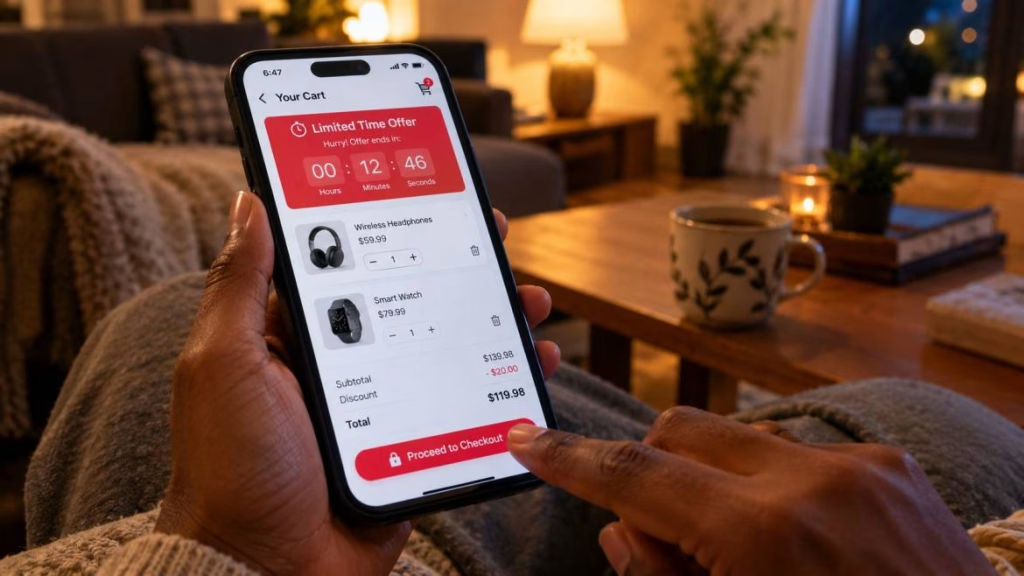
Raise your hand if you’ve ever bought something at 11 PM that you couldn’t even remember ordering by the time it showed up. Yeah. Same.
Impulse buying feels harmless in the moment — it’s one purchase, it’s small, it’s on sale. But impulse spending rarely stays small. It compounds, quietly, until you’re wondering where an entire paycheck went.
What usually triggers it:
- “It’s on sale” — even when you weren’t shopping for it
- One-click checkout with your card already saved
- A social media ad that hits at exactly the right (wrong) moment
- “Limited-time offer” countdown timers
- Straight-up emotional impulse — bored, stressed, celebrating, doesn’t matter
How to stop impulse spending:
- Use the 24-hour rule. Want it? Wait a day. Still want it tomorrow? Fine, buy it.
- Remove your saved payment info from shopping apps. Friction is your friend here.
- Keep a wish list instead of a cart. Half of what lands on a wish list never gets bought.
- Set a discretionary spending limit for the month, and once it’s gone, it’s gone.
Pro Tip: The 24-hour rule works even better on paper. Jot the item down in something like the Adams Account Book instead of your Notes app — writing it out by hand makes the “do I actually want this” question land differently.
Money Habit 4: Do You Spend Money When You’re Stressed, Sad or Bored?
This one’s sneaky because it doesn’t feel like a money problem. It feels like self-care. But emotional spending is still spending, and your bank account doesn’t care why you bought it.
The usual suspects:
- Retail therapy after a rough day
- Stress shopping when work gets overwhelming
- Boredom spending — scrolling turns into buying
- Reward spending (“I worked hard, I deserve this”)
- Social media making everyone else’s life look like something to buy your way into
Here’s the thing worth sitting with: none of these purchases actually fix the feeling. They just distract from it for about twenty minutes.
A better alternative:
- Name the trigger. Are you actually stressed, or actually bored? Be specific.
- Delay the purchase — even 30 minutes helps break the automatic loop.
- Swap in something free or cheap: a walk, a call with a friend, a show you’ve been meaning to watch.
- Track emotional purchases for a month. Seeing the pattern in writing is often enough to interrupt it.
You don’t need to eliminate every feel-good purchase. You just need to know when you’re doing it on purpose versus doing it on autopilot.
Money Habit 5: Are You Suffering From Lifestyle Inflation?

Lifestyle inflation is the habit that makes a raise feel like it never happened. Your income goes up. Your expenses go up right alongside it. Six months later, you’re making more than ever and somehow no less broke.
It shows up like clockwork:
| Income Event | Common Lifestyle Creep |
| New salary | New car to match the new job |
| Promotion | Move to a more expensive apartment |
| Bonus | Expensive vacation, spent before it’s saved |
| Raise | More subscriptions, more eating out, more “little” upgrades |
None of these purchases are wrong on their own. The problem is doing all of them, automatically, every time your income moves.
How to prevent lifestyle creep:
- Automatically save part of every raise before you feel it in your checking account
- Increase your investments before you increase your lifestyle
- Set a personal “raise rule” — something like: 50% to savings/investing, 50% to enjoy guilt-free
Pro Tip: That raise rule works best when it’s automated. Set up the transfer the same week your raise hits, before your spending habits catch up to your new number.
Money Habit 6: Do You Have a Budget — Or Are You Just Guessing Where Your Money Goes?
Let’s clear something up: budgeting isn’t about restricting every purchase you make. It’s about knowing where your money’s going before it’s already gone, instead of finding out after.
If you’ve avoided budgeting because it sounds like punishment, here are a few frameworks that don’t feel that way:
- Zero-based budgeting — every dollar gets a job, so nothing’s left “unassigned”
- 50/30/20 framework — 50% needs, 30% wants, 20% savings and debt payoff
- Pay-yourself-first method — savings comes out before anything else touches your account
- Monthly spending plan — a simple, flexible plan you adjust as the month goes
Whatever method you pick, a basic budget should account for:
- Income
- Housing
- Utilities
- Transportation
- Food
- Debt
- Savings
- Investments
- Entertainment
- Miscellaneous expenses
Pro Tip: If spreadsheets make your eyes glaze over, a physical planner like The Budget Mom’s Budget by Paycheck Workbook lines your budget up with your actual pay schedule instead of a generic monthly calendar — genuinely useful if you’re paid biweekly and tired of doing the math yourself.
Once you’ve got a framework, the next habits get a lot easier to fix — because you’ll actually see where they’re hiding.
Money Habit 7: Are You Failing to Track Your Expenses?
Here’s an uncomfortable question: could you tell me, right now, what you spent last month without checking your banking app? Most people can’t. And that’s exactly the problem.
Expense tracking isn’t glamorous, but skipping it is how “small” expenses quietly become your biggest spending habits. Individually, they look harmless:
- Coffee runs
- Food delivery
- Subscriptions you forgot you signed up for
- Convenience purchases (parking, quick snacks, rush shipping)
- Online shopping
- Bank fees you never bothered to question
None of these will ruin you on their own. All of them, together, every month, absolutely will.
Simple ways to actually track spending:
- A basic spreadsheet — free, flexible, works forever
- A budget app that syncs with your accounts automatically
- Your banking app’s built-in spending breakdown (most people never open this tab)
- An old-school expense notebook, if apps aren’t your thing
- A five-minute weekly spending review — same day, same time, every week
Pro Tip: If you’re a paper-and-pen person, the 2-Pack Expense Tracker Ledger makes this dead simple — no login, no app crashing on you mid-review, just a place to write it down and actually see it.
Once you can see where your money’s going, the next habit gets a lot easier to spot.
Money Habit 8: Do Small Purchases Keep Draining Your Bank Account?
Small leaks sink big ships. It’s an old saying, but it fits nowhere better than personal finance.
A $15 lunch delivery here. A $12 app subscription there. None of it registers as “real spending” in the moment. But run the math on a month, and those small, forgettable purchases quietly add up to hundreds of dollars — sometimes more than your actual grocery bill.
What to audit this week:
- Subscriptions (streaming, apps, memberships you forgot existed)
- Delivery fees stacking up on every food order
- Convenience purchases you could easily plan around
- Unused gym or club memberships
- Frequent takeout that’s replaced actual meal planning
- Small app purchases and in-game spending
| Small Habit | Cost Per Instance | Monthly Total (Weekly Habit) |
| Coffee run | $6 | ~$24–$30 |
| Food delivery fee | $8 | ~$32 |
| Forgotten subscription | $15/month flat | $15 |
| Impulse app purchase | $5 | ~$20 |
Add it up, and you’re looking at $90–$100 a month — over $1,000 a year — from purchases you probably couldn’t list from memory.
Pro Tip: Do a 10-minute subscription audit today. Pull up your bank statement, highlight every recurring charge, and cancel anything you can’t remember using in the last 30 days.
Money Habit 9: Are You Using Credit Cards to Fund a Lifestyle You Can’t Afford?
Credit cards aren’t the villain here. Using them to fund a lifestyle your actual income can’t support? That’s a genuinely bad financial habit, and it’s one of the easiest to fall into without noticing.
Here’s why it’s so easy to fall into:
- Credit makes overspending feel painless — you don’t feel the money leave
- Minimum payments make debt look manageable when it’s actually growing
- Interest quietly turns a $50 purchase into a $70 purchase over time
Before you swipe, ask yourself:
- Could I afford this with cash, right now, today?
- Am I buying this because I need it — or because it’s there?
- Am I already carrying a balance from last month?
- Will this payment reduce my ability to save this month?
If the honest answer to that last one is yes, that’s worth pausing on.
None of this means never use credit. It means using it as a tool, not a top-up for a paycheck that’s already spoken for.
Money Habit 10: Are You Only Making Minimum Debt Payments?

Minimum payments feel responsible. You’re paying something, on time, every month. But minimum payments are often designed to keep debt around, not pay it down — and that’s not a conspiracy theory, that’s just how interest math works.
High-interest debt actively works against your ability to build wealth. Every dollar going to interest is a dollar that isn’t going toward savings, investing, or literally anything else you actually want.
The difference that matters:
| Payment Type | What It Does |
| Minimum payment | Covers interest, barely touches the principal |
| Accelerated repayment | Pays extra toward principal, shrinks the balance faster |
Strategies worth knowing:
- Debt avalanche — pay off the highest-interest debt first; mathematically the fastest way out
- Debt snowball — pay off the smallest balance first for quick wins and momentum
- Extra principal payments — even an extra $50/month makes a real dent over time
- Debt consolidation — combining high-interest debts into one lower-interest payment, where it genuinely makes sense
Pro Tip: If you’re deep in credit card debt and not sure where to start, Dave Ramsey’s The Total Money Makeover lays out a straightforward, no-nonsense payoff plan — useful if you want a system to follow rather than figuring it out habit by habit.
Debt is where a lot of “broke” actually lives. Fix this one, and the next few habits start falling into place a lot faster.
Money Habit 11: Do You Save Whatever Is Left Instead of Paying Yourself First?
Most people run their finances on this formula:
Income − Spending = Savings
The problem? Spending always finds a way to expand until there’s nothing left. So “savings” ends up being whatever’s leftover after everything else has already had its turn — which is usually close to zero.
Flip the formula:
Income − Savings = Spending
Save first. Spend what’s left. Same money, completely different outcome, because now spending is the thing adjusting to fit — not the other way around.
Practical ways to make this automatic:
- Set up an automatic transfer the same day your paycheck lands
- Keep savings in a separate account you don’t casually check
- Save a percentage of income, not a fixed dollar amount, so it scales as you earn more
- Split your direct deposit so part of it never even touches your checking account
Pro Tip: The direct-deposit split is the most effective one on this list, honestly. If the money never hits your main account, you never have the chance to talk yourself out of saving it.
Money Habit 12: Do You Have No Emergency Fund?
Here’s exactly how emergencies become debt: something breaks, you don’t have cash for it, so it goes on a credit card. Simple as that. No emergency fund doesn’t just mean stress — it means every unexpected expense automatically becomes a loan.
And unexpected expenses aren’t rare. They’re just unpredictable:
- Car repairs
- Medical bills
- Job loss
- Home repairs
- Unexpected travel (a family emergency, a last-minute flight)
None of these are “if.” They’re “when.”
Building your emergency fund doesn’t happen all at once. It happens in stages:
| Stage | Goal |
| Stage 1 | Build a small starter fund — enough to cover one surprise expense without reaching for a credit card |
| Stage 2 | Cover several weeks to a few months of essential expenses |
| Stage 3 | Build a larger reserve based on your job stability, income type, and household situation |
The CFPB has pointed out that even a modest emergency reserve provides real, meaningful financial protection — you don’t need six months saved up before it starts helping you.
Pro Tip: Start Stage 1 with a specific, unglamorous number — like $500 or $1,000 — rather than a vague goal like “an emergency fund.” Vague goals are easy to postpone. Specific ones aren’t.
Money Habit 13: Are You Trying to Keep Up With Other People’s Lifestyles?
Nobody posts their credit card statement next to their vacation photos. Keep that in mind before your next scroll.
Social comparison is one of the sneakiest money habits to avoid, because it doesn’t feel like spending — it feels like keeping up. But the math doesn’t care how it feels.
Common triggers worth watching for:
- Instagram and TikTok “lifestyle” content
- Pressure from friends going out, traveling, or upgrading
- Expensive vacations booked to match someone else’s highlight reel
- Fashion and gadget purchases driven by trend, not need
- Status spending — buying the brand, not the thing
Here’s the honest part: you’re usually comparing your real financial life to someone else’s curated one. That’s not a fair comparison, and it’s definitely not one worth going into debt over.
Someone else’s lifestyle is not a measure of your financial success. It never was.
Money Habit 14: Do You Keep Saying “I’ll Start Saving When I Make More Money”?
This is one of the most common financial mistakes, and it sounds so reasonable that most people never question it.
“I’ll save once I get the raise.” “Once I land the promotion.” “After this next bonus.” “When the business finally takes off.”
Here’s the problem: if you can’t save on your current income, there’s no guarantee you’ll save on a bigger one either — unless you change the habit itself, not just the paycheck. More money without a saving habit just means more spending with better excuses.
Waiting for “more” can quietly become permanent. There’s always a next raise to wait for.
The better approach: Start small, right now, with whatever you have — even if it’s $20 a month. Increase the amount gradually as your income grows, instead of waiting for some future version of yourself who “finally” has it together.
That future version doesn’t show up automatically. The habit has to start now, at whatever size fits today.
Money Habit 15: Are You Avoiding Your Finances Because They Make You Uncomfortable?
Last one, and honestly, it’s the habit that quietly enables all the others.
Financial avoidance looks like:
- Not checking your bank balance, ever, out of dread
- Ignoring statements the moment they arrive
- Avoiding your credit card balance because you already know it’s bad
- Leaving financial emails unread
- Never reviewing what subscriptions you’re actually paying for
- Refusing to calculate your net worth because the number might upset you
I get it. Avoidance feels protective in the moment. But you can’t fix what you won’t look at, and the anxiety of not knowing is usually worse than whatever the actual number turns out to be.
The fix isn’t a total financial overhaul. It’s smaller than that: financial awareness before financial improvement. You can’t build a plan around numbers you’re not willing to see.
Try this: a simple weekly 20-minute money check-in.
- Check your account balances (5 minutes)
- Review last week’s spending (5 minutes)
- Glance at upcoming bills (5 minutes)
- Note anything that needs action this week (5 minutes)
That’s it. Twenty minutes, once a week, and you go from avoiding your finances to actually knowing them.
Pro Tip: Put this check-in on your calendar as a recurring event — Sunday evening works well for most people. Treating it like an appointment, not a “someday” task, is what actually makes it stick.
That’s all 15. None of them require a finance degree to fix — just awareness, a little consistency, and a willingness to look at the number instead of flinching from it.
3. Why Do These Bad Money Habits Keep You Broke?
Now that you’ve seen all 15, let’s zoom out for a second. Because knowing the habits isn’t the same as understanding why they’re so hard to shake.
3.1 Are Bad Money Habits Really About Money — Or Behavior?
Honestly? Mostly behavior. Money’s just the scoreboard.
What’s actually driving most of these habits:
- Instant gratification — a purchase feels good right now; savings feel good eventually
- Emotional spending — using money to manage feelings instead of a bank account
- Social pressure — spending to match the people around you
- Convenience — one-click checkout removes every natural pause
- Lack of financial awareness — you can’t fix a pattern you’ve never actually looked at
Every single habit on that list of 15 traces back to one of these five.
3.2 Why Is It So Difficult to Change Spending Habits?
Because your brain isn’t wired to make it easy. A few reasons this fights you every step of the way:
- Habits run on autopilot — you’re not deciding to overspend, you’re just… doing it
- Spending pays off immediately; saving pays off later, sometimes much later
- Delayed rewards lose to instant ones almost every time, for almost everyone
- Digital payments make spending feel invisible — tapping a phone doesn’t feel like handing over cash
None of that means you’re weak-willed. It means you’re human, and the deck’s a little stacked.
3.3 How Does Lifestyle Inflation Quietly Destroy Wealth?
Here’s the pattern, laid out plainly:
Higher income → higher spending → little additional savings → same financial stress, just with a bigger paycheck.
You’d think earning more automatically means feeling less broke. It doesn’t — not unless something actually breaks that chain.
4. How Can You Stop Living Paycheck to Paycheck?

This is the part where everything above turns into action. Let’s get into it.
4.1 Start by Finding Out Where Your Money Actually Goes
Run a simple 30-day spending audit before you change anything else. You need the real numbers first, not your best guess.
Track:
- Essential spending
- Debt payments
- Savings
- Discretionary spending
- Recurring subscriptions
- Impulse purchases
Most people are surprised by at least one category. Usually more than one.
4.2 Build a Realistic Monthly Budget
Once you know where your money’s going, map out where it should go:
Income → essentials → debt → savings → discretionary spending.
There’s no single “right” budgeting method here — zero-based, 50/30/20, pay-yourself-first, whatever you picked back in Habit 6. What matters is that you actually have one and you actually follow it.
4.3 Cut the Expenses That Provide the Least Value
Not everything. Just the stuff that isn’t earning its spot in your budget. Start with:
- Unused subscriptions
- Frequent food delivery
- Impulse purchases
- Unnecessary bank or service fees
- Lifestyle upgrades you didn’t consciously choose
4.4 Build a Starter Emergency Fund
Don’t aim for perfect here. Aim for breathing room. Even a small buffer means the next surprise expense doesn’t automatically become debt — and that alone takes a huge amount of financial pressure off your shoulders.
4.5 Automate Savings
Make saving something that happens whether you remember to or not:
- Automatic bank transfers on payday
- Direct-deposit allocations that split your paycheck before it lands
- A separate savings account you don’t casually check
- Automatic retirement contributions, where your employer or account allows it
Pro Tip: Automation beats willpower every time. Set it up once, and you stop relying on remembering to save.
4.6 Attack High-Interest Debt
Here’s the cycle you’re trying to break:
High-interest debt → larger payments → lower cash flow → less saving → continued paycheck-to-paycheck living.
Every dollar going to interest is a dollar that isn’t going toward getting you out of this cycle. Revisit the avalanche and snowball strategies from Habit 10, and pick whichever one you’ll actually stick with.
4.7 Give Every Dollar a Job
This is the mindset shift that ties everything together: intentional spending. Every dollar coming in gets assigned somewhere before it disappears into “I don’t know, stuff”:
- Bills
- Savings
- Debt
- Investments
- Lifestyle
When every dollar has a job, there’s no room left for money to just quietly vanish.
5. What Money Habits Should You Develop Instead?
Here’s the flip side of everything covered above — the 15 bad habits, replaced with the habits that actually build financial stability:
| Bad Habit | Better Habit |
| Spending without a plan | Budget before spending |
| Impulse buying | Planned purchases |
| Lifestyle inflation | Lifestyle control |
| Ignoring expenses | Track spending |
| Saving what’s left | Save first |
| Minimum debt payments | Accelerated debt payoff |
| No emergency fund | Build cash reserves |
| Emotional spending | Intentional spending |
| Comparing lifestyles | Define your own priorities |
| Avoiding finances | Weekly money review |
None of these require a complete personality overhaul. They’re just the same 15 problems, worked in reverse — one habit swapped out at a time.
6. What Are the Best Daily and Monthly Money Habits?
Fixing the 15 habits above is step one. Keeping them fixed is a different skill — and it comes down to a rhythm, not a one-time overhaul.
Here’s what that rhythm actually looks like, broken down by frequency:
| Frequency | Habits |
| Daily | Check spending, avoid impulse purchases, ask “do I actually need this?”, record anything unusual |
| Weekly | Review transactions, check your budget, look for spending leaks, glance at upcoming expenses |
| Monthly | Calculate your savings rate, review debt balances, cancel unused subscriptions, adjust next month’s budget, check progress toward goals |
None of this needs to eat your whole evening. The daily stuff takes two minutes. The weekly check-in is your 20-minute Sunday review from Habit 15. The monthly pass is the only one that takes real focus, and even that’s usually done in under half an hour.
Pro Tip: Don’t try to run all three levels perfectly from week one. Start with the daily habit — it’s the smallest, and it’s the one that prevents the other two from turning into damage control.
7. How Can You Break Bad Money Habits for Good?

Reading about better habits and actually building them are two different things. Here’s a simple framework for closing that gap:
Step 1: Identify. Which of the 15 habits are actually hurting you? Be specific — “I overspend” is vague, “I order food delivery four times a week” is fixable.
Step 2: Measure. How much is it actually costing you, per month? Put a real number on it. Vague guilt doesn’t motivate change nearly as well as a dollar figure does.
Step 3: Replace. What’s the healthier behavior standing in for this habit? Don’t just remove something — swap it for a specific alternative, or the old habit tends to creep right back in.
Step 4: Automate. Make the good behavior the path of least resistance. Automatic transfers, saved budgets, recurring reminders — anything that takes willpower out of the equation.
Step 5: Review. Check your progress weekly or monthly. Habits that go unchecked tend to quietly slip.
Step 6: Reward yourself. Use something cheap or free — a favorite meal you cook at home, a movie night, a walk somewhere nice. Progress deserves acknowledgment, even the financially responsible kind.
This isn’t a one-and-done process. You’ll cycle through these six steps for different habits at different times, and that’s completely normal.
8. What If You Don’t Earn Enough Money to Save?
Let’s be honest about something: not every version of “broke” is a habits problem. Sometimes the math genuinely doesn’t work, no matter how disciplined the budget is. If that’s your situation, this section’s for you.
Where to start when income is the real constraint:
- Reduce expenses where you actually can — but recognize there’s a floor. You can only cut housing, food, and transportation so far before it starts costing you in other ways.
- Increase your income — this is where the real lift usually is, because unlike expenses, income doesn’t have a hard ceiling.
- Side income — freelancing, gig work, a weekend side hustle that fits your skills
- Negotiate your compensation — a lot of people never ask, and a lot of raises exist simply because someone asked
- Freelancing — turning an existing skill into extra income on your own schedule
- Selling unused items — not a long-term fix, but a real one for immediate breathing room
- Building higher-value skills — the slower path, but often the one with the biggest long-term payoff
Here’s the distinction worth remembering: cutting expenses has a floor. Increasing income doesn’t. You can only trim so much fat from a budget before you’re cutting into things you actually need. There’s no equivalent ceiling on what you can eventually earn.
If you’re in a genuine income crunch, budgeting alone won’t fix it — and it’s not honest to pretend otherwise. What budgeting will do is make sure every dollar you do have is working as hard as possible while you work on the income side of the equation.
Pro Tip: If skill-building is your path forward, prioritize skills with immediate income potential — freelance writing, virtual assistance, basic design, or customer support — over long-term credentials that take years to pay off. You want traction now, not just eventually.
9. Frequently Asked Questions About Bad Money Habits
Why am I always broke even though I make good money?
Because income and financial stability aren’t the same thing. Lifestyle inflation, debt payments, and no budgeting system can quietly absorb a good salary just as fast as a smaller one.
What are the worst money habits?
Spending more than you earn, carrying high-interest debt, and having no emergency fund top the list — they compound the fastest and hit the hardest.
How do I stop living paycheck to paycheck?
Start with a 30-day spending audit, build a realistic budget, automate your savings, and attack high-interest debt first. It’s a process, not a single fix.
Why can’t I save money?
Usually it’s some mix of no clear budget, spending on autopilot, and saving “whatever’s left” instead of paying yourself first. Flip that order, and saving gets a lot easier.
How do I stop spending money unnecessarily?
Track your expenses for a month, then audit anything that isn’t earning its place — unused subscriptions, frequent delivery fees, impulse purchases.
How can I control impulse spending?
Use the 24-hour rule, remove saved payment info from shopping apps, and set a monthly discretionary spending limit. Friction works better than willpower.
What is lifestyle inflation?
It’s when your spending rises right alongside your income — a raise, a bonus, a promotion, all quietly absorbed by upgrades instead of savings.
How much should I keep in an emergency fund?
Start small — $500 to $1,000 is a real, usable starter goal. From there, build toward a few months of essential expenses based on your job stability.
Should I save money or pay off debt first?
Generally, build a small starter emergency fund first, then prioritize high-interest debt. Once that’s under control, ramp up savings and investing.
How do I start budgeting if I’ve never budgeted before?
Pick one simple framework — the 50/30/20 rule is the easiest entry point — and track your first month without judging yourself for what you find.
Can someone with a good salary still be living paycheck to paycheck?
Yes, absolutely. High housing costs, debt, lifestyle inflation, and no savings system affect six-figure earners just as much as anyone else.
How long does it take to break a bad money habit?
It varies, but most people see real traction within 30 to 90 days of consistent tracking and automation. The habit doesn’t have to be perfect — it just has to stick.
10. Conclusion — You Don’t Have to Stay Stuck

Here’s what I want you to take away from all of this: being financially stuck almost never comes down to one huge mistake. It’s small, repeated behaviors — a subscription here, a “just this once” purchase there — quietly adding up until the math stops working.
And that’s actually good news. Small, repeated behaviors can change too.
You don’t have to fix all 15 habits this week. Honestly, please don’t try. Pick one or two that hit closest to home, and start there. Build a simple budget. Track your spending for a month. Automate your savings so it happens without relying on willpower. Create a starter emergency fund. Attack the debt costing you the most in interest. Then keep going, one habit at a time.
You don’t need to become wealthy overnight. Nobody does. You need to stop leaking money in places you’re not paying attention to, and start giving every dollar a deliberate job.
Ready to actually start? Try the 7-Day Money Reset.
Over the next seven days:
- Track every single expense — no exceptions, no “that one doesn’t count”
- Identify three unnecessary expenses hiding in your spending
- Cancel one subscription you’re not using
- Set up one automatic savings transfer
- Review your outstanding debt, honestly
- Build a basic monthly budget
- Choose one bad money habit from this list to eliminate first
Seven days won’t fix everything. But it’ll show you exactly where your money’s actually going — and that’s the part most people never do.
Which of these 15 habits hit closest to home for you? Drop a comment below and let me know which one you’re tackling first — I read every one, and I’d genuinely love to hear where you’re starting.