

How to Build Financial Discipline: A Step-by-Step Money Management Guide for Financial Success
Meet Sarah, 32, from Chicago. She earns $65,000 a year, has a decent job, and works hard. But every month, she runs out of money before she runs out of month. Her savings account? Nearly empty. Her credit card? Nearly maxed.
Now meet her friend Marcus, 28. He pulls in $48,000, almost $20K LESS than Sarah. Yet he has $15,000 in savings, zero debt, and a clear path to financial freedom before 40.
Same city. Same cost of living. Wildly different outcomes.

So what separates them? It’s not income. Not luck. It’s not some secret Wall Street trick. The one thing Marcus has that Sarah doesn’t? Financial discipline.
Here’s the truth nobody wants to hear: most people don’t have a money problem, they have a money management problem. And the good news? That’s 100% fixable.
You don’t need to earn more to start winning with money. You need a smarter system, a step-by-step framework that rewires how you budget, spend, save, and think about wealth. That’s exactly what I’m breaking down in this guide.
From creating a budget that actually sticks, to tracking your spending, crushing debt, automating your savings, and building long-term wealth, I’ve got you covered.
The life you want is closer than you think. It starts with one decision: to get disciplined with your money, starting today.
What Is Financial Discipline and Why Is It Important?
What Is Financial Discipline?
Let’s get one thing straight, financial discipline is NOT about being cheap. It’s not about cutting out every coffee or living like a monk. So what IS it?
Financial discipline is the ability to consistently make intentional money decisions that align with your long-term goals, even when your emotions, impulses, or circumstances push you in the opposite direction.
Think of it like going to the gym. You don’t get fit from one great workout. You get fit from showing up, week after week, even when you don’t feel like it. Money works the SAME way.
Now here’s the distinction most people miss:
| Earning Money | Managing Money Wisely |
| Depends on job market, skills, economy | Depends entirely on YOU |
| Can be inconsistent or unpredictable | Built through consistent daily habits |
| Doesn’t guarantee wealth | The actual driver of long-term financial success |
| Sarah’s story — $65K, still broke | Marcus’s story — $48K, $15K saved |
Sarah earns more. Marcus manages more. That gap? That’s financial discipline.
Why Financial Discipline Matters
Here’s what changes when you build real financial discipline:
- Better decision-making — You stop reacting to money emotionally and start responding strategically. No more panic purchases or impulse swipes.
- Reduced financial stress — Money is the #1 source of stress in America. Discipline creates clarity, and clarity kills anxiety.
- Faster wealth building — Small, consistent actions compound over time. Even saving $200/month at 7% interest for 20 years grows to over $100,000.
- Greater financial security — Emergency funds, debt freedom, and retirement savings become real — not just wishful thinking.
💡 Pro Tip: You don’t need a massive income to reduce financial stress. Studies show that people who feel in control of their money report significantly lower stress levels — regardless of how much they earn.
The Link Between Financial Discipline and Financial Success
Here’s the part that blows people’s minds: consistent habits beat high income — every single time.
Back to Marcus and Sarah. Marcus automates $400/month into savings and contributes to his 401(k). He tracks his spending weekly with YNAB (You Need A Budget), a powerful zero-based budgeting app. He doesn’t earn more, he wastes less.
Sarah, on the other hand, gets a raise every two years. But her lifestyle inflates with every raise. This is called lifestyle creep — and it silently destroys financial progress.
The research backs this up. A landmark study by Thomas Stanley (The Millionaire Next Door) found that most American millionaires live well below their means, drive used cars, and prioritize saving over spending. They didn’t out-earn their way to wealth, they out-disciplined everyone else.
Understanding the Foundations of Money Management
What Is Good Money Management?
Good money management comes down to four core principles working together:
| Principle | What It Means |
| Income | Know exactly what comes in each month (after tax) |
| Spending | Control where every dollar goes |
| Saving | Pay yourself first — before bills, before fun |
| Investing | Make your money work while you sleep |
Miss any one of these? The whole system leaks. It’s like a bucket with a hole — you can keep pouring water in, but you’ll never fill it up.
Common Money Management Mistakes
Most people aren’t bad with money on purpose. They just never learned the rules. Here are the biggest mistakes I see:
- Living paycheck to paycheck — No buffer, no breathing room, one emergency away from debt
- Impulse spending — Emotional purchases that feel good now, hurt later
- Ignoring savings goals — “I’ll save what’s left over” (spoiler: there’s never anything left over)
- Excessive credit card debt — Paying 20%+ interest while trying to build wealth is like running uphill in sand
Assess Your Current Financial Situation
Before you fix anything, you need to see everything. Here’s a quick four-step money snapshot:
- Calculate your net income — What actually hits your account each month after taxes
- Track monthly expenses — Fixed (rent, car) + variable (groceries, entertainment)
- Determine debt obligations — Total balances, interest rates, minimum payments
- Review your financial goals — What do you actually want your money to DO for you?
💡 Pro Tip: Use Monarch Money or PocketGuard to pull all your accounts into one dashboard instantly. You get a clear, real-time picture of your full financial situation in minutes, no spreadsheet required.
Knowing where you stand today is the first act of financial discipline. Everything else builds from here.
Step 1 – Create a Personal Budget That Works

Why Every Financial Plan Starts With a Budget
A budget isn’t a punishment. It’s a PLAN. It’s you telling your money where to go — instead of wondering where it went.
Without a budget, you’re flying blind. You might earn well, spend reasonably, and still end up broke at month’s end. Sound familiar? That’s not a money problem. That’s a visibility problem — and a budget fixes it immediately.
Here’s the thing: you can’t manage what you don’t measure. A budget is the single most powerful tool in your financial discipline toolkit. Everything else — saving, investing, debt payoff — flows from this one habit.
How to Create a Budget in 30 Minutes
Yes, 30 minutes. That’s all it takes to build your first real budget. Here’s how:
- Calculate your net income — Add up every dollar that hits your account monthly. Salary, side hustle, freelance — all of it, after taxes.
- Categorize your expenses — Split them into fixed (rent, car payment, insurance) and variable (groceries, gas, dining out).
- Identify discretionary spending — This is the “want” money — subscriptions, entertainment, shopping. This is usually where the leaks are hiding.
💡 Pro Tip: Pull three months of bank and credit card statements before you budget. Most people underestimate their spending by 20–30%. The numbers don’t lie.
Best Budgeting Methods for Beginners
Not every method fits every lifestyle. Here are the three most effective approaches:
| Method | How It Works | Best For |
| 50/30/20 Rule | 50% needs, 30% wants, 20% savings/debt | Beginners wanting simplicity |
| Zero-Based Budget | Every dollar gets assigned a job; income minus expenses = $0 | Detail-oriented planners |
| Cash Envelope System | Physical cash divided into spending categories | Impulse spenders who overshoot |
Marcus uses the 50/30/20 rule — simple, sustainable, and surprisingly effective on a $48K salary. Start there if you’re new to budgeting.
Budgeting Tips for Long-Term Success
- Keep it simple — A budget you actually use beats a perfect one you abandon in week two
- Review it monthly — Life changes; your budget should too
- Adjust as income changes — A raise shouldn’t vanish into lifestyle inflation; allocate it intentionally
Track Every Dollar You Spend
Why Expense Tracking Builds Financial Discipline
Creating a budget is step one. Tracking what you actually spend is where discipline gets real.
Most people have a rough idea of their spending. But a rough idea won’t build wealth. Tracking creates AWARENESS — and awareness creates behavior change. When you see $340 went to food delivery last month, something shifts in your brain. That number becomes impossible to ignore.
How to Use a Spending Tracker Effectively
You have three solid options — pick what fits your style:
- Manual tracking — Write every purchase in a notebook. Old school, but surprisingly powerful. The friction forces mindfulness.
- Spreadsheet tracking — Google Sheets works great. Set up income and expense columns, update weekly. Free and fully customizable.
- Mobile apps — The fastest, most automated method. Syncs with your bank and categorizes spending in real time.
Best Budgeting Apps for Expense Tracking
| App | Best For | Cost |
| YNAB | Zero-based budgeting; best overall discipline tool | $14.99/mo |
| Monarch Money | Comprehensive tracking + financial overview | $9.99/mo |
| PocketGuard | First-time budgeters; shows “spendable” balance | Free–$7.99/mo |
| EveryDollar | Dave Ramsey fans; clean zero-based interface | Free–$12.99/mo |
I personally love YNAB for anyone serious about building financial discipline fast. It forces you to give every dollar a purpose — which is exactly the mindset shift most people need.

Identifying Spending Leaks
This is where most budgets quietly bleed out. Watch for these three culprits:
- Subscription creep — Netflix, Hulu, gym, meal kits, cloud storage… add them up. Most people are paying for 3–5 subscriptions they forgot about.
- Convenience spending — Grabbing lunch out, last-minute Amazon orders, Uber instead of planning ahead. Small individually, MASSIVE collectively.
- Lifestyle inflation — Every raise triggers an upgrade. Bigger apartment, newer car, fancier dinners. Your income grows — but so do your expenses. Net result? Zero progress.
💡 Pro Tip: Use Truebill to scan for forgotten subscriptions and negotiate lower bills automatically. Users save an average of $720/year — real money back in your pocket with zero effort.
Track everything for 30 days. You will be shocked by what you find.
Step 3 – Build Strong Financial Habits
The Psychology Behind Financial Discipline
Here’s something most personal finance guides skip: discipline isn’t willpower — it’s design.
Willpower runs out. It’s a finite resource. That’s why relying on motivation alone to manage money never works long-term. What DOES work? Building systems and habits that make the right financial behavior automatic — so you don’t have to think about it every single day.
Your brain craves routine. When a habit is locked in, it bypasses the decision-making part of your brain entirely. That’s the goal — make good money behavior as automatic as brushing your teeth.
Financial Discipline Habits That Work
These four habits separate people who build wealth from people who wish they did:
- Pay yourself first — The moment your paycheck hits, move a set amount to savings before you pay a single bill. Treat savings like a non-negotiable expense.
- Weekly money reviews — Spend 10 minutes every Sunday checking your balances, tracking progress, and spotting problems early. Marcus does this every week without fail.
- Delayed gratification — Want something expensive? Wait 72 hours before buying. You’ll be surprised how often the urge disappears entirely.
- Consistent saving — Amount matters less than consistency. Saving $100 every month beats saving $500 occasionally every time.
💡 Pro Tip: Attach your new money habits to existing ones. Already make coffee every morning? Review one financial goal while it brews. Habit stacking makes new behaviors stick faster.
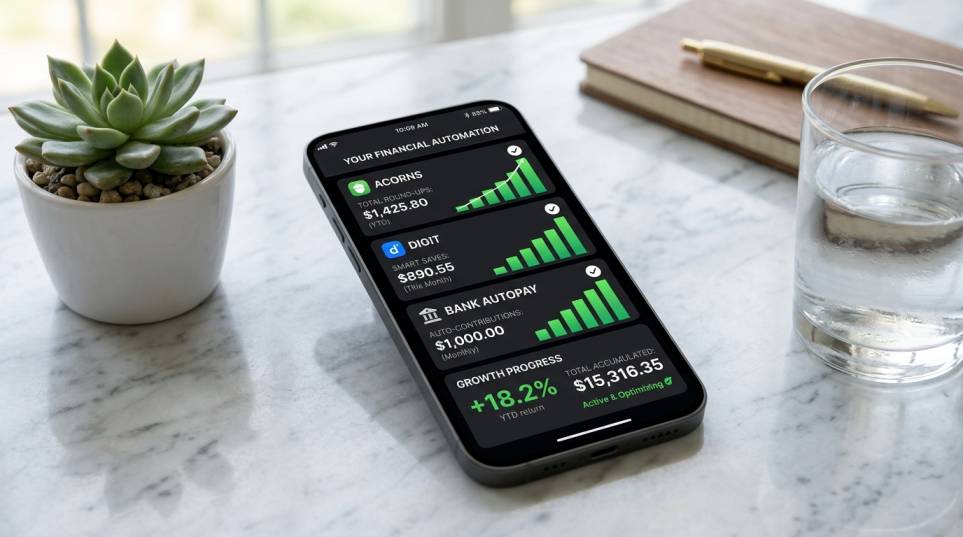
Building Good Money Habits Through Automation
Automation is the CHEAT CODE of financial discipline. When the system runs itself, your behavior doesn’t depend on mood, memory, or motivation.
| What to Automate | How It Helps | Tool to Use |
| Savings | Builds wealth without thinking about it | Digit or Acorns |
| Bill payments | Zero late fees, zero credit score damage | Your bank’s autopay feature |
| Investments | Consistent investing beats timing the market | Acorns (spare change investing) |
Set it up once. Let it run. That’s the Marcus strategy in action.
Step 4 – Learn How to Control Spending and Stop Impulse Purchases
Why Impulse Spending Destroys Financial Goals
Impulse spending is the silent budget killer. It doesn’t show up as one big disaster — it shows up as a hundred small ones. A $30 Amazon add-on here. A $60 spontaneous dinner there. Before you know it, $400 has evaporated and you can’t explain where it went.
The average American spends $314/month on impulse purchases — that’s nearly $3,800 a year. Invested instead at 7%, that’s over $50,000 in 10 years. Every impulse buy has a real long-term cost.
How to Stop Impulse Spending
Three tactics that actually work:
- 24-hour purchase rule — See something you want? Wait 24 hours. If you still want it tomorrow, buy it intentionally — not emotionally.
- Shopping lists — Go to the store with a list. Buy only what’s on it. Simple, boring, and devastatingly effective.
- Unsubscribe from marketing emails — You can’t impulse-buy what you never see. Remove the temptation at the source.
The 30-Day No Spend Challenge
This one is a GAME CHANGER — especially if impulse spending is your Achilles heel.
How it works: For 30 days, you spend money only on absolute essentials — rent, utilities, groceries, transportation. Everything else stops.
Benefits:
- Resets your relationship with money
- Reveals exactly where your discipline breaks down
- Typically saves $200–$500 in a single month
- Builds the “delay muscle” you need for long-term discipline
Real talk: Thousands of Americans have used the no-spend challenge as their financial turning point — paying off credit cards, jump-starting emergency funds, and breaking the paycheck-to-paycheck cycle in just one month.
Creating a Healthier Money Mindset
Controlling spending isn’t just tactical — it’s psychological. Shift these beliefs and everything changes:
| Old Mindset | New Mindset |
| “I deserve this now” | “I deserve financial freedom more” |
| “It’s only $20” | “Small amounts compound both ways” |
| “I’ll save next month” | “I save first, spend second” |
| “Budgets are restrictive” | “Budgets are permission slips” |

💡 Pro Tip: Use “Goodbudget” — a digital cash envelope app — to pre-allocate spending money by category. When the envelope’s empty, spending stops. It makes the boundary visual, real, and powerful.
Your mindset is either your biggest financial asset or your biggest liability. Choose wisely.
Step 5 – Build an Emergency Fund for Financial Security
Why an Emergency Fund Is Essential
Life doesn’t ask permission before it gets expensive. Car transmission blows. Medical bill arrives. Job disappears. Without an emergency fund, every unexpected expense becomes a debt spiral.
This is exactly why Sarah stays stuck. One surprise cost wipes out whatever tiny buffer she had, and she reaches for the credit card — again. Marcus? He has a cushion. He handles emergencies without derailing his entire financial plan.
An emergency fund isn’t a luxury. It’s the foundation that makes every other financial goal possible.
How Much Should You Save?
Build it in stages — don’t let the full target intimidate you into doing nothing:
| Stage | Target Amount | Who It’s For |
| Starter fund | $1,000 | Anyone starting from zero |
| Core fund | 3–6 months of expenses | Most working adults |
| Extended fund | 6–12 months of expenses | Self-employed, single-income households |
Start with $1,000. That one milestone alone removes the most common reasons people go into debt. Then build toward three to six months. Don’t rush — steady wins.
Best Places to Keep Emergency Savings
Your emergency fund needs to be accessible — but NOT so accessible you spend it. The sweet spot:
- High-yield savings account (HYSA) — Earns 4–5% interest while staying liquid. Far better than a regular savings account earning 0.01%.
- Money market account — Similar to HYSA; some offer debit card access for true emergencies
- Separate bank entirely — Keeping emergency savings at a different bank adds friction, which reduces temptation
💡 Pro Tip: Use Digit to automate small daily transfers into your emergency fund. It analyzes your spending patterns and moves money you won’t miss. Painless, consistent, and surprisingly fast.
How to Save Money Consistently
Consistency beats intensity — always. Here’s how to make saving automatic:
- Automated transfers — Schedule a fixed transfer to savings the day after payday. What you don’t see, you don’t spend.
- Savings goals — Name your savings account “Emergency Fund” or “Freedom Fund.” A named goal is 42% more likely to get funded than a nameless one.
- Windfall allocation — Tax refund? Bonus? Side hustle income? Send at least 50% straight to savings before lifestyle creep touches it.

Step 6 – Create a Debt Reduction Plan
Why Debt Prevents Financial Freedom
Debt is the most expensive habit in America. The average US household carries over $6,000 in credit card debt at 20%+ interest. That means you’re paying a premium just to stay in place — running on a financial treadmill that never stops.
Every dollar in interest payments is a dollar that could be building YOUR wealth instead of your bank’s profits. You cannot build real financial freedom while debt owns a piece of every paycheck.
How to Pay Off Debt Faster
Two proven methods — pick the one that fits your personality:
| Method | How It Works | Best For |
| Debt Snowball | Pay smallest balance first; roll payments to next debt | Motivation-driven people; quick wins matter |
| Debt Avalanche | Pay highest interest rate first; saves most money | Math-driven people; minimizing total interest |
Neither is wrong. The best method is the one you’ll actually stick with.
Managing Credit Card Debt Effectively
- Stop adding to it — Cut the card or freeze it (literally) while paying it down
- Pay more than the minimum — Minimum payments are designed to keep you in debt for decades
- Call and negotiate — Many card issuers will lower your interest rate if you simply ask
- Consider a balance transfer — Moving high-interest debt to a 0% intro APR card buys you breathing room
Common Debt Repayment Mistakes
Avoid these and you’ll pay off debt significantly faster:
- Only paying minimums — You’ll pay 2–3x the original balance in interest alone
- No emergency fund while paying debt — Without one, every surprise expense goes right back on the card
- Closing paid-off cards immediately — This can hurt your credit score by reducing available credit
- Ignoring the interest rate order — Not all debt is equal; high-interest debt bleeds you faster
💡 Pro Tip: Use Quicken Deluxe to map all your debts in one place — balances, rates, and payoff timelines. Seeing the full picture in one dashboard makes your debt reduction plan feel real, trackable, and beatable.
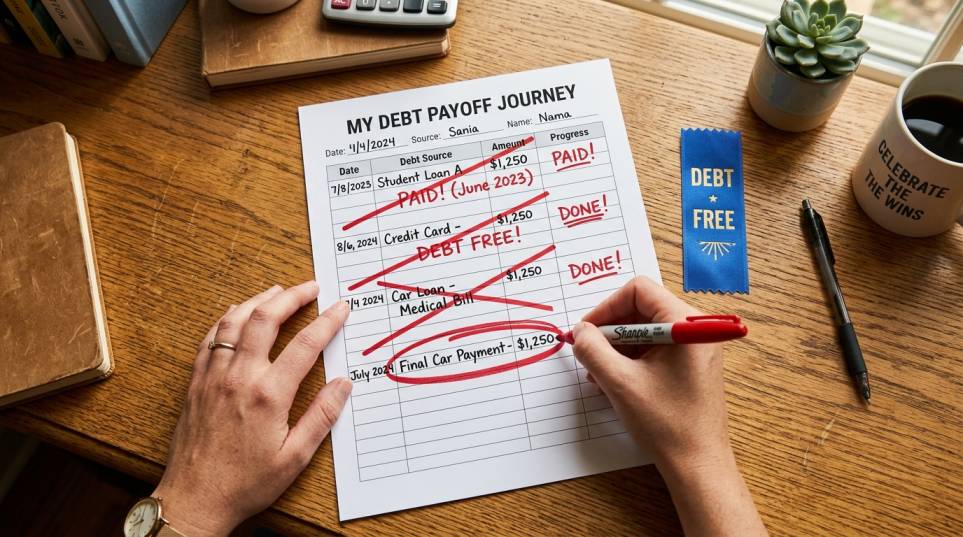
Debt freedom isn’t just financial — it’s emotional. The day you make that last payment? Unforgettable.
Step 7 – Set Clear Financial Goals and Stay Accountable
Why Financial Goals Matter
A budget without goals is just math. Goals are what give your financial discipline meaning — the reason you say no to the impulse buy and yes to the savings transfer.
Here’s the truth: people with written financial goals are 42% more likely to achieve them than those who keep goals vague and mental. Marcus doesn’t just “want to save money.” He has a specific number, a deadline, and a plan. That clarity is what separates dreamers from builders.
Short-Term Financial Goals (Under 2 Years)
Start here. Early wins build momentum and prove to yourself that this actually works:
- Vacation savings — Pick a destination, price it out, divide by months remaining. Suddenly it’s a math problem, not a wish.
- Emergency fund — Your first $1,000, then three to six months of expenses
- Debt repayment — Target one specific card or loan with a clear payoff date
Long-Term Financial Goals (2+ Years)
These are the BIG ones — the goals that make all the short-term sacrifice worth it:
- Home ownership — Down payment savings require years of consistent discipline
- Retirement — Maximize your 401(k) and IRA contributions; time in the market is everything
- Wealth building — Index funds, ETFs, and diversified investments that grow while you sleep
Using SMART Financial Goals
Vague goals fail. SMART goals stick. Here’s the framework:
| SMART Element | What It Means | Example |
| Specific | Clear and defined | “Save $5,000 for emergency fund” |
| Measurable | Trackable progress | “$417/month for 12 months” |
| Achievable | Realistic for your income | Based on actual budget surplus |
| Relevant | Aligned with your priorities | Matches your life goals |
| Time-bound | Has a deadline | “By December 31, 2026” |
Write your goals down. Review them monthly. Make them visible — on your phone, your fridge, your bathroom mirror. Whatever keeps them front of mind.
Monthly Money Checkups
Goals without check-ins drift. Schedule a 20-minute money review every month — same day, every month. Here’s what to cover:
- Progress tracking — Are you hitting your savings and debt payoff targets?
- Budget adjustments — Did anything change? Income, expenses, priorities?
- Accountability systems — Tell a trusted friend your goals. Better yet, find a money accountability partner.
💡 Pro Tip: Monarch Money has a built-in goals tracker that visualizes your progress in real time. Watching that bar move toward 100% is genuinely motivating — small dopamine hits that keep you on track.
Step 8 – Automate Your Finances for Long-Term Success
Why Automation Increases Financial Discipline
Automation removes the most dangerous variable in personal finance: you on a bad day.
When you’re tired, stressed, or tempted, your discipline wobbles. But automated systems don’t have bad days. They execute perfectly, every single time, whether you feel like it or not. This is the single biggest upgrade most people can make to their financial life — and it takes about 30 minutes to set up.
What You Should Automate
| Category | What to Set Up | Tool |
| Savings | Auto-transfer on payday to HYSA | Digit or bank autopay |
| Investments | Monthly contribution to index funds/ETFs | Acorns or brokerage auto-invest |
| Debt payments | Minimum + extra amount auto-scheduled | Bank bill pay |
| Bills | Utilities, insurance, subscriptions | Direct autopay with each provider |
Automate savings and investments FIRST — before discretionary spending gets a chance to absorb that money.
Automate Your Finances Without Losing Control
Automation doesn’t mean set-and-forget forever. Stay in the driver’s seat:
- Review automated transfers quarterly — Make sure amounts still match your current budget
- Keep a small buffer — Maintain $200–$300 extra in checking to prevent overdrafts from automated pulls
- Get transaction alerts — Turn on real-time notifications for every automated transaction
- Audit annually — Cancel automated payments for anything you no longer use or need
💡 Pro Tip: Use Quicken Deluxe to manage and monitor ALL your automated transactions in one place. You stay fully in control while the system does the heavy lifting.
Automation isn’t lazy — it’s SMART. The less financial discipline depends on daily decisions, the more consistently it works.
Step 9 – Improve Your Financial Literacy
The Role of Financial Education in Wealth Building
Here’s a hard fact: the American school system teaches you algebra but not how to file taxes. Geometry but not how compound interest works. We graduate knowing nothing about the one thing that affects every single day of our adult lives — money.
Financial literacy is the bridge between wanting wealth and actually building it. The more you understand money, the better every decision you make with it. Marcus didn’t stumble into financial discipline — he learned it. And so can you.
Essential Personal Finance Topics to Learn
Start here. Master these four areas and you’ll outperform 80% of Americans financially:
| Topic | Why It Matters | Start With |
| Budgeting | Foundation of all financial control | 50/30/20 rule |
| Investing | Turns discipline into long-term wealth | Index funds, ETFs |
| Credit scores | Affects loans, rentals, even jobs | Pay on time, keep utilization under 30% |
| Retirement planning | The cost of waiting is ENORMOUS | Maximize 401(k) match first |
Don’t try to learn everything at once. Pick one topic per month and go deep.
Best Financial Books and Resources
These aren’t just good books — they’re life-changing ones:
- The Total Money Makeover by Dave Ramsey — The gold standard for debt elimination and financial discipline. Practical, no-nonsense, and motivating. Available on Amazon for $17.99.
- I Will Teach You to Be Rich by Ramit Sethi — A six-week personal finance program built specifically for Americans in their 20s–40s. Automation-focused and brilliantly practical. $19.99 on Amazon.
- The Millionaire Next Door by Thomas Stanley — Reveals the real habits of wealthy Americans. Spoiler: they live well below their means.
Beyond books, use free resources like the Social Security Administration Calculator at ssa.gov to project retirement benefits — a genuinely useful planning tool most people ignore.
💡 Pro Tip: Read one financial book per quarter. That’s just four books a year — but four years in, you’ll have a deeper financial education than most college graduates.
When to Consider a Financial Coach
Sometimes you need more than a book. A financial coach is worth considering if:
- You’ve tried budgeting repeatedly and keep failing
- You’re navigating a major life change — divorce, inheritance, job loss
- You have significant debt and don’t know where to start
- You want an accountability partner with real expertise
A good financial coach — search platforms like NFEC or AFCPE for certified coaches — typically charges $100–$300/hour but can save you thousands in financial mistakes. Think of it as an investment, not an expense.

Step 10 – Build Wealth and Achieve Financial Freedom
Moving Beyond Budgeting
Budgeting keeps you stable. Investing makes you wealthy. Once your emergency fund is solid and high-interest debt is gone, it’s time to shift from defense to offense.
This is where the real game begins.
Investing for Long-Term Wealth
You don’t need to be rich to invest. You need to be consistent.
| Investment Vehicle | What It Is | Why It Matters |
| 401(k) | Employer-sponsored retirement account | Tax advantages + free employer match |
| IRA/Roth IRA | Individual retirement account | Tax-free growth (Roth) or tax deduction (Traditional) |
| Index funds | Tracks entire market indexes like S&P 500 | Low fees, consistent long-term returns |
| ETFs | Traded like stocks, diversified like funds | Flexible, low-cost wealth building |
Start with your employer’s 401(k) — especially if they match contributions. That match is an INSTANT 50–100% return on your money. Never leave it on the table.
Saving for Retirement
The math on waiting is brutal. Consider this:
- Invest $200/month starting at 25 → roughly $525,000 by 65 at 7%
- Invest $200/month starting at 35 → roughly $243,000 by 65 at 7%
Same money. Ten years earlier. More than DOUBLE the result. Time is your most powerful financial asset — and it’s the one thing you can’t buy back.
Use MaxiFi Financial Planning Software to model your retirement scenarios and optimize your Social Security claiming strategy. Free to start, and genuinely eye-opening.
The Path From Financial Discipline to Financial Freedom
Financial freedom isn’t a destination — it’s a progression:
Budget → Save → Eliminate Debt → Invest → Build Wealth → Freedom
Every step you’ve taken through this guide has been moving you along that path. Sarah can still get there. So can you. The gap between where you are and where Marcus is isn’t income — it’s decisions. Consistent, disciplined, intentional decisions made day after day.
💡 Pro Tip: Financial freedom doesn’t require perfection. It requires direction. Pick one step from this guide, start today, and build from there. Progress — not perfection — is the goal.
Common Financial Discipline Challenges and How to Overcome Them
Living on a Low Income
Low income is a real constraint — but it’s not a life sentence. The biggest mistake people make on tight budgets? Waiting until they earn “enough” to start. That day rarely comes.
What actually works:
- Start saving $25–$50/month — the habit matters more than the amount
- Use the 50/30/20 rule but flex it — try 60/30/10 if needs genuinely demand more
- Find one expense to cut this week — not everything, just one
- Explore income supplements: freelancing, gig work, selling unused items
💡 Pro Tip: Spendee is a free budgeting app with a beautiful interface built specifically for tight budgets. It helps you see exactly where every dollar goes — critical when every dollar counts.
Unexpected Expenses
Surprises aren’t the problem — being unprepared for them is. And the only real preparation is a funded emergency fund.
Until yours is fully built, use this triage approach:
- Pause non-essential spending immediately
- Negotiate payment plans for large unexpected bills — most providers offer them
- Redirect any windfall (tax refund, bonus) straight to the gap
- Avoid credit cards as the default response — that trades one problem for a worse one
Lack of Motivation
Motivation fades — every time. That’s not weakness, that’s human. Here’s how to stay moving anyway:
- Make progress visible — Track your net worth monthly. Watching it climb is addictive.
- Celebrate small wins — Paid off a card? Mark it. Hit a savings milestone? Acknowledge it.
- Reconnect with your WHY — Is it freedom? Security? Your kids’ future? Write it down and read it when discipline wavers.
- Find community — Reddit’s r/personalfinance has millions of people on the same journey. You’re not alone.
Financial Setbacks and Recovery
Job loss. Medical emergency. Divorce. Setbacks happen to disciplined people too. The difference is how fast they recover.
Recovery framework:
- Assess the damage honestly — Total it up. Ignoring it makes it worse.
- Rebuild the emergency fund first — Before investing, before extra debt payments
- Adjust the budget immediately — New income reality needs a new spending plan
- Resume the plan — Don’t restart from scratch; pick up where you left off
Financial setbacks are not failures. They’re detours. The path still exists.
Managing Money During Economic Uncertainty
Inflation, layoffs, market crashes — economic turbulence tests even the most disciplined savers. Stay grounded with these principles:
- Strengthen your emergency fund — Aim for six months minimum during uncertain times
- Don’t panic-sell investments — Market downturns are temporary; selling locks in losses permanently
- Cut discretionary spending proactively — Before you’re forced to, not after
- Diversify income — One income stream is a single point of failure
Discipline built in calm times is what protects you when things get rough.
Top Money Management Tips for Lasting Financial Success
You’ve absorbed the full framework. Now here’s your quick-reference playbook — ten habits that separate people who talk about financial success from those who actually achieve it:
| # | Money Management Tip | Why It Works |
| 1 | Review your budget monthly | Keeps spending aligned with goals |
| 2 | Pay yourself first | Savings happen before excuses do |
| 3 | Track every expense | Awareness drives behavior change |
| 4 | Avoid lifestyle inflation | More income should mean more wealth, not more spending |
| 5 | Automate savings | Removes reliance on willpower |
| 6 | Build multiple income streams | Reduces financial vulnerability |
| 7 | Invest consistently | Compounding rewards patience above everything |
| 8 | Maintain an emergency fund | Protects every other financial goal |
| 9 | Focus on long-term goals | Short-term sacrifices need a long-term reason |
| 10 | Keep improving financial literacy | Knowledge compounds just like money does |
None of these are complicated. All of them work. The only question is whether you’ll actually do them — consistently, imperfectly, and persistently.
💡 Pro Tip: Print this table. Stick it somewhere visible. Review it every Sunday during your weekly money check-in. Simple systems executed consistently beat complex plans abandoned quickly — every single time.

Frequently Asked Questions
What is financial discipline and why is it important?
Financial discipline is the consistent practice of making intentional money decisions aligned with your long-term goals — budgeting, saving, avoiding unnecessary debt, and investing regularly. It matters because income alone doesn’t build wealth. How you manage money determines your financial future.
How do I start building financial discipline with little money?
Start smaller than you think you need to. Save $25/month. Track every expense. Cut one unnecessary cost this week. Financial discipline isn’t about how much you have — it’s about building the habits. The amount scales up; the habits have to come first.
What is the best budgeting method for beginners?
The 50/30/20 rule — 50% needs, 30% wants, 20% savings and debt repayment. It’s simple, flexible, and effective for most income levels. Once you’re comfortable, graduate to zero-based budgeting for even tighter control.
How much should I save each month?
Aim for at least 20% of your net income. If that’s not possible yet, start with whatever you can — even 5% — and increase by 1% every month. The habit matters more than the percentage when you’re starting out.
How can I stop impulse spending?
Apply the 24-hour rule — wait a full day before any unplanned purchase. Unsubscribe from marketing emails. Shop with a list. Try the 30-day no-spend challenge to fully reset your spending patterns. And use Goodbudget to pre-allocate your spending money so limits feel real and visible.
How long does it take to build financial discipline?
Research suggests it takes 66 days to form a new habit — not 21, as the old myth claimed. Expect the first month to feel hard, the second to feel manageable, and the third to feel natural. Give yourself 90 days before judging your progress.
What are the best budgeting apps in 2026?
| App | Best For | Cost |
| YNAB | Zero-based budgeting; best overall | $14.99/mo |
| Monarch Money | Comprehensive financial tracking | $9.99/mo |
| PocketGuard | First-time budgeters | Free–$7.99/mo |
| EveryDollar | Simple zero-based budgeting | Free–$12.99/mo |
| Spendee | Tight budgets; beginners | Free–$4.99/mo |
Can financial discipline help me get out of debt?
ABSOLUTELY. Financial discipline is the engine of debt freedom. It helps you stop adding new debt, find money to accelerate payments, and stay consistent with your debt reduction plan. Use the Debt Snowball for motivation or the Debt Avalanche to minimize interest — either method works when backed by discipline.
How can I stay motivated with my financial goals?
Make progress visible. Track your net worth monthly. Celebrate every milestone — paid-off card, emergency fund milestone, first investment. Find an accountability partner. And always keep your why front and center — freedom, security, family, options. Discipline fades; purpose doesn’t.
What is the fastest path to financial freedom?
Budget aggressively → eliminate high-interest debt → build emergency fund → automate savings → invest consistently. In that order. There’s no shortcut, but there is a fast track — and it’s executing these steps simultaneously, without waiting for the “perfect” moment that never arrives.
Conclusion: Financial Discipline Is the Foundation of Financial Success
Remember Sarah and Marcus from the beginning of this guide?
Sarah earns more. Marcus has more. And now you know exactly why.
It was never about income. Never about luck, timing, or circumstance. It was about financial discipline — the daily, consistent, intentional decision to manage money with purpose instead of spending it with emotion.
Here’s your complete roadmap recap:
- ✅ Create a budget — Tell your money where to go
- ✅ Track your spending — Awareness drives everything
- ✅ Build strong money habits — Systems beat willpower
- ✅ Save consistently — Start small, stay consistent
- ✅ Eliminate debt — Break the chain holding you back
- ✅ Automate your finances — Remove human error from the equation
- ✅ Invest for the future — Make your money work while you sleep
Financial discipline is not a personality trait you either have or don’t. It’s a skill — one that anyone can learn, practice, and master. You don’t need a finance degree. No need to have a six-figure salary. You need a system. And now you have one.
Sarah from our opening story didn’t have a higher income than Marcus. She had less financial discipline. And that’s the difference between living paycheck to paycheck and building real wealth. You don’t need to be naturally disciplined, you just need the right system. This step-by-step guide is that system. Start with Step 1 today. In 66 days, you’ll have built habits that last. In 5 years, you’ll have financial freedom. Your future self is waiting.
Small, consistent actions, not dramatic overnight transformations, are what build lasting financial freedom. The best time to start was yesterday. The second best time is right now.
Take the first step today. Your future self will thank you.