
10 Income-Producing Assets to Invest in for Passive Income
What if some of your money worked as hard as you do? Income producing assets make that possible. They pay you interest, dividends or rent on a regular schedule, and you do not need to be rich or a Wall Street insider to start owning them. Nothing here will make you wealthy overnight, but a steady stream of extra income can change how your month feels.
Here is the good news. Every investor you admire made a first purchase once, and that purchase started small. Your first purchase can happen this year, and the best time to make it is before you feel ready. Small money, started early and fed regularly, grows into big money. Time works for you the moment you begin.
Let’s start with how most of us earn. You trade your time for money. You show up, you do the work, and a paycheck lands in your account. Stop showing up and the paycheck stops too. That is active income. It pays your bills, and it deserves respect, but it has a ceiling, because you only have so many hours in a week.
How Owning Assets Changes the Deal
Income producing assets flip that deal. You buy or build something once, and it pays you again and again. A company shares its profit with you as dividends. A bank pays you interest. A tenant pays you rent. A reader buys your ebook. Your time stays free for your family, your hobbies, or a good nap.
Let me show you the math with a simple example. Say you own 100 shares of a company that pays $2 per share in dividends each year. That is $200 landing in your account whether you worked hard that week or binge watched a show instead. The number looks small. But it grows every time you add shares, and it never asks you to clock in. Buy 500 shares instead of 100, and the same company pays you $1,000 a year for doing nothing extra.
That steady flow is passive income, and it drives long term wealth. Even a small stream matters. When you reinvest what it pays, you buy more assets, those assets pay more income, and that income buys even more assets. Compounding does the heavy lifting. I run a digital product business, so I live this idea every day: you build once and you sell many times.
Why One Income Stream Leaves You Exposed
Now look at your own setup. If one paycheck covers every bill, one bad day can wreck your plans. A layoff, a cut in hours, a medical bill, a slow month at your side business. One source of income leaves you almost no room to move. Add a second and a third stream, and you get choices. You can turn down a bad job offer or finally take that career risk, because your whole life no longer hangs on one employer.

I wrote this guide for beginners and for investors who want to widen their options. You will walk through 10 income producing assets you can invest in today:
- Dividend paying stocks
- Dividend ETFs
- Real estate investment trusts (REITs)
- Rental properties
- Government bonds
- Corporate bonds
- High yield savings accounts
- Certificates of deposit (CDs)
- Income generating businesses
- Digital products and royalties
For each one, you will see how it pays you, what you need to start, what can go wrong, and how US taxes treat the income. You will also learn which ones pay you monthly and which ones suit beginners.
What It Takes to Start, and What Can Go Wrong
Do you need a mountain of cash to begin? NO. Some high yield savings accounts ask for no minimum deposit at all. Many brokerage platforms now sell fractional shares, so you can buy a slice of a stock or an ETF with a small amount. Other assets, like rental properties and businesses, ask for more money up front, and I will tell you exactly where each one sits.
I also owe you some honesty. Passive income is rarely passive at the start. You need starting money and research time, and some assets demand ongoing management after that. A rental property calls you when the water heater breaks. A new business needs your full attention before it runs without you. Even a simple ETF needs a plan and a few check ins each year. Every investment carries risk too, and you can lose money. Prices drop, tenants leave, and companies cut dividends.
I am not a financial advisor, so treat everything here as education, not personal advice. Talk to a licensed professional before you commit serious money.
What are Income Producing Assets and How Do They Generate Passive Income?
What Exactly Are Income Producing Assets?
An income producing asset is anything you own that pays you money on a regular schedule while you keep it. That is the whole idea. Income producing assets send cash to your account, and the asset stays yours. A bond pays interest. A stock pays dividends. A rental unit pays rent. You collect, and you still own the thing that paid you.
That money reaches you in five main ways:
| How it pays | What you receive | Common examples |
| Interest | A fee for lending your money | Government bonds, corporate bonds, high yield savings accounts, CDs |
| Dividends | A share of company profit | Dividend paying stocks, dividend ETFs |
| Rent | Payment for letting others use property | Rental properties, REITs |
| Profits | Your cut of what a business earns | Income generating businesses |
| Royalties | Payment each time someone buys or uses your work | Ebooks, templates, courses, music |
Look at that table again. You may already own an income producing asset without calling it one. Your savings account pays interest, so it counts. A stock fund inside your 401(k) may pay dividends too. The only real difference between those holdings and an income plan is intention: you pick assets on purpose and add to them on a schedule.
Take a certificate of deposit as a plain example. You park $5,000 at a bank for a set term, and the bank pays you interest for using your money. You sold nothing, and you clocked in nowhere.
Income Assets vs. Growth Assets
Now compare that to assets that mostly appreciate, meaning they gain value over time but pay little or nothing along the way. Gold, art, collectibles, and shares in a fast growing company that pays no dividend all fit here. You earn only when you sell, and you hope the price beats what you paid. Your own home sits on this side for most owners. It may gain value, but it pays you nothing each month unless you rent out a room. Plenty of assets do both. A rental property pays rent every month and can also rise in value over time, which makes it a double winner.
Pro Tip: Ask one question before you buy anything: “What pays me, and when?” If the only answer is “when I sell,” you own a growth asset, not an income asset. Growth assets have a place in a portfolio, but they will not cover your electric bill THIS month.
How Do Income Producing Assets Help Build Wealth?
Your paycheck pays for today. Your assets pay for everything after. Income producing assets build wealth in five ways, and each one stacks on the others.
First, they add income beyond your job. Every dollar your assets pay is a dollar your employer did not have to hand you. Say your assets pay $300 a month. That is $3,600 a year, enough to cover a car insurance bill or a flight home for the holidays. Even $100 a month changes how a surprise bill feels.
Second, they create multiple streams. Interest from a CD, dividends from an ETF, and rent from a unit each arrive on their own schedule. When one slows down, the others keep going. Remember the layoff scenario from the introduction? A second stream would have kept some money coming in.
Third, they compound. Compounding means your earnings start earning too. Try the rule of 72: divide 72 by your annual return, and you get the rough number of years your money needs to double. At a 7 percent return, that takes about 10 years. The math assumes you reinvest what your assets pay, and nothing guarantees any return, so treat 7 percent as an example, not a promise.

Long Term Security and Financial Independence
Fourth, they build long term security. Asset income gives you a cushion for emergencies, so you do not sell investments at a bad time or reach for a credit card. Think of it as a second floor under your finances. If your job disappears, that floor holds for a while.
Fifth, they move you toward financial independence and a calmer retirement. Financial independence means your asset income covers your living costs, so working becomes a choice. In retirement, the same income lets you pay your bills without selling your investments every month. You do not need full independence to benefit, either. If asset income covers your phone bill and groceries, you already have breathing room.
Pro Tip: Give yourself a target. Multiply your monthly expenses by 12, then divide by the yield you expect. Say you spend $3,000 a month. That is $36,000 a year, and at a 4 percent yield you need about $900,000 in assets to cover it. Big number, I know. You reach it in small steps, one deposit at a time.
What Is the Difference Between Passive Income and Active Income?
Active income comes from trading your time and effort for pay. A salary, freelance gigs, consulting, and running your own business day to day all count. Stop working, and the money stops.
Passive income arrives with little daily effort once you set it up. Between the two sits semi passive income, where you still work, but far fewer hours than a job demands. Plenty of income streams land in this middle zone, and that is perfectly fine.

| Type | How it works | Examples | Your daily effort |
| Active | You trade time for pay | Salary, freelancing, running a shop yourself | High |
| Semi passive | You set it up, then manage it part time | A rental you manage yourself, digital products, a business with a manager | Medium |
| Passive | You fund it, then collect | Bonds, CDs, high yield savings, dividend ETFs, REITs | Low |
Here is where many beginners trip up. Passive does NOT mean zero effort. The word describes your daily workload after setup, and the setup itself takes real work. You research the asset, compare fees and fund the account. Skip that part, and you pick the wrong asset or miss a fee that eats your income. At the other end, flipping houses or running an online shop can make money, but both sit much closer to active income.
Why Some Income Streams Need Ongoing Management
Why do some opportunities need ongoing management? Because someone has to make the decisions. A tenant texts you about a broken heater. A digital product needs updates and customer support. A business needs hiring, pricing and marketing. Nobody does that work for free, and if you hire help, the help shrinks your income.
Compare that to a high yield savings account. You open it, fund it, and the bank handles everything else. Your only job is to check the interest rate once in a while. A dividend ETF works much the same way, and so do bonds and CDs.
Pro Tip: My advice? Match the asset to your calendar. If work keeps you buried this year, lean toward hands off assets. If you have free time and the itch to build, a rental or a small business may suit you better. The IRS also has its own rules on what counts as passive income for tax purposes, so ask a tax professional before you assume your rental income qualifies.
What Should You Consider Before Investing in Income Producing Assets?
Before you move a single dollar, run every asset through six checks.
Start with the initial investment. A savings account may need $0 to open. A dividend ETF may cost the price of one share. A rental property takes a down payment, closing costs and a repair fund. Match the entry price to your budget, not your ambition. You can always start small and add money every month.
Next comes expected income and returns. Check the yield, which is the yearly income divided by the price you pay. An investment of $10,000 that pays $400 a year has a 4 percent yield. Treat every projection as an estimate. A higher yield usually signals higher risk, so if someone promises a monthly return far above what banks and bonds pay, ask what they are hiding.
Then weigh risk and capital preservation. Capital preservation means protecting the money you put in. The FDIC insures bank deposits up to $250,000 per depositor, per bank, per ownership category, and the US government backs Treasury securities. Stocks, REITs and rentals carry a real chance of loss, and corporate bonds can lose value when a company struggles. Size each one to match your comfort.
Liquidity, Duration, Fees and Taxes
Think about liquidity too. How fast can you get your cash out? A savings account pays out within a few business days. A CD charges a penalty if you cash out early. A rental property can take months to sell. Ask yourself how you would pay for a sudden car repair, then keep your emergency fund in liquid assets.
Duration matters as well. Decide how long you can leave the money alone. A five year CD, a 10 year bond and a rental you plan to hold for decades all demand patience. If you need the money in two years, pick shorter terms.
Last, count fees, taxes and inflation. Fund expense ratios, broker fees and property management fees all cut your income. The IRS taxes interest as ordinary income, while qualified dividends often get lower rates. Inflation quietly shrinks what your income buys. If your asset pays 3 percent and prices rise 4 percent, you lose ground. Judge every return after fees, taxes and inflation.
Pro Tip: I like a simple spreadsheet for this, with one row per asset and one column per check. Fill it in before you buy. Comparing side by side takes ten minutes and saves you from expensive surprises.
2. What Are the 10 Best Income Producing Assets to Invest In?
You know how these assets work and what to check before you buy. Now meet the ten. I start with the ones you can buy from your phone and end with the ones that demand real work from you.
2.1 Dividend Paying Stocks: How Can You Earn Regular Income From Company Profits?
A dividend paying stock hands you a slice of company profit in cash. Most US companies that pay dividends do it every quarter. You own the shares, the board declares a dividend, and the money lands in your brokerage account. Buy before the ex dividend date, or you miss that payout.
Dividend yield tells you how much. Divide the yearly dividend by the share price. A $50 stock that pays $2 a year yields 4 percent. Beware of sky high yields, though. When a stock price crashes, the yield jumps, and that often signals trouble.
To spot a healthy payer, look for:
- A payout ratio (the share of profit paid as dividends) well below 100 percent
- Years of steady or rising dividends
- Growing sales and manageable debt
Johnson & Johnson, Coca-Cola and Procter & Gamble have paid dividends for decades. Treat them as names to research, not tips. You can read any company’s annual report free on the SEC’s EDGAR database.
Set realistic goals too. A 4 percent yield means you need $25,000 invested to collect $1,000 a year.
The risk is simple. Nothing guarantees a dividend, and a board can cut it overnight.
Pro Tip: Own companies from different industries. One dividend cut then hurts less.
2.2 Dividend ETFs: How Can You Earn Income From a Diversified Stock Portfolio?
An exchange traded fund (ETF) bundles many stocks into one share. A dividend ETF holds dozens of dividend payers. The fund collects the dividends, then passes them to you, usually every quarter.
Compare it with picking single stocks:
| Single dividend stock | Dividend ETF | |
| Companies you own | One | Dozens |
| Effect of one dividend cut | Large | Small |
| Research needed | A lot | Less |
| Yearly fee | None | Expense ratio |
Check three things before you buy: the expense ratio (the yearly fee), the payment schedule, and how the fund picks its stocks. A 0.50 percent fee costs $50 a year on $10,000. A 0.06 percent fee costs $6.
Three popular examples to research:
- Schwab U.S. Dividend Equity ETF (SCHD), built around dividend quality
- Vanguard High Dividend Yield ETF (VYM), built around higher yields
- iShares Core Dividend Growth ETF (DGRO), built around companies that raise dividends
Pro Tip: Do not chase the highest yield. Read how the fund selects stocks first.
2.3 Real Estate Investment Trusts (REITs): How Can You Earn Rental Income Without Owning Property?
A REIT is a company that owns income producing real estate. To keep its tax status, a REIT must pay out at least 90 percent of its taxable income as dividends. That rule makes REITs popular with income investors.
Public REITs trade on stock exchanges, so you buy and sell them like any stock. Private and nontraded REITs are harder to sell, and some limit who can invest.
REITs come in many types: residential, commercial, industrial (warehouses) and healthcare.
Beginners can start with a REIT ETF, such as Vanguard Real Estate ETF (VNQ) or Schwab U.S. REIT ETF (SCHH). Platforms give you another route:
- Arrived sells shares in single rental homes. You must be 18, live in the US, and be a US citizen or green card holder.
- Fundrise runs private real estate portfolios. You need permanent US residency and a US tax ID.
Prices swing with interest rates and property markets, and payouts can shrink.
Pro Tip: Most REIT dividends count as ordinary income for tax purposes. A retirement account such as an IRA can shelter them.
2.4 Rental Properties: Can Owning Real Estate Generate Consistent Monthly Income?
A rental property pays you rent. Residential rentals (houses, duplexes, apartments) suit most beginners. Commercial rentals (shops, offices) can sign longer leases, but they cost more and carry bigger risks.
Learn two numbers. Gross rental yield is yearly rent divided by purchase price. Cash flow is rent minus every cost. Try this simple example:
| Item | Yearly amount |
| Rent ($2,000 a month) | $24,000 |
| Property taxes | $3,000 |
| Insurance | $1,200 |
| Maintenance | $2,400 |
| One month of vacancy | $2,000 |
| Left before mortgage | $15,400 |
If your mortgage costs more than $15,400 a year, you lose money every month. These figures are examples. Your costs will differ.
Owning rentals has real perks: monthly income, price growth and tax deductions. It also has real drawbacks: a big down payment, slow sales and tenant headaches. A property manager can take over the calls, but they charge a share of your rent.
Pro Tip: Run your numbers with low rent and extra vacancy. If cash flow still works, keep going.
2.5 Government Bonds: How Can You Earn Interest From Lending Money to the US Government?
When you buy a government bond, you lend money to Uncle Sam. He pays you interest and returns your money at maturity. The US government backs these securities, which makes them a favorite for cautious investors.
| Security | Term | How it pays |
| Treasury bill | 4 to 52 weeks | You buy at a discount and collect face value at maturity |
| Treasury note | 2 to 10 years | Interest every six months |
| Treasury bond | 20 or 30 years | Interest every six months |
| TIPS | 5, 10 or 30 years | Twice a year, on a principal that adjusts with inflation |
| Series I Bond | Up to 30 years | Fixed rate plus an inflation rate |
You buy all of them at TreasuryDirect.gov. Treasury securities start at $100, and I Bonds start at $25. You must hold an I Bond for 12 months, and you lose three months of interest if you cash out within five years.
Two risks matter. If rates rise and you sell early, you may take a loss. Inflation can also eat the value of a fixed rate. On the plus side, Treasuries can steady a portfolio when stocks fall, though nothing guarantees that.
2.6 Corporate Bonds: Can Lending Money to Companies Generate Investment Income?
Companies borrow money by selling bonds. You lend, they pay you interest (usually twice a year), and they return your principal at maturity.
Ratings tell you how safe the loan looks. Investment grade bonds come from stronger companies and pay less. High yield bonds, nicknamed junk bonds, come from weaker companies and pay more because default risk runs higher.
Rates also move bond prices. When interest rates rise, existing bond prices fall. Hold to maturity and you get your principal back, unless the company defaults.
Individual bonds need research and often big minimums. A bond ETF, such as Vanguard Total Bond Market ETF (BND), holds thousands of US investment grade bonds in one share. You trade a little control for a lot of diversification.
Pro Tip: Before you buy a single bond, check its rating, the company’s debt level and the maturity date. FINRA’s free bond lookup tool shows prices and ratings.
2.7 High Yield Savings Accounts: Can Your Savings Generate Interest Income?
A high yield savings account is a bank account that pays more interest than a standard one. Online banks usually lead because they skip the cost of branches.
Look at the APY, or annual percentage yield. It shows what you earn in a year, including compounding. These rates are variable, so they rise and fall with the market.
Your money stays liquid, and the FDIC insures deposits up to $250,000 per depositor, per bank, per ownership category.
Compare accounts on APY, fees, minimum deposits and transfer speed. Three well known online options:
- Capital One 360 Performance Savings: no monthly fee and no minimum balance
- Ally Online Savings: savings buckets and automatic transfers
- Marcus by Goldman Sachs: no minimum opening deposit
Check each bank’s current rate before you open an account.
Pro Tip: Park your emergency fund here. It earns interest and stays ready for a rainy day.
2.8 Certificates of Deposit (CDs): How Can You Earn Predictable Returns From Fixed Term Savings?
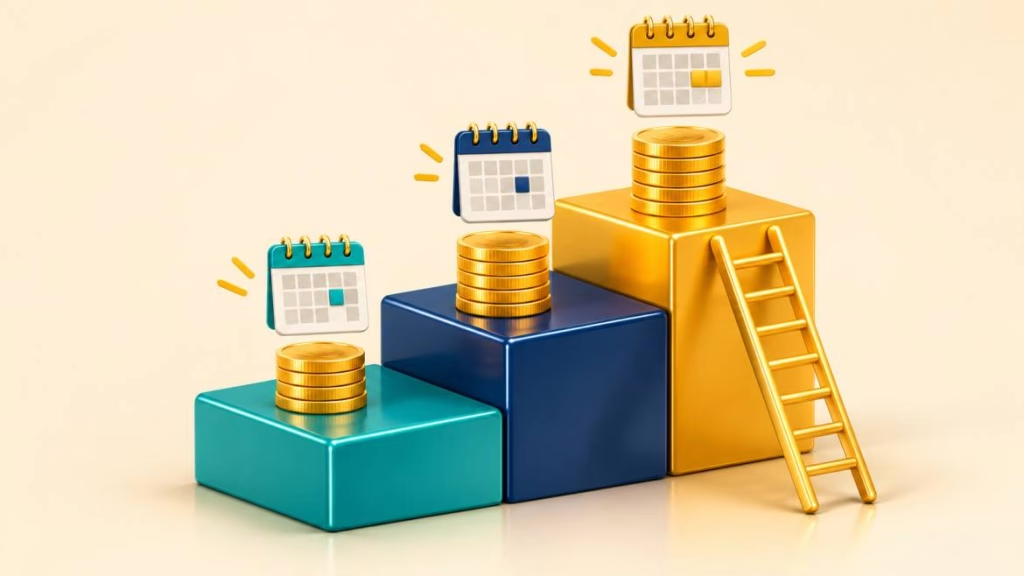
A CD locks your money for a set term, such as six months or five years. The bank pays a fixed rate for the whole term. You know your return on day one.
Pull money out early, and you usually pay a penalty. A no penalty CD removes that charge, but it normally pays a lower rate. Ally Bank and Marcus sell both types, and Capital One 360 also sells CDs.
A CD ladder spreads the risk. Say you split $9,000 into three $3,000 CDs with 1, 2 and 3 year terms. One matures every year. When one ends, you roll it into a new 3 year CD. You get regular access to cash and keep earning longer term rates.
The downsides: your rate stays locked if rates rise, and inflation can outrun a fixed rate.
Pro Tip: Match the CD term to when you need the money. Compare rates across banks, and confirm FDIC (or NCUA, for credit unions) coverage.
2.9 Income Generating Businesses: Can Owning a Business Become a Source of Passive Income?
Owning a business and running one are different jobs. As an owner, you collect profits. As an operator, you work in the shop every day. Most owners land somewhere between, so I call this asset semi passive, not fully passive.
One route is to buy a small, established business and hire a manager. Marketplaces such as BizBuySell list businesses for sale. Another route is to invest as a partner in a business someone else runs.
Profits reach you as distributions. Before you buy, ask for several years of tax returns and financial statements. Hire an accountant to read them with you.
Systems decide whether the income stays hands off. Without written processes and a reliable manager, the business needs you.
The risks run high. Businesses fail, customers leave, and you cannot sell your stake quickly.
Pro Tip: Only buy a business whose cash flow you can verify on paper and explain in two sentences.
2.10 Digital Products and Royalties: Can You Earn Recurring Income From Intellectual Property?

You create something once and sell it many times. That is a digital product. Think ebooks, online courses, templates, planners and licensed photos or music.
- Ebooks earn royalties. Amazon KDP, for example, pays 35 or 70 percent depending on price and terms.
- Courses sell on Udemy, Teachable or your own site.
- Templates and planners sell on Etsy, Gumroad or your own store.
Marketplaces give you reach, but they take fees and set the rules. A policy change or account suspension can cut your income overnight. That is platform risk.
The product takes effort up front. The audience takes more. Content on Pinterest, YouTube and your email list brings buyers over time. I sell Excel templates through MavenSynergy, and I can tell you the audience matters as much as the product.
Maintenance never fully disappears either. You update files, answer customers and refresh listings.
Pro Tip: Test demand before you build. Ask your audience what they struggle with, then create that.
2.11 How Do the 10 Best Income Producing Assets Compare?
Here is the whole lineup at a glance. Risk levels are broad illustrations, not formal ratings.
| Asset | How it pays | Income frequency | Risk level | Liquidity |
| Dividend stocks | Dividends | Usually quarterly | Moderate to high | High |
| Dividend ETFs | Dividends and distributions | Varies | Moderate to high | High |
| REITs | Property distributions | Varies | Moderate to high | Depends on type |
| Rental properties | Rent | Usually monthly | Moderate to high | Low |
| Government bonds | Interest | Depends on security | Varies | Varies |
| Corporate bonds | Interest | Often twice a year | Moderate to high | Varies |
| High yield savings | Interest | Usually monthly | Low | High |
| CDs | Interest | Varies | Low | Limited before maturity |
| Businesses | Profits | Varies | High | Often low |
| Digital products | Sales and royalties | Varies | Varies | Depends on product and platform |
3. Which Income Producing Assets Generate Monthly Income?
That table shows how often each asset pays. Many readers want a check every month, so let’s look closer.
3.1 What Investments Pay You Monthly?
Several assets can send money monthly:
- High yield savings accounts, which usually credit interest monthly
- Rental properties, as long as tenants pay on time
- Some REITs and bond funds
- Monthly dividend ETFs, such as JPMorgan Equity Premium Income ETF (JEPI), which uses an options strategy that can limit upside
- Platforms such as Arrived, which pass on rent as distributions where applicable
Most stocks and ETFs pay quarterly. Bonds often pay twice a year. Monthly does not mean more money. A fund that pays $4.80 a year pays the same total whether it sends $1.20 each quarter or $0.40 each month. Monthly payments just make budgeting easier.
3.2 Which Assets Give You the Most Consistent Income?
Contracts create consistency. A savings account, a CD or a Treasury security promises you a rate. That makes them the steadiest options, though savings rates can drop.
Dividends come next. Companies usually try to protect them, yet they can cut payouts when profit falls. Rental income depends on tenants, and every empty month costs you.
Consistency and high yield rarely show up together. A very high yield usually means the market doubts the payout will last.
| Asset | Consistency | Main threat |
| Treasuries and CDs | Very high | Inflation |
| High yield savings | High | Falling rates |
| Dividend ETFs | Medium | Dividend cuts |
| Rental properties | Medium | Vacancies |
| Businesses | Low to medium | Failure |
3.3 How Can You Build Multiple Streams of Monthly Income?

Mix assets so something pays almost every month. A sample plan:
- A high yield savings account for monthly interest and your emergency fund
- A dividend ETF for quarterly payments
- A CD ladder for scheduled maturities
- A REIT ETF for property income
Here is a neat trick. Dividend funds pay on different quarterly cycles. One pays in January, April, July and October. Another pays in February, May, August and November. Check each fund’s schedule, and you can fill the calendar.
Reinvest what you do not need yet. Spread your money, too. If one asset supplies most of your income, one bad event can sink you.
4. How Do You Choose the Best Income Producing Assets for Your Financial Goals?
Knowing your options is step one. Matching them to your life is step two.
4.1 Which Income Producing Assets Are Best for Beginners?
Start where the entry price is low and the rules are simple:
- High yield savings accounts
- Treasury securities
- CDs
- A diversified dividend ETF
You need an account to buy them. Brokerage accounts at firms such as Fidelity, Charles Schwab or Vanguard hold stocks, ETFs and bonds. Banks hold savings accounts and CDs. TreasuryDirect holds government securities. Opening a brokerage account usually takes a short online application: your ID, Social Security number and a linked bank account.
Pro Tip: I would start with a savings account and one broad dividend ETF. Add the rest once those feel boring.
4.2 Which Assets Are Best for Long Term Wealth Building?
For long horizons, you want income that grows. Dividend growth funds, such as DGRO, fit well. Over decades, a company that pays 2 percent and raises its dividend every year can beat one that pays 5 percent and never moves.
REITs and real estate add property exposure. A mix of diversified stock and bond funds spreads your risk. Reinvesting every payout powers compounding.
Balance matters here. Income pays you today. Growth pays you later. Decide how much of each you need.
4.3 Which Income Producing Assets Require the Least Maintenance?
Some assets run themselves. Others run you.
| Effort | Assets | What you do |
| Very low | Savings accounts, CDs | Open and fund |
| Low | Treasuries, dividend ETFs, public REITs | Buy, then review yearly |
| High | Rental properties | Manage tenants and repairs |
| High | Businesses, digital products | Manage people, products and customers |
Hands off assets save time. Hands on assets can pay more, but they cost you hours.
Higher yields usually carry higher risk. Think in three tiers:
4.4 How Do You Balance Investment Risk and Potential Returns?
| Risk tier | Examples |
| Lower | High yield savings, CDs, Treasuries held to maturity |
| Moderate | Investment grade bonds, diversified dividend ETFs |
| Higher | Single stocks, REITs, high yield bonds, rentals, businesses |
Add liquidity to the picture. Can you sell fast without a penalty? Then spread your money across tiers, and match the mix to your life: your age, your job security and your time horizon.
Pro Tip: Build an emergency fund of three to six months of expenses before you chase yield.
5. How Can You Start Investing in Income Producing Assets With Little Money?
Good news: you do not need a fortune. Here is how to begin.
5.1 How Much Money Do You Need to Start Investing?

Less than you think:
- Savings accounts: often $0
- Treasury securities: $100
- Series I Bonds: $25
- Fractional shares: a few dollars at some brokerages
Be realistic about results. At a 4 percent yield, $1,000 pays about $40 a year, or $3.33 a month. That looks tiny. But the habit matters more than the amount. Add $50 every month, and your income grows with you.
5.2 How Do You Set Financial Goals for Passive Income?
Follow these steps:
- Pick a monthly income target, such as $500.
- Multiply by 12 and divide by an expected yield to find your needed capital. At 4 percent, $500 a month needs about $150,000.
- Split the goal into short term milestones (a $1,000 starter fund) and long term ones.
- Track your income each month in a simple spreadsheet with columns for asset, amount invested, income received and date.
Keep expectations honest. Returns vary, and your first year will not look like your tenth.
5.3 How Do You Select the Right Investment Platforms?
| You want | Use | Check |
| Stocks, ETFs, bonds | A brokerage such as Fidelity, Schwab or Vanguard | Fees, minimums, tools |
| Treasuries and I Bonds | TreasuryDirect | Account setup |
| Savings and CDs | Ally, Marcus or Capital One 360 | APY, FDIC coverage |
| Property income | Arrived or Fundrise | Eligibility, liquidity, fees |
SIPC protects brokerage customers if their firm fails. It does not cover market losses. Also remember that some platforms require US residency, a US tax ID or citizenship. International readers should confirm eligibility first.
5.4 How Can You Grow Your Investments Through Reinvestment?
Reinvesting turns small payments into bigger ones. Use these habits:
- Turn on dividend reinvestment at your brokerage
- Automate a monthly deposit
- Review your mix once a year and rebalance if one asset has grown too large
- Raise your contributions whenever your income rises
Compounding works slowly at first, then faster.
6. What Are the Risks of Investing in Income Producing Assets?
Reinvesting builds wealth, but every asset here carries risk. Let’s name each one.
6.1 Can Income Producing Investments Lose Money?
Yes. Many can.
| Risk | What happens |
| Market volatility | Stock, ETF and REIT prices drop |
| Interest rate risk | Bond prices fall when rates rise |
| Credit and default risk | A borrower stops paying |
| Property value decline | Your rental loses value |
| Business failure | Profits vanish |
Even FDIC insured accounts can lose purchasing power to inflation.
6.2 How Can You Protect Your Investment Capital?

- Spread your money across asset types
- Research before you commit, using the SEC’s Investor.gov, and check any broker or adviser on FINRA BrokerCheck
- Read the fees and terms
- Walk away from promises of high guaranteed returns. The SEC warns that big returns with little risk can signal fraud.
- Keep an emergency reserve so you never sell in a panic
6.3 How Does Inflation Affect Passive Income?
Inflation shrinks what your income buys. At 3 percent inflation, $1,000 of monthly income will buy only what about $744 buys today after ten years.
Fixed interest loses ground. TIPS and I Bonds adjust for inflation. Dividend growth and rising rents can help too, though nothing guarantees either. Build a mix that raises your income over time.
6.4 Are Income Producing Assets Taxable in the United States?
Generally, yes. Here is a simplified view of federal treatment:
| Income | Typical federal tax treatment |
| Qualified dividends | Lower long term capital gains rates |
| Other dividends, most REIT dividends | Ordinary income rates |
| Savings, CD and corporate bond interest | Ordinary income rates |
| Treasury interest | Federal tax, but no state or local tax |
| Rental income | Ordinary income, minus expenses and depreciation |
| Gains on assets held over one year | Lower long term rates |
States tax differently. Your situation will too, so talk to a qualified tax professional. Check IRS.gov for current rules.
7. Frequently Asked Questions About Income Producing Assets
7.1 What Are Income Producing Assets?
They are investments or properties that pay you through interest, dividends, rent, business profits or royalties. Examples include dividend stocks, bonds, REITs, rentals and savings accounts.
7.2 What Are the Best Income Producing Assets to Invest In?
It depends on your goals, timeline and comfort with risk. Popular choices include dividend stocks and ETFs, REITs, bonds, high yield savings, CDs, rentals and businesses.
7.3 How Much Money Do I Need to Start Investing?
Less than you think. Treasuries start at $100, I Bonds at $25, and some savings accounts and fractional shares need almost nothing.
7.4 Which Assets Generate Monthly Income?
High yield savings, rentals, some REITs, bond funds and monthly dividend ETFs. Always check each product’s payment schedule.
7.5 What Is the Safest Income Producing Asset?
FDIC insured savings and CDs protect your deposits up to $250,000. The US government backs Treasuries. Neither one protects you from inflation.
7.6 Are Dividend Stocks a Good Way to Generate Passive Income?
They can be. You earn regular cash and possible price growth. But companies can cut dividends and prices can fall, so study each company first.
7.7 What Is the Difference Between Income Producing Assets and Growth Assets?
Income assets pay you along the way. Growth assets aim to gain value, and you profit when you sell. Some assets do both.
7.8 Can Real Estate Generate Passive Income?
Yes, though rentals come with maintenance, insurance, taxes and vacancies. REITs let you own real estate without managing it.
7.9 Are REITs Good Investments for Passive Income?
They can add real estate income to a portfolio. Their prices move with the market, and payouts can change.
7.10 What Investments Pay Interest Instead of Dividends?
Government and corporate bonds, Treasury bills, CDs, high yield savings and money market deposit accounts.
7.11 Can I Earn Passive Income With $1,000?
Yes, but keep expectations modest. At a 4 percent yield, $1,000 pays about $40 a year. Use savings, a Treasury, a dividend ETF or fractional shares, then keep adding.
7.12 What Are the Best Passive Income Investments for Beginners?
Diversified dividend ETFs, Treasuries, high yield savings and CDs. They differ in risk, liquidity and income predictability.
7.13 How Can I Build Multiple Streams of Passive Income?
Spread money across dividends, real estate, bonds, savings and perhaps a business. Diversifying reduces your dependence on one source. It does not remove risk.
7.14 Are Income Producing Assets Taxable?
Yes. Interest, dividends, rent and capital gains each get different tax treatment. Ask a tax professional about your situation.
7.15 Can Income Producing Assets Help Me Achieve Financial Independence?
They can help. Invest regularly, reinvest earnings and manage risk. Financial independence takes time, and no asset guarantees it.
8. Conclusion: How Can You Start Building Wealth With Income Producing Assets?
Owning assets that pay you changes how money works in your life. Your paycheck stops when you stop. Your assets keep sending money.
You now have ten ways to put your money to work: dividend stocks, dividend ETFs, REITs, rental properties, government bonds, corporate bonds, high yield savings, CDs, businesses and digital products.
No single asset fits everyone. A cautious saver and a hands on builder need different mixes. Start with what you understand and can afford. Spread your money around, reinvest your payouts and give compounding time.
Be patient. This is a long game, not a get rich quick plan, and no guide can promise you a return. A small stream today can grow into a much bigger one in ten years, but only if you start.

So take one step this week. Pick one asset from this list, open the account, and fund it with an amount you can afford to leave alone. Then set a reminder for next month’s deposit.