
10 Passive Income Ideas That Could Help You Make $200 a Day
1. Is it Possible to Make $200 a Day in Passive Income?
Nobody posts the first six months. You write blog posts that get twelve visits, and half of them come from your mom. You build a spreadsheet template at 10 p.m. after a full workday, and it sells zero copies. Then, months later, your phone buzzes with a payment alert for something you finished long ago. That buzz feels amazing, and it explains why you’re searching for passive income ideas and ways to make $200 a day. It also explains why you deserve the full story, not the highlight reel.
So here’s the honest answer. Some people do make $200 a day from passive income, but it isn’t fast, and nobody can guarantee it. Most of them stack several smaller streams, and most spend months or even years building before the money feels real. You will often earn very little at first, and sometimes nothing.
Here’s what the target looks like: $200 a day adds up to $1,400 a week, about $6,083 a month, and $73,000 a year. That’s before expenses, platform fees, and taxes, which take a real bite.
Passive income means you build an asset once, then earn from it with far less daily effort. You still maintain it. Totally hands-off income almost never exists.
Now the encouraging part. You don’t need a lucky break. You need a clear plan, patience, and the willingness to keep going while the results look small. Steady effort gives you a real shot, and that beats luck.
In this guide, I walk you through ten ideas, from affiliate marketing and blogging to dividends and real estate. For each one, you get the startup cost, the work involved, the risks, and the math behind $200 a day. Choose the idea that fits your skills, your time, and your budget, then start small.
The Daydream Behind the Dollar Sign
Let’s linger on that daydream for a second, because it deserves a proper look.
Maybe your version goes like this. You wrote a blog post two years ago about the best budget standing desks. A reader finds it at 2 a.m., clicks your link, and buys one. You earn a commission while you snore.
Or you built a budgeting spreadsheet on a slow Saturday, listed it for $19, and now it sells while you hike with your dog.
Or you own a few shares of a company that sends you a dividend every quarter. The deposit lands in your account like a polite little thank-you note.
Different engines. Same feeling. Money arrives while your attention sits somewhere else.
I won’t pretend that feeling isn’t intoxicating. It is. But every honest guide has to say the quiet part out loud: behind each of those notifications sits a pile of hours, a pile of cash, or both. The blogger spent months writing posts that almost nobody read. The spreadsheet seller spent weekends testing formulas and rewriting product descriptions. The dividend investor spent years saving the money that now pays them back.
Passive income works like a rooftop party. It looks effortless from the street, but somebody hauled the speakers up the stairs.

Good news, though. Hauling speakers is a skill, and you can learn it. Once the party runs, you get to enjoy it. Better still, you get to invite more people.
How Much Do You Need to Earn to Make $200 a Day?
Let’s turn the dream into numbers. Numbers don’t flatter you, but they keep you honest.
Here is what $200 a day looks like when you stretch it across the calendar:
| Timeframe | Amount |
| Per day | $200 |
| Per week (7 days) | $1,400 |
| Per month (annual average) | About $6,083 |
| Per year (365 days) | $73,000 |
| Per waking hour (16 hours) | $12.50 |
Take a second with that last row. $12.50 per waking hour sounds modest, and it is. Yet $73,000 a year sounds big, and it is too. Both numbers describe the same goal, which tells you something useful: the target is reachable, but it isn’t small.
Now for the part that trips up almost every beginner. $200 in revenue and $200 in your pocket are two very different animals.
Revenue is everything customers pay you. Profit is what stays after you cover your costs, such as software subscriptions, advertising, platform fees, and refunds. Take-home income is what remains after taxes.
Let me show you how fast the gap grows. Say your costs and fees eat 15 percent of your sales, and taxes take another 25 percent of what’s left. Those rates are only an example, and your own numbers will differ. To take home $200 a day, you’d need to bring in roughly $314 a day in sales. That’s about $114 you never see, and it surprises people every single time.
So when you set your goal, decide which $200 you mean. I suggest you aim for $200 a day in profit before taxes, then work backward to the sales number and the expenses you can live with. That habit alone puts you ahead of most people who chase this goal.
How This Guide Works (and Why I’m Keeping It Straight With You)
Plenty of articles on this topic read like a brochure. They list ten shiny ideas, sprinkle in some exclamation points, and leave you with nothing you can act on. I refuse to write that article.
For each of the ten ideas, I’ll show you how the income model works, what you need to start, and what it costs. Then I’ll hand you a step-by-step starting plan, explain how the stream can grow, and spell out the workload, the risks, and the maintenance. Finally, I’ll show you what hitting $200 a day might take in each case, using plain numbers. Where an idea carries real downsides, I’ll say so. Where fees and rules change, I’ll tell you to check the current terms before you commit, because platforms update their policies all the time.
One quick disclaimer, and I mean it. I’m not your financial advisor, your lawyer, or your accountant. Investments can lose value, and tax rules depend on your situation. Treat this guide as a map and talk to a licensed professional before you make big money decisions.
After the ten ideas, you’ll also get a practical framework: how to choose the right idea, how to test it before you spend a dime, how to automate it, and how to measure whether it really makes money. I’ll cover the common mistakes too, because I’d rather you learn from other people’s bruises than from your own.
Your Preview of the 10 Passive Income Ideas
Ready for the lineup? Here’s the quick tour. Think of this as the menu before the meal. Each idea gets a full breakdown in the next section.
- Affiliate marketing. You recommend products and earn a commission when readers buy through your links. It’s one of the best passive income ideas for beginners because you never create or ship a product.
- Blogging. You build a website around a clear audience and earn from ads, affiliate links, and your own products. It builds slowly and compounds nicely.
- Digital products. You create spreadsheets, templates, planners, or guides once and sell them again and again. Think of it as the “build once, sell forever” model.
- Self-published e-books. You write a book, publish it through a self-publishing platform, and collect royalties on every sale.
- YouTube. You publish videos that stay useful for years and earn from ads, affiliate links, sponsorships, and products.
- Online courses. You teach a skill and sell lessons on repeat. Courses take effort to build, but they can pay well.
- Print-on-demand. You design the artwork, and a provider prints and ships the product after a customer orders. You skip the inventory headache.
- Stock photos and digital assets. You license photos, illustrations, or video clips and earn royalties each time someone uses them.
- Dividend stocks and funds. You invest money in companies and funds that share profits with shareholders. It takes capital, and it carries risk.
- Real estate and REITs. You earn from rental properties or from publicly traded real estate investment trusts, without necessarily owning a building.
Here’s a rough side-by-side so you can spot where you might fit. These are general ranges, and your own numbers will vary.
What are the costs and efforts needed?
| Idea | Startup Cost | What You Mostly Invest | How Fast Income Can Start |
| Affiliate marketing | Low | Time and content | Slow (often months) |
| Blogging | Low | Time and writing | Slow (often months) |
| Digital products | Low | Skills and design | Moderate |
| Self-published e-books | Low | Writing time | Slow to moderate |
| YouTube | Low to medium | Time and consistency | Slow |
| Online courses | Low to medium | Expertise and production | Moderate |
| Print-on-demand | Low | Design and testing | Moderate |
| Stock photos and assets | Low to medium | Gear and a large catalog | Slow |
| Dividend stocks and funds | Medium to high | Money | Quick, but small at first |
| Real estate and REITs | Medium to high | Money and management | Varies widely |
Spot the pattern? Cheap ideas ask for your time. Fast ideas ask for your cash. Almost nothing in the world asks for neither, and I’d run from anything that claims it does.
Before You Pick Your First Idea
Here’s my advice, and I’ll repeat it later in the guide because it matters. Don’t try all ten at once. Choose one. Learn it, test it, and watch the numbers before you add a second. People who chase every shiny idea usually end up with ten half-built projects and zero income.
So grab a notebook, pour a coffee you actually need this time, and let’s get into the ten ideas that could move you closer to $200 a day.
2. What Is Passive Income, and How Does It Actually Work?
You’ve met the dream. Now let’s look under the hood, because the people who succeed at passive income know how the engine runs before they press the gas.
2.1 What Is Passive Income?
Passive income is money you earn from an asset, product, or system that keeps paying you without your constant, hands-on effort. You build it once, or you fund it once, and it pays you again and again.
I like to call it “earn later” income. You do the work today, and the paychecks show up down the road.
Here’s what that looks like in real life:
- Digital products: You design a planner once and sell it for years.
- Advertising: An article or video you made last year keeps earning ad revenue.
- Royalties: A book or stock photo pays you every time someone buys or licenses it.
- Investments: Dividends and rent flow to you because you own the asset.
Almost every one of these passive income streams demands real effort at the start. You write, design, film, or save. After launch, you still handle light upkeep like updating a post, answering a customer email, or rebalancing a portfolio.
That’s why I never describe passive income as free money. I describe it as recurring income ideas that reward front-loaded effort. If you build a decent asset and keep it healthy, it can pay you for years. If you build it badly or ignore it, it fades.
Active Vs Passive Income
Think of it this way. Selling apples at a farmers market is active income. You show up at dawn, you haul the crates, you chat with customers, and you only earn while you stand there. Planting an apple tree is closer to passive income. You dig, you water, you wait, and you fight off the squirrels for a couple of seasons. Eventually the tree produces fruit every year, and you pick it with a fraction of the effort.
Notice the part people skip, though. The tree still needs pruning. Someone still has to watch for pests. Passive income almost never means zero effort. It means front-loaded effort, followed by lighter maintenance.
Here is how the two styles compare in everyday life:

| Feature | Active Income | Passive Income |
|---|---|---|
| How you earn | You trade your time directly for pay | Your asset or system earns for you |
| Typical examples | Salary, freelancing, consulting, tutoring | Digital products, royalties, dividends, ad revenue |
| Time commitment | Ongoing and steady | Heavy at the start, lighter later |
| Growth ceiling | Limited by your available hours | Can grow without extra hours |
| Main risk | You stop working, you stop earning | Slow start, market changes, wasted upfront effort |
Neither style wins every round. Active income pays the bills while you build the passive kind. I’d never tell you to quit a steady job to chase a blog that has zero readers. Use your active income as the fuel and your passive projects as the engine you’re building on the side.
2.2 What Is the Difference Between Active Income and Passive Income?
Active income means you trade your time for pay. Passive income means your asset or system earns while you do other things. Most of us live somewhere in between.
| Income Type | Time Commitment | Scalability | Financial Risk |
| Employment | Fixed hours, every week | Low, since you earn a set salary | Low to medium (job loss) |
| Service side hustle (freelancing, tutoring) | Flexible hours, but you must show up | Medium, but capped by your hours | Low |
| Digital product or content | Heavy upfront, light later | High, since one product sells many times | Low to medium (time and small costs) |
| Investments (dividends, rental income) | Low ongoing, but money required | High, since you can add capital | Medium to high (market losses) |
Look at the time commitment column first. A job demands your hours every week. An asset demands them early, then eases off. That shift is the whole game.
Now look at scalability. A freelancer who charges $50 an hour hits a ceiling once the calendar fills. A product that costs you nothing extra per sale has no such ceiling.
Finally, risk matters. Active income costs you time. Passive income can cost you time AND money, so you can lose both if you pick poorly.
Remember this: passive income is rarely completely hands-off. Anyone who tells you otherwise skipped the maintenance chapter.
2.3 How Much Do You Need to Earn to Reach $200 a Day?
You already saw the headline math in the intro: $1,400 a week, about $6,083 a month, $73,000 a year. Now let’s see what those numbers do after the money leaves the store.
Say you sell digital products and you gross $9,000 a month, which works out to $300 a day. Sounds like you beat your goal by a mile. Watch what happens.
| Line Item | Monthly Amount |
| Gross sales (revenue) | $9,000 |
| Platform and payment fees (about 10%) | -$900 |
| Advertising spend | -$1,200 |
| Software and tools | -$100 |
| Profit before taxes | $6,800 |
| Taxes set aside (an illustrative 28%) | -$1,904 |
| Take-home income | $4,896 |
| Take-home per day (30 days) | About $163 |
The gap between $300 and $163 shocks almost everyone the first time. Revenue is every dollar customers pay you. Profit is what stays after expenses. Take-home income is what you keep after taxes.
Those percentages are examples. Your own fees, ad costs, and tax rate will differ, and self-employment tax may apply on top of regular income tax.
So decide which $200 you want. I’d aim for $200 a day in profit, then work backward to the sales volume you need. That habit alone puts you ahead of the crowd.

2.4 How Long Does It Take to Build a Passive Income Stream?
Anyone who gives you an exact timeline is guessing, or selling something. The honest answer is “it depends,” and I can tell you what it depends on.
- Your skills. If you already write well, design well, or understand money, you move faster.
- Your capital. More money buys more shortcuts, like paid tools, ads, or investments.
- Your audience. Someone with 5,000 email subscribers can sell a product next week. Someone starting from zero needs time to earn attention.
- Competition. A crowded niche takes longer to crack than a quiet one.
- Consistency. Publishing for two years beats publishing for two weeks, every time.
Different methods also run on different clocks. A digital product can land its first sale within weeks if you have an audience ready. A blog or YouTube channel often takes many months, and sometimes more than a year, before the income feels real. Dividends can start paying right away, but a small investment produces small checks.
Here’s my take: treat your first six to twelve months as an apprenticeship. You’re learning, testing, and collecting data. Some people earn faster, and some take longer. Neither speed makes you a failure. Quitting early does.
3. What Are the 10 Best Passive Income Ideas That Could Help You Make $200 a Day?
Time for the main event. Each idea below shows you how the money works, what you need, what it costs, how to start, how it grows, what it demands, and what $200 a day could require. Every number is an illustration, so run your own math before you commit. Platform fees and rules also change, so check current terms before you spend a dime.
3.1 Affiliate Marketing

Affiliate marketing for passive income works like a finder’s fee. A company gives you a unique link. A reader clicks it, buys, and you earn a commission. Rates swing wildly. Big retail programs often pay from low single digits up to about 10 percent, while many software programs pay far more, and some pay you again every month the customer stays subscribed. That recurring angle makes software one of my favorite places to look.
What you need: somewhere to publish (a blog, a YouTube channel, or a newsletter), a niche, and a few approved programs. Startup cost: roughly $0 to $200. A domain runs about $15 a year, hosting costs a few dollars a month, and many email tools offer free starter plans.
Your starting plan, if you’re a beginner:
- Pick a niche where you can help people make a real buying decision, like home-office gear, budgeting apps, or pet supplies.
- Join two or three affiliate programs and read the terms. Cookie windows, payout minimums, and promotion rules differ.
- Write honest reviews, comparisons, tutorials, and “best X for Y” buying guides.
- Add an email signup so you own the relationship with your readers.
- Update your top posts every few months so they stay accurate.
Disclosures matter. In the US, the FTC expects you to clearly tell readers when you earn from your links. Put the notice near the link, in plain words. My rule is simple: recommend only what you’d tell a close friend to buy.
How it scales: You add more content, more programs, and an email list that you promote to again and again.
The $200 math: Say you earn an average $20 commission per sale. $200 a day (about $6,083 a month) needs roughly 305 sales a month. If 1 in 50 clicks becomes a sale, that’s about 15,000 clicks on your links monthly. If 10 percent of your visitors click, you need around 150,000 visitors.
Reality check: Affiliate income starts slowly, programs can cut commissions, and search traffic can drop after algorithm updates. It can earn while you sleep, but you must build the thing that earns first.
3.2 Blogging

Think of a blog as a store that never closes, staffed by articles. Passive income from blogging comes from three places: display ads, affiliate links, and your own digital products. The smartest blogs mix all three.
Startup cost: about $100 to $300 in year one for a domain, hosting, and maybe a theme. Your biggest cost is time.
Your starting plan:
- Choose a niche with staying power. Pick a topic readers will still care about in five years, like personal finance, fitness, or home repair. Avoid fads.
- Know your reader. Write for a specific person with a specific problem.
- Plan evergreen articles. Use search tools and Google’s autocomplete to find questions people ask, then answer them better than the current top results.
- Build internal links. Connect related posts so readers and search engines move through your site easily. [Internal link: MavenSynergy guide on blog monetization]
- Refresh older posts. Updating a ranking article often beats writing a new one.
How it scales: More quality posts, a growing email list, and better monetization. Ad networks often set traffic minimums, so check each network’s current requirements. Many premium networks want tens of thousands of monthly visits.
The $200 math: Suppose your ads pay about $20 per 1,000 sessions (a figure that swings a lot by niche). Earning $6,083 a month from ads alone takes roughly 300,000 sessions. Add affiliate sales and a few products, and you can hit the same number with far less traffic. That’s why make money blogging advice always says to diversify.
Reality check: Traffic, content quality, competition, and ad eligibility all shape your earnings. Search algorithms change, and thin content gets buried. You’ll also keep updating posts. A blog is passive in the way a garden is passive. You stop mowing daily, but you never stop caring.
3.3 Sell Digital Products Online
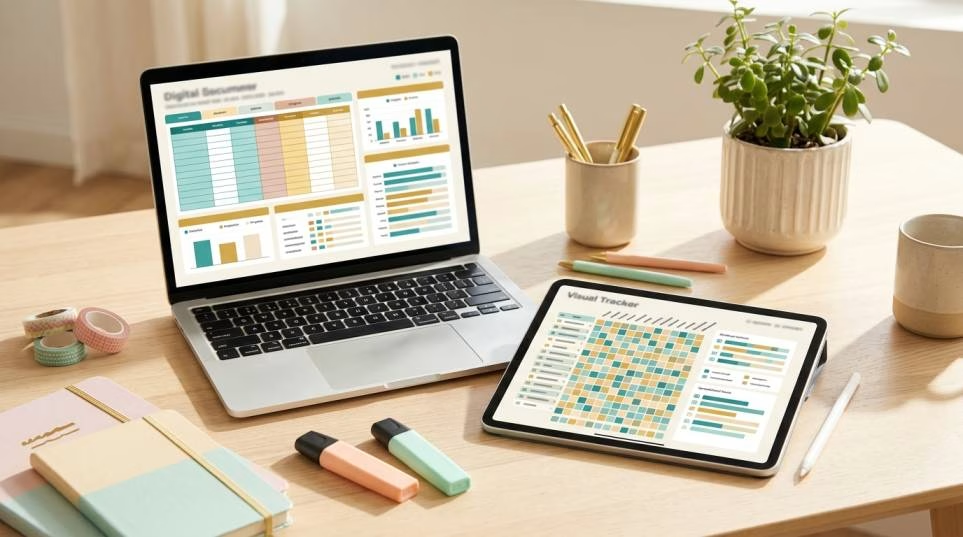
If you want to sell digital products online, you’re in luck. You create it once, and delivery is automatic. No shipping, no inventory, no garage full of boxes.
Product ideas: spreadsheet templates, budget planners, printable checklists, e-books, resume kits, social media templates, and Canva templates. If you plan to sell Canva templates, read Canva’s current rules about licensing and selling, and check the licenses on every font, image, and element you include.
Startup cost: $0 to $100. Free design tools work well. Marketplaces like Etsy charge listing and transaction fees, while storefronts like Gumroad or Payhip take a cut per sale.
Your starting plan:
- Find a problem people pay to fix. Search Etsy and Pinterest for what already sells. Demand proves someone wants it.
- Build a simple first version. Do not spend three months polishing. Make something useful, then improve it.
- Choose a storefront. A marketplace brings built-in traffic. Your own store gives you control and better margins.
- Price it fairly. Look at similar products, then test.
- Create a mini funnel. Offer a free checklist, collect emails, then sell your paid product.
The $200 math changes with price. I’m assuming about 10 percent in fees:
| Product Price | Net Per Sale (after fees) | Sales Needed Per Day for $200 |
| $15 | About $13.50 | About 15 |
| $29 | About $26.10 | About 8 |
| $79 | About $71.10 | About 3 |
See the lesson? A higher price means fewer customers. That’s why bundling and premium versions help.
Reality check: Competitors copy fast, refunds happen, and customers email questions. You can automate delivery, but you can’t automate quality.
3.4 Earn Royalties by Self-Publishing E-books
Want to sell e-books online without begging a publisher? Self-publishing lets you upload a book and earn self-publishing royalties every time someone buys it.
Startup cost: $0 to a few hundred dollars. Uploading is usually free. Paid editing and a professional cover cost extra, and I’d pay for a good cover even on a tight budget. People really do judge books by them.
Your starting plan:
- Pick a topic with a clear reader need. Nonfiction that solves a problem, like meal planning for busy parents, often sells more reliably than a vague memoir.
- Write, then edit. Edit twice. Typos kill reviews.
- Format and design. Use a formatting tool for a clean layout and get a cover that matches your genre.
- Choose a platform. Amazon KDP is the biggest option. Compare other stores too.
- Check royalties and pricing. KDP has offered a 70 percent royalty tier for e-books priced within a certain range and 35 percent outside it, but rules change, so read the current terms before you set your price.
- Promote through content you already have. Mention your book in blog posts, videos, and newsletters.
Follow each platform’s content rules, including any requirements about disclosing AI-generated material.
How it scales: Build a catalog. A reader who loves one book often buys the next. Ten decent books beat one perfect book almost every time.
The $200 math: Say you price a book at $4.99 and keep about $3.50 per sale. $200 a day needs around 57 sales a day. Across ten books, that’s under six sales per book daily. Raise the price to $9.99 and you cut the needed sales roughly in half.
Reality check: The market is crowded, and most books sell few copies. Reviews, covers, and clear topics matter a lot. Maintenance stays light, but promotion never fully stops.
3.5 YouTube Videos

Yes, with a big asterisk. Passive income on YouTube works because a good video can keep pulling views for years. Someone searching “how to fix a leaky faucet” in 2029 might still watch your 2026 tutorial. But you must make the videos first, and that takes real effort.
Startup cost: $0 to about $300. Your phone shoots decent video. A basic microphone helps more than a fancy camera, because viewers forgive average video far sooner than bad sound.
Your starting plan:
- Choose a niche and audience. Teach, explain, or entertain in a lane you can sustain.
- Plan evergreen videos. Tutorials, comparisons, and explainers outlast trending news.
- Publish consistently. Pick a schedule you can really keep.
- Study your analytics. Watch where viewers drop off and fix your next video.
- Add several income streams. Use ads, affiliate links in your descriptions, sponsorships, and your own products.
Monetization rules matter. YouTube sets eligibility requirements for its Partner Program, such as minimum subscriber and watch-time thresholds, and it updates them from time to time. Check YouTube’s current policies and watch for copyright issues.
The $200 math: Ad earnings per 1,000 views vary widely by niche and audience. At an illustrative $5 per 1,000 views, $200 a day needs about 40,000 views a day. At $10, you need about 20,000. Affiliate sales and sponsorships can cut that number sharply.
Reality check: Channel growth takes patience, and old videos can slow down. Policy changes can hit your revenue overnight. Content creation, channel growth, and audience engagement still demand real work. Treat YouTube as a long game and a great asset.
3.6 How Can You Create an Online Course That Generates Recurring Sales?
If you can teach something people want to learn, a course can pay you repeatedly. Sell online courses on a skill like Excel for beginners, photography basics, or resume writing, and each new student adds revenue without adding to your workload.
Startup cost: $0 to $500, plus platform costs. Course platforms like Teachable, Thinkific, and Kajabi offer different pricing, so compare them. Marketplaces like Udemy bring traffic but set their own pricing rules.
Your starting plan:
- Pick a teachable skill. Choose something you do well and can explain simply.
- Validate before you build. Survey your audience, run a waitlist, or presell a small version. If nobody raises a hand, don’t film 40 lessons.
- Build lessons, downloads, and exercises. Short videos plus worksheets beat long lectures.
- Pick a delivery platform.
- Promote. Use search content, email marketing, or an existing audience.
- Update and support. Refresh outdated lessons and answer student questions.
How it scales: Add advanced modules, bundles, and a membership.
The $200 math: Price a course at $197 and keep about $177 after fees. Reaching $6,083 a month takes about 34 sales monthly, a bit more than one a day. Price it at $97 and you need around 70 sales a month.
Reality check: Producing a good course takes weeks, and marketing is the hard part. You’ll answer questions, process refunds, and update content as your topic changes. Passive income from online courses exists, but it rewards people who keep improving. I’d call it semi-passive at best.
3.7 Print-on-Demand Business with Low Inventory Costs

Here’s the magic of the print-on-demand business: you list a design on a T-shirt, mug, or tote bag, and a provider prints and ships it only after someone orders. You buy no inventory, so you risk almost nothing upfront. That’s why print-on-demand passive income and passive income with little money show up in the same searches.
Startup cost: $0 to about $100, mostly for sample orders. Providers like Printful and Printify connect to stores like Etsy and Shopify, and some marketplaces like Redbubble handle printing and sales for you.
Your starting plan:
- Choose a product and a niche. “T-shirts” is a bad niche. “Funny shirts for pickleball players” is a good one.
- Design original artwork. Use your own work or hire a designer.
- Choose a provider and storefront.
- Order samples. Check the print quality and sizing yourself.
- Do the margin math. Add the product cost, shipping, platform fees, and ad costs, then price for profit.
Respect intellectual property. Do NOT use trademarked characters, brand logos, or song lyrics. Platforms remove those listings and can suspend your account.
How it scales: Add designs, products, and niches, and test ads on your winners.
The $200 math: If you profit $8 per item after all costs, $200 a day takes 25 sales a day, roughly 750 a month.
Reality check: Competition is fierce, margins run thin, and shipping delays create angry emails. You depend on a provider’s quality control, so customer service lands on you. It works best when you pick a tight niche and a design style people recognize.
3.8 Royalties from Stock Photos and Digital Assets
If you take decent photos or make illustrations, you can license them to buyers worldwide. Passive income from stock photos works because you upload an image once and earn each time a customer licenses it.
What you need: a camera or good smartphone, editing software, and patience. Your startup cost runs from nearly $0 with a phone to about $1,500 with a camera setup. Marketplaces like Shutterstock and Adobe Stock accept contributor submissions, and each sets its own standards.
Your starting plan:
- Study what sells. Business scenes, food, travel, tech, and clean backgrounds often do well. Browse current top sellers.
- Shoot or create commercially useful work. Think about what a marketer needs for a blog header.
- Edit carefully. Sharp focus, clean lighting, and no logos.
- Get releases. Photos of recognizable people or private property usually need signed releases.
- Write good titles and keywords. Buyers find you through search.
- Read the licensing terms. Earn royalties online only after you understand what each platform pays and allows.
How it scales: Catalog size. Hundreds of images won’t move the needle, and thousands might. Add video clips, vectors, and templates.
The $200 math: Per-license earnings range from a few cents to a couple of dollars, depending on the platform and license type. At an illustrative $0.60 average, $200 a day takes roughly 330 licenses a day. Very few contributors reach that.
Reality check: Earnings vary with demand, competition, licensing activity, and portfolio size. I’d treat stock assets as a small layer in your stack, not the whole cake. Follow each platform’s rules on AI-generated content too.
3.9 Dividend Stocks and Funds
Dividend income for beginners starts with one simple idea. When you own shares of a company that shares profits, the company can send you cash. Those payments are dividends, and eligible shareholders receive them, usually quarterly.
You can buy dividend-paying stocks individually or choose dividend-focused funds that hold many companies. Funds give you instant diversification, which lowers the damage if one company stumbles.
Startup cost: Many brokerages let you start with small amounts, including fractional shares. But earning serious income takes serious capital.
Know these terms:
- Dividend yield: annual dividends divided by share price.
- Expense ratio: the yearly fee a fund charges. Lower is usually better.
- Reinvestment: using dividends to buy more shares, so your income compounds.
Your starting plan:
- Open a brokerage account at a reputable provider.
- Build an emergency fund first.
- Choose diversified funds or a handful of stocks you understand.
- Invest regularly, even small amounts.
- Reinvest dividends until you need the income.
The $200 math is sobering. Earning $73,000 a year from dividends takes:
| Dividend Yield | Capital Needed |
| 2% | About $3.65 million |
| 3% | About $2.43 million |
| 4% | About $1.83 million |
| 5% | About $1.46 million |
At a 4 percent yield, $10,000 pays about $400 a year, roughly $1.10 a day. That’s a coffee. Dividends work best as one slice of your $200.
Clearly, investments can lose value. Companies can cut or suspend dividends, and share prices can fall. A higher yield does not mean a better or safer investment. Sometimes it signals trouble. I’m not a financial advisor, so talk to a licensed one before you invest.

3.10 Real Estate Investments
Real estate gives you two main roads. Direct rental ownership means you buy a property and collect rent. REITs (real estate investment trusts) are companies that own income-producing property, and you buy shares like a stock.
Rental income sounds great until you list the expenses. Look at this illustrative monthly example:
| Item | Amount |
| Rent collected | $1,800 |
| Mortgage, property tax, insurance | -$1,350 |
| Maintenance reserve | -$150 |
| Vacancy reserve | -$100 |
| Property management (about 8%) | -$144 |
| Net cash flow | About $56 |
Yes, $56. Financing, insurance, taxes, repairs, and management can eat most of the rent. Better deals exist, but you need to run the numbers on every property. To reach $6,083 a month at an assumed $500 net per property, you’d need about 12 properties.
Capital needed: A 20 percent down payment on a $300,000 home is $60,000, before closing costs and repairs. Property is also illiquid, meaning you can’t sell it in a day.
REITs lower the barrier. Publicly traded REITs let you start with a small amount, trade easily, and skip the landlord calls. U.S. REITs must pay out most of their taxable income as dividends, which is why their yields often look attractive. Their dividends can fall, share prices can drop, and the tax treatment can differ from regular stock dividends.
Your starting plan:
- Decide whether you want a landlord’s job or just exposure to real estate.
- Save for a down payment or start with a diversified REIT fund.
- Study fees, financing costs, and local rules.
- Start small and learn.
Neither property ownership nor REIT investing guarantees a particular income. Markets, rates, and tenants all move. Talk to a tax professional before you buy.
4. Which Passive Income Ideas Can You Start With Little or No Money?
Empty bank account? You still have options. Cash is only one of the two currencies in this game. Time and skills are the other.
4.1 What Are the Best Low-Cost Passive Income Ideas for Beginners?
The best passive income ideas with no money trade your time for cash you don’t have. Here’s how the main low-cost options compare:
| Idea | Mostly Costs You | Cash Needed |
| Affiliate marketing | Time and content | Very low |
| Blog (on an existing site or low-cost host) | Time and writing | Low |
| Digital products | Skills and design time | Very low |
| E-books | Writing and editing time | Low |
| Stock assets | Time and a decent phone or camera | Low |
The money-heavy methods, like dividends and real estate, sit in a different bucket. They ask for cash first and effort second. If your wallet is thin today, start with the time-heavy group and build capital from there. Many readers search passive income ideas with little money for exactly this reason.
4.2 How Can You Start Earning Passive Income With Skills You Already Have?
You probably own skills you undervalue. Here are some translations:
- Writing: e-books, blog posts, email courses
- Design: templates, printables, print-on-demand art
- Spreadsheets: budget trackers, project planners, small business templates
- Teaching: mini-courses and study guides
- Photography: stock photos and presets
- Professional expertise: a nurse writes a study guide, an accountant builds a freelancer tax tracker, a teacher creates lesson packs
The trick is to create once and sell or license repeatedly. Start by listing three problems you solve at work or at home. Pick the one people would pay to fix, then package your solution into a reusable asset. If you answer the same question for friends three times, that’s a product idea.
4.3 What Tools Can Help You Build Passive Income on a Budget?
You don’t need fancy software on day one. Try these free or entry-level options:
- Design: Canva’s free tier covers many beginner needs.
- Documents and spreadsheets: Google Docs and Sheets cost nothing.
- Website: A low-cost host plus WordPress keeps you in control.
- Email marketing: Many email platforms offer free plans while your list stays small.
- Selling: Storefronts like Gumroad and Payhip let you start without a monthly fee, though they take a cut per sale.
- Research: Google Trends and search autocomplete show you what people want.
Upgrade only when a tool clearly pays for itself. If a $30 monthly subscription saves you five hours and helps you earn $300, buy it. If you can’t name the benefit, skip it. Test demand before you take on subscriptions. I’ve seen many beginners buy a whole toolbox before they’ve sold a single thing.
4.4 Which Passive Income Ideas Are Best If You Work Full-Time?
Your time is your scarcest resource, so match the method to your schedule. These are rough comparisons:
| Method | Time Demand Early | Time Demand Later |
| Content creation (blog, YouTube) | High | Medium |
| Digital products | Medium to high | Low |
| Affiliate marketing | Medium to high | Medium |
| Investing | Low | Very low |
Here’s a manageable week of about six hours:
- Monday, Wednesday, Friday: 45 minutes of creating or writing
- Saturday: two focused hours of building or publishing
- Sunday: 30 minutes to review numbers and plan the week
Choose one model first. Chasing every opportunity at once guarantees half-finished projects. If you want to make $200 a day online while working full-time, depth beats breadth. Master one stream, then add the next. Passive income ideas from home work best when you protect your focus time like a meeting with your boss.
5. How Can You Build a Passive Income Stream Step by Step?

A list of ideas is fun. A framework gets you paid. Use the steps below to turn curiosity into action.
5.1 How Do You Choose the Right Passive Income Idea?
Score each idea from 1 to 5 on these seven questions, then add them up:
| Question | What to Ask Yourself |
| Startup capital | Can I afford the upfront cost? |
| Skills and experience | Do I already know how to do this? |
| Weekly time | Can I give it the hours it needs? |
| Audience and demand | Do real people want this? |
| Competition | Can I stand out? |
| Income uncertainty | Can I handle slow or uneven earnings? |
| Maintenance and risk | Am I comfortable with the ongoing work and possible losses? |
The idea with the best total, not the shiniest headline, usually wins. And be honest. If you hate writing, a blog might fail, no matter how well it pays someone else.
5.2 How Do You Validate an Income Idea Before Investing Money?
Test the idea cheaply before you build the expensive version.
- Research competitors. Look at what exists, what it costs, and what buyers complain about in reviews.
- Listen to your audience. Browse Reddit, Facebook groups, and forums. Note the questions people ask again and again.
- Check search terms. Search tools show whether people look for your topic.
- Run a small test. Publish one article, make one video, sell a $9 mini product, or open a waitlist.
- Measure. Track clicks, email signups, and sales.
Set a rule before you test. For example: “If 20 people buy or join the waitlist within 30 days, I build the full version.” That rule saves you from falling in love with a dud.
5.3 How Do You Automate and Scale a Passive Income Business?
Automation takes boring tasks off your plate. It never removes you from the business.
- Email automation: A welcome sequence sells while you sleep.
- Order delivery: Your storefront sends files instantly.
- Scheduling: Queue posts and videos ahead of time.
- Customer support: Write an FAQ page and templates for common emails.
- Documentation: Write down your repeatable steps so you can hand them to a freelancer later.
Reinvest selectively. If a $50 ad brings back $120, spend more. If a tool saves you an hour a week, keep it. Automation reduces certain tasks, but you still answer to your customers, your numbers, and the law.
5.4 How Do You Measure Whether Your Passive Income Is Profitable?
Build a simple spreadsheet with these columns each month: revenue, expenses, net profit, and hours worked.
Then calculate a few helpful numbers:
- Net profit = revenue minus expenses
- Hourly rate = net profit divided by hours invested
- Revenue per visitor = revenue divided by visitors
- Cost per subscriber = ad spend divided by new subscribers
Say your digital product makes $600 profit in a month after 20 hours of work. That’s $30 an hour. Not bad. Review your results monthly, and give each idea a fair trial, maybe 90 days. If it loses money and shows no sign of improving, stop. Quitting a bad project isn’t failure. It’s good management.
6. What Mistakes Should You Avoid When Building Passive Income?
I’d rather you learn from other people’s bruises. Here are the big ones.
6.1 Why Should You Be Cautious of Claims Promising Effortless Income?

Watch for these red flags:
- Guaranteed income amounts
- “No work, no skills, no risk”
- Screenshots of earnings with no proof
- Pressure to buy NOW before the offer disappears
- Vague details about how the money actually arrives
Results differ hugely between people and business models. The ones who succeed rarely call it effortless. If a pitch sounds too easy, ask what the seller earns from you. That question exposes a lot of nonsense.
6.2 Why Is Relying on Only One Income Stream Risky?
Imagine your whole income comes from one YouTube channel, and YouTube changes its rules. Or your blog depends on one search ranking, and an algorithm update drops your traffic. This is platform dependence, and it bites hard.
Customer demand changes too. A hot product today can fade next year.
So diversify, but at the right time. Build your first stream until it earns steadily, then add a second. Also own your audience by collecting emails, so you can reach people if a platform disappears.
6.3 What Hidden Costs Can Reduce Passive Income?
Costs sneak in quietly:
- Software and tool subscriptions
- Advertising spend
- Platform and payment fees
- Refunds and chargebacks
- Maintenance and updates
- Taxes
Always calculate net profit, not headline revenue. A product that sells for $50 but costs $38 after fees, ads, and refunds earns you $12. That might be fine, or it might not be. You can’t tell until you do the math.
6.4 How Can You Avoid Copyright, Disclosure, and Compliance Problems?
Stay out of trouble with these habits:
- Respect intellectual property. Use your own work or properly licensed assets. Check licenses on fonts, images, and music.
- Disclose affiliate relationships. In the US, the FTC expects clear disclosure.
- Follow platform rules. Read the current policies for each marketplace, store, and video platform.
- Handle taxes. Keep records of income and expenses, and ask whether you owe estimated quarterly payments.
Every situation differs. Hire a tax professional or attorney when your circumstances get complicated. That fee costs far less than a penalty.
7. Frequently Asked Questions About Making $200 a Day in Passive Income
7.1 Is it possible to make $200 a day in passive income?
Yes, for some people, but not quickly and not guaranteed. Most who reach it stack several streams. See Section 3 for ideas and Section 5 for a plan.
7.2 What is the easiest passive income idea for beginners?
I’d pick digital products if you have a useful skill, since sales can start within weeks. Affiliate marketing costs less to launch but usually takes longer to pay. See Sections 3.1 and 3.3.
7.3 Can I start making passive income with no money?
Yes. Time-based methods like affiliate marketing, digital products, and YouTube need little cash. You pay with effort instead. See Section 4.
7.4 How much money do I need to earn $200 a day passively?
It depends on the method. With dividends alone at yields from 2 to 5 percent, you’d need roughly $1.46 million to $3.65 million. Business models need less money but more time. See Section 3.9.
7.5 How long does it take to build passive income?
Digital products can sell within weeks. Blogs and YouTube channels often take many months or more than a year. Dividends start fast but pay small at first. See Section 2.4.
7.6 Can I make $200 a day online while working full-time?
Possibly, over time. Try about six focused hours a week on one idea. Don’t chase several at once. See Section 4.4.
7.7 Which passive income streams can generate daily sales?
Digital products, print-on-demand, e-books, courses, and affiliate content can all sell daily once traffic flows. Dividends pay on a schedule, usually quarterly, not daily.
7.8 Can blogging generate $200 a day?
Yes, but it takes serious traffic. Ads alone might need around 300,000 monthly sessions, though affiliate income and products lower that. See Section 3.2.
7.9 Can affiliate marketing generate income while I sleep?
Yes, once your content ranks and your links sit in the right places. But you must build and update that content first. See Section 3.1.
7.10 Are digital products a good source of passive income?
They’re one of the best, thanks to low costs and high margins. You still need demand, quality, and customer support. See Section 3.3.
7.11 Is dividend income a reliable way to earn passive income?
It can be steady, but it isn’t guaranteed. Companies cut dividends, and prices can fall. Diversified funds reduce single-company risk. See Section 3.9.
7.12 How much is $200 a day per month and per year?
About $6,000 for a 30-day month (or $6,083 on a yearly average), $1,400 a week, and $73,000 a year. See Section 2.3.
8. Conclusion: Which Passive Income Idea Will You Start With?
You’ve now seen ten ways to build toward $200 a day: affiliate marketing, blogging, digital products, e-books, YouTube, online courses, print-on-demand, stock assets, dividends, and real estate. Some ask for your time. Others ask for your cash. Almost all ask for patience.
Earning $200 a day is a target, not a promise. Your skills, your schedule, your starting capital, and your comfort with risk will shape the road you take. Nobody can hand you a guaranteed result, and anyone who tries deserves your suspicion.

So here’s your move. Pick ONE idea. Validate demand with a small test. Start small, measure what happens, and fix what breaks. Dependable income usually comes from patience, smart reinvestment, and steady improvement, not from a lucky weekend.
You don’t need to feel ready. You need to start. A single $9 sale tells you the machine can run, and you can build the rest around that sound.
So tell me: which income stream will you explore first? Drop your pick in the comments, and let’s get you moving.