
Ultimate Guide to Making Money Online in 2026: 15 Proven Methods for Beginners
You’re sitting at your desk, doing the same job for the third year in a row — same pay, same hours, same ceiling. Meanwhile, people just like you are quietly building real income streams from their laptops, on their own schedules. What’s the difference? They took the first step.
The good news is that 2026 might be the best time in history to start making money online. Remote work is now mainstream, AI tools have leveled the playing field, and online platforms are more beginner-friendly than ever. You don’t need a degree, a big budget, or years of experience — you just need the right roadmap.
The opportunity is real. The only question is whether you’re ready to reach for it.
In this guide, you’ll discover 15 proven, beginner-friendly methods to make money online — from freelancing and affiliate marketing to selling digital products and leveraging AI. For each method, you’ll get clear steps, the best tools to use, and honest expectations about what it takes to start earning.
Whether you’re looking for a flexible side hustle or a full-time income from home, this guide gives you everything you need to find the path that actually fits your life — and start moving down it.
1. Why Making Money Online in 2026 Is Realistic (and Not a Scam)
Let’s get one thing straight — making money online is not a myth. It’s not reserved for tech geniuses or social media celebrities. Millions of everyday people are doing it right now, and the conditions in 2026 make it more achievable than ever before.
The Landscape Has Changed
Three major shifts have opened the door for beginners:
- Remote work is mainstream. Companies across every industry now hire remotely, creating a massive demand for online workers and freelancers.
- AI tools have leveled the playing field. You no longer need advanced skills to produce professional-quality content, designs, or code. Tools like AI writing assistants and Canva put expert-level output within anyone’s reach.
- Gig platforms have exploded. Upwork, Fiverr, Etsy, and dozens of other platforms connect sellers directly to buyers — no middleman, no storefront required.
Who Can Actually Benefit?
Almost anyone. Here’s a quick breakdown:
| Who You Are | How You Can Start |
| Student | Freelance writing, tutoring, social media management |
| Stay-at-home parent | Sell digital products, affiliate marketing, online courses |
| Part-time worker | Supplement income with side hustles or print-on-demand |
| Career changer | Use existing skills to freelance or consult remotely |
| Complete beginner | Surveys, micro-tasks, or UGC content creation |
How to Spot Legit Opportunities vs. Scams
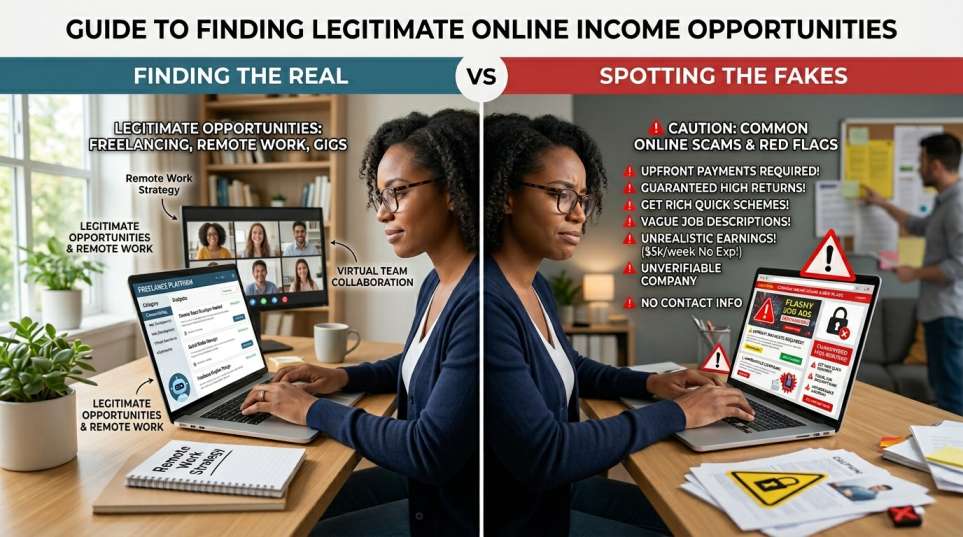
Not everything online is trustworthy — and that’s the honest truth. Here’s how to protect yourself:
Red flags to watch for:
- Promises of fast, guaranteed income with no effort
- Requests for upfront payment to “unlock” earnings
- Vague explanations of how you actually make money
- No verifiable reviews or company information
Green flags that signal legitimacy:
- Clear explanation of the business model
- Transparent payment terms and withdrawal options
- Verifiable user reviews on third-party sites
- Free to start, or a low-cost, clearly justified investment
Pro Tip: Always Google the platform name + “review” or “scam” before signing up. Stick to well-known platforms like Upwork, Fiverr, Shopify, and Etsy — especially as a beginner.
2. How to Choose the Right Online Income Method for You
With so many options available, the biggest mistake beginners make is trying everything at once. Focus beats variety every time. Here’s how to find your best starting point.
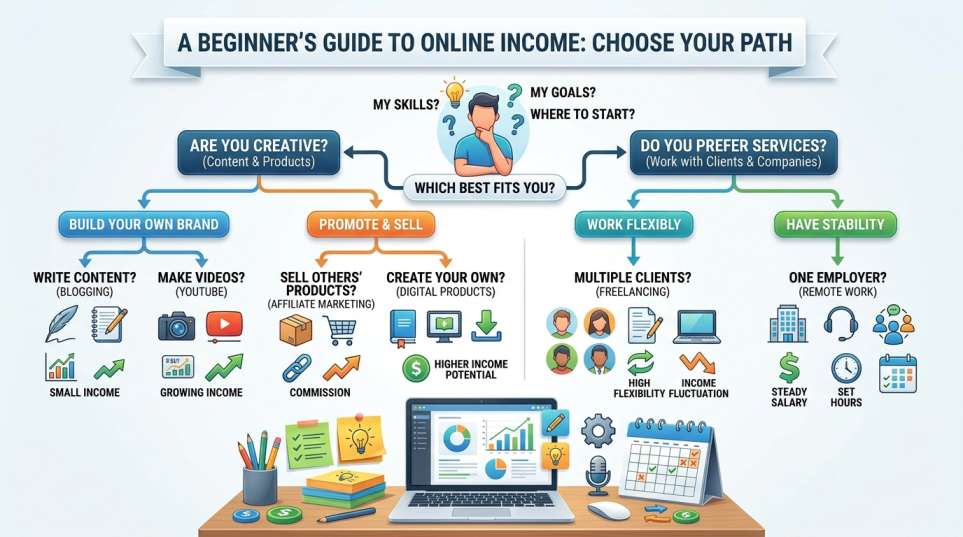
Ask Yourself Two Core Questions
1. How much time can you realistically commit?
- Less than 5 hours/week → Surveys, cashback apps, micro-tasks
- 5–15 hours/week → Freelancing, affiliate marketing, blogging
- 15+ hours/week → Online courses, building an e-commerce store, YouTube
2. What skills do you already have — or can quickly learn? You don’t need to be an expert. You need a 1–2 skill advantage over the average person. Writing, design, teaching, video editing, customer service — any of these can become income online.
Two Types of Online Income
Understanding this distinction will shape your entire strategy.
Active Income — You work, you get paid. Stop working, income stops.
- Examples: freelancing, virtual assistance, social media management
- Best for: fast results, immediate cash flow
- Time to first income: days to weeks
Passive Income — You build once, earn repeatedly.
- Examples: blogging with affiliate links, digital products on Etsy, online courses on Teachable
- Best for: long-term, scalable income
- Time to first income: 1–6 months
Pro Tip: Start with active income to build cash flow and confidence. Then use those earnings to invest time into building passive income streams.
Most successful online earners combine both — a freelance gig that pays the bills while a blog or digital product grows quietly in the background.
Ready to dive in?
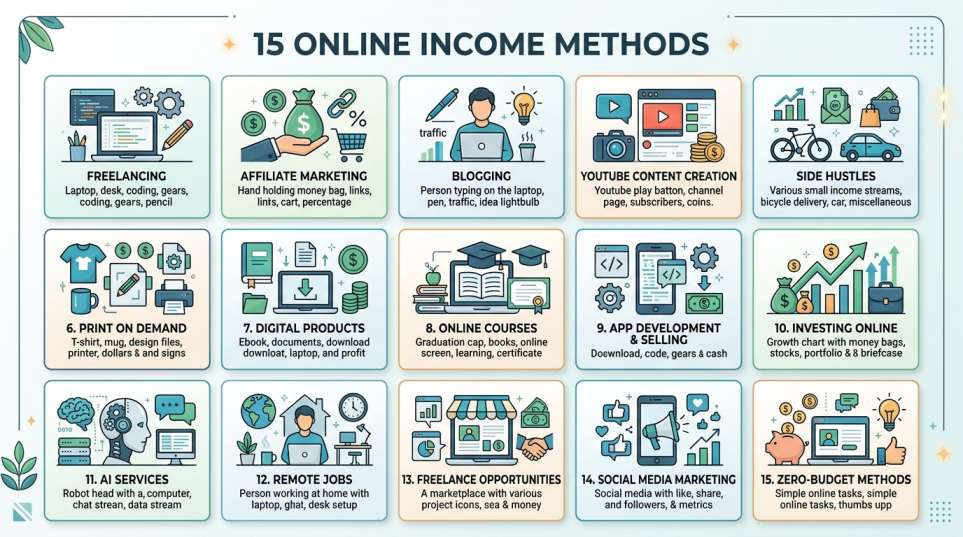
3. 15 Proven Ways to Make Money Online in 2026 (Beginner‑Friendly)
You don’t need to reinvent the wheel. Every method in this list has been tested by real people — many of whom started with zero experience. Work through them, pick what fits your skills and schedule, and take action.
3.1 Freelance Jobs Online in 2026
Freelancing is one of the fastest ways to earn real money online. You offer a skill, someone pays for it. Simple.
Types of freelance work you can start today:
- Writing & copywriting — blog posts, product descriptions, email campaigns
- Graphic design — logos, social media graphics, brand kits
- Programming — web development, app builds, automation scripts
- Virtual assistance — email management, scheduling, data entry, research
Best platforms to get started:
| Platform | Best For | Level |
| Fiverr | Selling packaged services at fixed prices | Beginner |
| Upwork | Applying to client job postings | Beginner–Intermediate |
| Toptal | High-ticket, vetted professional projects | Advanced |
Start with Fiverr or Upwork — both are free to join and beginner-accessible.
How to land your first client:
- Choose one service — don’t offer everything at once
- Write a clear, benefit-focused profile headline
- Add a portfolio — even mock projects or personal work count
- Start with a competitive rate to build reviews, then raise your prices
- Apply to 5–10 jobs daily on Upwork or create 2–3 Fiverr gigs
Pro Tip: Your first goal isn’t maximum pay — it’s your first 5-star review. That review unlocks better clients and higher rates faster than anything else.

3.2 Affiliate Marketing for Beginners in 2026
Affiliate marketing lets you earn a commission by promoting other people’s products. No product creation. No inventory. No customer service.
Here’s how it works in plain terms:
- You join an affiliate program (free)
- You get a unique tracking link
- Someone clicks your link and buys
- You earn a commission — typically 5%–50% depending on the product
Best niches for affiliate income:
| Niche | Why It Works |
| Finance | High commissions, massive search demand |
| Health & Wellness | Evergreen topic, wide product range |
| Tech & Software | Recurring SaaS commissions can compound fast |
| Lifestyle & Home | Easy to create relatable content around |
Tools that make affiliate marketing easier:
- ThirstyAffiliates — manages and cloaks your affiliate links inside WordPress
- ClickMeter — tracks clicks and conversions across all your links
- ClickFunnels / Kajabi — build landing pages and sales funnels to boost conversions
You don’t need a website to start — a YouTube channel, Pinterest account, or email list works too. But a blog gives you the most long-term leverage.
Pro Tip: Focus on one niche and one traffic source first. Spreading across five platforms too early kills momentum. Master one, then scale.
3.3 Make Money Blogging in 2026
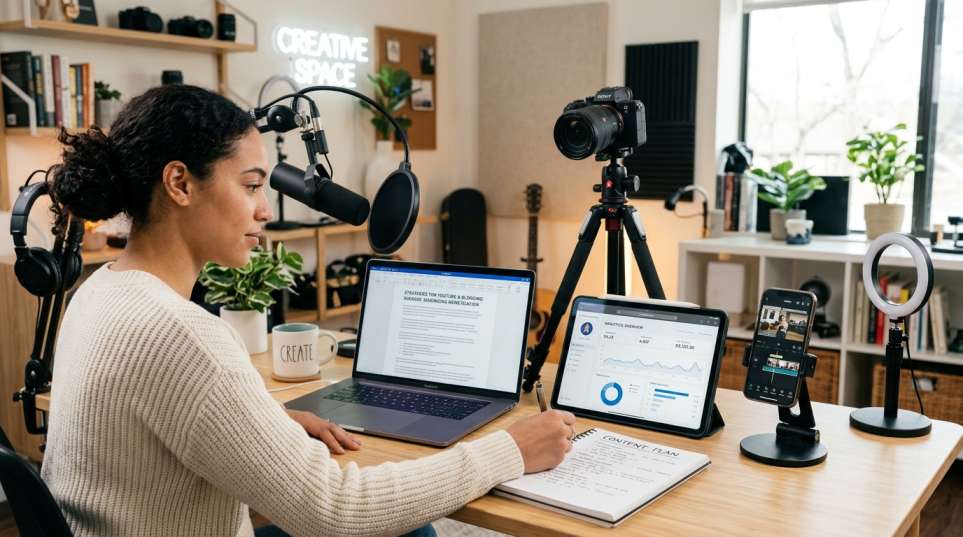
Blogging still works — but only if you treat it like a business, not a hobby. Done right, a blog becomes a passive income engine that earns while you sleep.
How blogs generate income:
- Display ads — Google AdSense pays you based on traffic volume
- Affiliate links — earn commissions from products you recommend
- Digital products — sell eBooks, templates, or courses directly to your audience
Step-by-step: Launch your blog the right way
- Choose a niche — pick a topic you know and that people actively search for
- Get hosting — Hostinger or Bluehost are affordable and beginner-friendly (from ~$3/month)
- Install WordPress — free, powerful, and the industry standard for bloggers
- Add Elementor — drag-and-drop page builder; no coding needed
- Create content — publish SEO-optimized posts consistently (aim for 2–4/month to start)
- Monetize — apply for AdSense once you hit consistent traffic; add affiliate links from day one
Realistic timeline:
- Months 1–3: Build content, gain indexing
- Months 4–6: Traffic grows, first affiliate commissions
- Months 6–12: Ad revenue kicks in as traffic scales
Pro Tip: Don’t chase viral topics early on. Target long-tail keywords with low competition — they rank faster and bring in readers who are ready to act.
3.4 YouTube Monetization in 2026
YouTube remains one of the most powerful income platforms online — and in 2026, there are more ways than ever to get paid as a creator.
What you need to qualify for monetization:
| Program | Requirement |
| YouTube Partner Program | 1,000 subscribers + 4,000 watch hours (last 12 months) |
| YouTube Shorts Fund | 1,000 subscribers + 10M Shorts views (last 90 days) |
| Channel Memberships | 500 subscribers (lower threshold since 2023 updates) |
Content ideas that work for beginners:
- Tutorials — teach a skill you already know (Excel, cooking, fitness, budgeting)
- Product reviews — pair with affiliate links for double income
- Faceless content — voiceover + screen recordings or stock footage; no camera required
- Listicle videos — “Top 10” formats perform consistently well in search
How to grow faster with Shorts and cross-promotion:
- Post 3–5 YouTube Shorts per week alongside your long-form videos
- Repurpose your Shorts directly to TikTok and Instagram Reels
- Each platform feeds the others — one video, three audiences
- Use your Shorts to tease long-form content and drive subscribers
Pro Tip: Faceless YouTube channels are booming in 2026. Use AI voiceover tools to narrate scripts and Canva to create visuals — no on-camera presence needed, and no expensive equipment required to start.

3.5 Online Side Hustles in 2026
You don’t have to quit your job to start making money online. The right side hustle fits around your existing schedule and builds income steadily in the background.
Three high-demand side hustles right now:
Remote Tutoring
- Platforms: Tutor.com, Wyzant, Preply
- You can teach academic subjects, languages, music, or test prep
- Rates range from $15–$80/hour depending on subject and experience
- Flexible hours — sessions can be scheduled around your job
Graphic Design Freelancing
- Tools like Canva have made design accessible to non-designers
- Offer services like social media graphics, logos, or presentation design
- Start on Fiverr with 2–3 packaged gigs at competitive rates
- Build a small portfolio using free or personal projects first
UGC (User-Generated Content) for Brands
- Brands pay creators to film short, authentic product videos
- You don’t need a big following — UGC is about content quality, not audience size
- Rates typically range from $100–$500 per video for beginners
- Find opportunities on platforms like Billo, JoinBrands, or by pitching brands directly
How to manage a side hustle without burning out:
- Block 1–2 dedicated hours per day — consistency beats long irregular sessions
- Start with just one hustle and master it before adding another
- Use Notion to track clients, deadlines, and income goals
- Set a 90-day income target to stay motivated and measure progress
Pro Tip: UGC is one of the fastest-growing income opportunities in 2026. Brands of all sizes need it, and you can start with just a smartphone and good lighting.
3.6 Print on Demand in 2026
Print on demand (POD) lets you sell custom-designed products — t-shirts, mugs, tote bags, phone cases — without holding a single item in stock. When someone orders, the supplier prints and ships it for you.
How the model works:
- You create a design → upload it to a POD platform → list it for sale
- A customer orders → the platform prints and ships directly to them
- You keep the profit margin between your sale price and the base cost
Best platforms to use:
| Platform | Best For |
| Printful | Integrates seamlessly with Shopify and Etsy |
| Shopify | Building your own branded store with full control |
| Etsy | Built-in marketplace traffic — great for beginners |
Step-by-step launch plan:
- Use Canva to create 5–10 simple niche designs
- Open a free Printful account and connect it to Etsy
- Upload designs and set your prices (aim for 30–40% margin)
- Post product mockups consistently on Pinterest and Instagram
- Use trending hashtags and seasonal themes to drive early traffic
Pro Tip: Niche-specific designs outperform generic ones every time. Instead of “funny t-shirts,” go for “funny nurse t-shirts” or “cat mom gifts.” Smaller audience, far less competition, much higher conversions.
3.7 Sell Digital Products Online
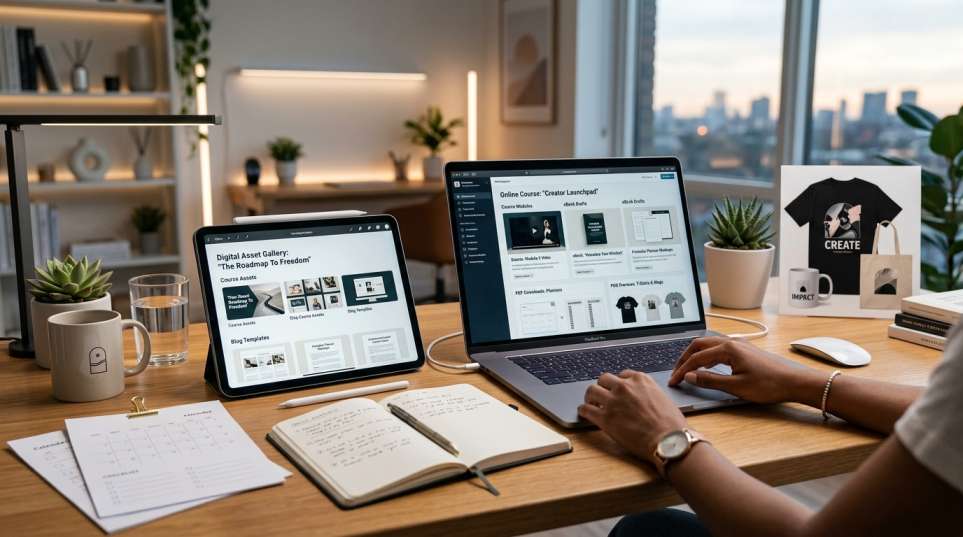
Digital products are one of the smartest income streams available — you create them once and sell them indefinitely with zero inventory and near-zero overhead.
Types of digital products that sell well:
- eBooks — guides, how-tos, niche expertise in PDF format
- Templates — Canva graphics, resume templates, spreadsheet trackers
- Printables — planners, journals, worksheets, wall art
- Mini-courses — short, focused video lessons on a specific skill
Best platforms to sell on:
| Platform | Best For | Fee Structure |
| Etsy | Printables and templates with built-in traffic | Listing + transaction fees |
| Gumroad | Simple digital downloads, no store setup needed | Free plan available |
| Teachable | Courses and coaching products | Monthly subscription |
| Udemy | Courses with marketplace exposure | Revenue share model |
How to validate your idea before building it:
- Search your product idea on Etsy — if others are selling it successfully, demand exists
- Post a poll or question in a relevant Facebook group or Reddit community
- Create a simple landing page and run a small ad to test interest
- Pre-sell the product before it’s finished — if people pay, build it
Pro Tip: Don’t wait for perfection. A simple, well-targeted Canva template that solves one specific problem will outsell a complex product aimed at everyone.

3.8 Online Courses in 2026
If you know something others want to learn, you can package that knowledge into a course and sell it repeatedly. Teaching online is one of the highest-margin income models available.
You don’t need to be a world-class expert. You just need to be a few steps ahead of your student. Topics that sell consistently include Excel, coding basics, fitness, photography, parenting strategies, and personal finance.
Hosting platform comparison:
| Platform | Best For | Pricing Model |
| Udemy | Reaching a large built-in audience fast | Revenue share (you keep 37–97%) |
| Teachable | Full control over branding and pricing | Monthly plans from ~$39/month |
| Kajabi | All-in-one: courses, email, and sales funnels | Premium (~$89+/month) |
How to price your course:
- Beginner course (1–2 hours): $27–$97
- Intermediate course (3–5 hours): $97–$297
- Premium course with community: $297–$997+
Start lower to gather reviews and testimonials, then raise the price as social proof builds.
How to promote it without a big audience:
- Share free value on YouTube or TikTok that leads into your course
- Build an email list using Mailchimp — even 200 subscribers can generate first sales
- Partner with bloggers or influencers in your niche for affiliate promotion
Pro Tip: Record a free “mini-lesson” and post it on YouTube. Link your full course in the description. Warm traffic from people who already trust your teaching converts far better than cold ads.
3.9 Passive Income Apps in 2026
Not every income method requires building something from scratch. Passive income apps let you earn with minimal effort — answering surveys, completing micro-tasks, or getting cashback on purchases you’re already making.
Popular apps worth using (US users):
| App | How You Earn | Realistic Monthly Earnings |
| Swagbucks | Surveys, videos, shopping cashback | $20–$50 |
| InboxDollars | Surveys, reading emails, offers | $15–$40 |
| Rakuten | Cashback on online purchases | Varies by spending |
| UserTesting | Provide feedback on websites/apps | $10 per 20-min test |
| Respondent | In-depth research studies | $50–$200 per study |
Honest pros and cons:
Pros:
- Extremely low barrier to entry — anyone can start today
- No skills required
- Flexible — do it during downtime, commutes, or lunch breaks
Cons:
- Income ceiling is low — rarely exceeds $200/month
- Time-per-dollar ratio is poor compared to freelancing or affiliate marketing
- Not scalable
The bottom line: Apps are best used as a supplemental income layer, not a primary strategy. Use them to generate small amounts of cash while you build a more scalable income stream in parallel.
Pro Tip: Respondent.io pays significantly more than standard survey apps because studies are more in-depth. If you qualify for studies in your professional field, the hourly rate can rival entry-level freelancing.
3.10 High-Yield Savings & Passive Income Investing
Investing isn’t just for the wealthy. With the right tools, even a small amount of money can start generating a quiet, steady income stream — one that grows while you focus on everything else.
Four beginner-friendly investment vehicles:
| Option | What It Is | Risk Level | Realistic Return |
| High-Yield Savings Account | Earns higher interest than standard savings | Very Low | 4–5% APY (2026 rates) |
| CDs (Certificates of Deposit) | Fixed interest over a set term | Very Low | 4–5.5% APY |
| ETFs (Exchange-Traded Funds) | Diversified basket of stocks, traded like shares | Medium | 7–10% avg. annually |
| Dividend Stocks | Stocks that pay regular cash dividends | Medium | 3–6% dividend yield |
Platforms to get started:
- Fidelity — excellent for beginners; zero-commission trades, strong educational tools
- Vanguard — best for long-term ETF investing and retirement accounts
- Robinhood — simple interface, great for casual stock and ETF buying
How to build a small but steady income stream:
- Open a high-yield savings account — park your emergency fund here first
- Once you have $500–$1,000 saved, open a brokerage account on Fidelity or Vanguard
- Invest consistently in a broad ETF like VTI or VOO — even $50/month compounds over time
- Add dividend stocks gradually as your confidence grows
Pro Tip: Don’t chase high returns early. A boring 4.5% APY in a high-yield savings account beats a risky investment that wipes out your starting capital. Build the habit first, then scale.

3.11 Make Money with AI in 2026
AI hasn’t replaced online workers — it’s supercharged them. In 2026, the people earning the most online aren’t fighting AI. They’re using it to work faster, deliver better results, and take on more clients.
Four income areas where AI gives you a serious edge:
- Writing — Use AI writing assistants to draft blog posts, emails, and ad copy at 3x the speed
- Video — AI tools generate scripts, auto-edit footage, and even create voiceovers
- Design — AI-powered design platforms produce graphics, logos, and social content in minutes
- Coding — AI coding assistants help non-developers build basic apps, automations, and websites
High-value AI-powered services you can offer on Fiverr or Upwork:
| Service | What You Offer | Beginner Rate |
| AI blog writing | SEO articles written and edited with AI assistance | $50–$150/article |
| AI voiceover production | Realistic voiceovers for videos and podcasts | $30–$100/project |
| AI graphic design | Social media packs, ad creatives, brand kits | $50–$200/package |
| AI video editing | Short-form content creation with AI tools | $75–$250/video |
How to position yourself:
- Don’t hide that you use AI — frame it as “AI-assisted” work that delivers faster turnaround
- Focus on quality control — clients pay for clean, polished output, not raw AI drafts
- Build a small portfolio of AI-produced samples before pitching clients
Pro Tip: The highest-earning AI freelancers in 2026 combine AI speed with human judgment. Learn to prompt well, edit critically, and deliver consistently — that combination is genuinely hard to outsource.
3.12 Work from Home Jobs in 2026

Remote jobs offer the stability of a paycheck without the commute. If you want guaranteed income while building other online streams, a full-time remote role is a smart foundation.
Remote roles vs. side hustles — key differences:
| Remote Job | Side Hustle | |
| Income | Stable, predictable | Variable, grows over time |
| Time commitment | Full-time (40 hrs/week) | Flexible (5–20 hrs/week) |
| Benefits | Often includes health, PTO | None |
| Ceiling | Limited by salary | Unlimited |
In-demand remote roles hiring right now:
- Customer support specialist
- Remote sales representative
- Virtual project manager
- Technical support agent
- Online data analyst
How to position yourself for remote work:
- Update your resume — lead with remote-friendly skills: communication, self-management, Zoom, Slack, Notion
- Optimize your LinkedIn — add “Open to Remote Work” in your profile headline
- Target remote-first companies — search on LinkedIn, We Work Remotely, and Remote.co
- Prepare your home setup — reliable internet, a quiet space, and a decent webcam signal professionalism instantly
Pro Tip: When applying for remote roles, mention specific tools you’ve used — Slack, Notion, Asana, Google Workspace. Remote employers filter fast, and tool familiarity signals you can hit the ground running.
3.13 Remote Freelance Opportunities in 2026
Freelancing remotely gives you the freedom to work with clients anywhere in the world — and in 2026, demand for skilled freelancers has never been higher.
Most in-demand freelance skills right now:
| Skill | Average Rate (Beginner) | Where to Find Work |
| SEO Writing | $50–$150/article | Upwork, ProBlogger Job Board |
| Social Media Management | $300–$800/month per client | Fiverr, LinkedIn, direct outreach |
| Video Editing | $75–$250/project | Upwork, Fiverr, YouTube creator networks |
| Email Copywriting | $50–$200/email | Upwork, cold outreach to businesses |
| Web Design | $300–$1,500/project | Fiverr, local business outreach |
How to find high-paying gigs:
- Search Upwork with filters set to “Expert” budget — then pitch with a beginner-friendly rate
- Use LinkedIn to connect directly with marketing managers and small business owners
- Check niche job boards like ProBlogger (writing) and We Work Remotely (tech/design)
- Set up job alerts so you’re among the first to apply — speed matters on competitive platforms
How to build a portfolio with little or no budget:
- Create 3–5 sample pieces in your chosen skill — treat them like real client work
- Offer one free or discounted project to a local business or nonprofit in exchange for a testimonial
- Publish your work on a free portfolio site like Contra or a simple Notion page
- Screenshot results whenever possible — traffic growth, engagement stats, before/after designs
Pro Tip: One strong, results-focused portfolio piece beats ten generic samples. Show what changed because of your work — not just what you made.
3.14 Social Media Marketing Services
Small businesses desperately need social media help — and most of them don’t have the time or skills to do it themselves. That’s your opening.
What you can offer:
- Monthly content management (posting, captions, scheduling)
- Short-form video creation for Instagram Reels and TikTok
- Paid ad creation and management on Facebook and Instagram
- Profile setup and optimization for new businesses
How to package your services:
| Package | What’s Included | Suggested Price |
| Starter | 12 posts/month + captions + scheduling | $300–$500/month |
| Growth | 20 posts + Stories + basic engagement | $500–$900/month |
| Premium | Full management + ad creation + monthly report | $900–$1,500/month |
Packaging beats hourly pricing — it’s easier to sell, easier to deliver, and scales better.
Tools that make the work faster:
- Canva — design professional graphics and Reels covers in minutes
- Meta Business Suite — manage Facebook and Instagram from one free dashboard
- Buffer or Later — schedule posts in advance across multiple platforms
How to land your first client:
- Start with a local business you already know — a restaurant, salon, or gym
- Offer a free 2-week trial in exchange for a testimonial and case study
- Use that result to pitch your next client at full price
Pro Tip: Document your client’s growth with screenshots — follower count, reach, engagement. A before-and-after result is the most powerful sales tool you’ll ever have.

3.15 Make Money Online with No Money (Only Time and Skills)
No budget? No problem. Several of the most scalable online income methods cost nothing to start — just consistent time and a willingness to learn.
Zero-budget income methods that actually work:
| Method | What You Need | Time to First Income |
| Freelance writing | Laptop + writing ability | 1–2 weeks |
| Affiliate marketing | Free blog or social account | 1–3 months |
| Blogging | Free WordPress.com or Blogger account | 3–6 months |
| Surveys & micro-tasks | Smartphone or laptop | Same day |
| UGC content creation | Smartphone + good lighting | 2–4 weeks |
How to start with zero budget — step by step:
- Pick one method from the table above
- Create a free profile on the relevant platform today
- Dedicate 1–2 hours daily — consistency is your only real investment
- Reinvest your first earnings into tools that accelerate growth (hosting, Canva Pro, etc.)
Realistic income expectations:
- Month 1–2: Little to no income — you’re building foundations
- Month 3–4: First small earnings begin ($50–$300/month)
- Month 5–6: Income stabilizes and grows with consistency ($300–$1,000+/month)
Don’t let slow early results discourage you. Every successful online earner went through this exact phase.
Pro Tip: Track your hours and activities in a simple Notion dashboard. When you can see your consistency mapped out, quitting becomes much harder — and progress becomes much clearer.
4. How Long Does It Take to Start Earning Money Online in 2026?
One of the most common questions beginners ask — and one of the most honestly answered here. Timelines vary by method, effort, and consistency. Here’s a realistic breakdown.
Three earning phases to know:
| Phase | Timeline | Best Methods | Realistic Earnings |
| Quick-Start | 1–30 days | Surveys, micro-tasks, simple freelancing | $50–$500/month |
| Medium-Term | 1–6 months | Affiliate marketing, blogging, mini-courses | $300–$2,000/month |
| Long-Term | 6–24 months | Passive income systems, full-time remote business | $2,000–$10,000+/month |
Quick-Start (1–30 Days)
These methods pay fast because they require minimal setup:
- Surveys and micro-tasks — earn within hours of signing up
- Simple freelancing — land a first Fiverr or Upwork gig within 1–2 weeks
- UGC content — pitch brands and close a paid deal within 30 days
Earnings are modest at this stage. That’s normal. The goal isn’t wealth — it’s momentum.
Medium-Term (1–6 Months)
This is where most serious beginners operate. You’re building systems, not just completing tasks:
- A blog starts gaining Google traction around months 3–4
- Affiliate commissions begin trickling in once content and traffic align
- A small online course can generate its first sales with an email list of just 100–200 people
Long-Term (6–24 Months)
This is where online income becomes genuinely life-changing:
- A well-monetized blog can generate $3,000–$10,000/month passively
- A freelance business can scale into a full agency
- Digital product libraries compound — each new product feeds the others
Pro Tip: Don’t benchmark your month 1 against someone else’s month 18. Compare yourself only to where you were last week.
5. How to Avoid Scams and Still Make Money Online
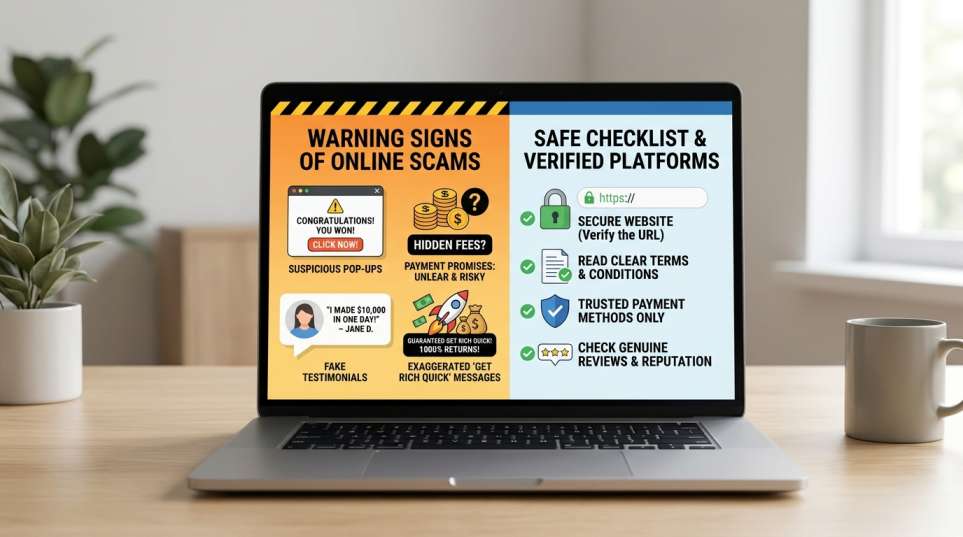
The online income space has real opportunity — and real predators. Knowing the difference protects your time, money, and confidence.
Red Flags That Signal a Scam
Stop and walk away if you see any of these:
- Promises of “guaranteed” income with no effort required
- Vague or evasive explanations of how you actually earn
- Requests for upfront payment to access jobs or training
- Pressure tactics — “limited spots,” “offer expires tonight”
- No verifiable company name, address, or contact information
Your Scam-Vetting Checklist
Before joining any platform or program, run through this:
- Search “[platform name] + scam” or “[platform name] + reviews” on Google
- Check Trustpilot and Reddit for unfiltered user experiences
- Confirm payment methods are standard (PayPal, direct deposit, Stripe)
- Read the terms of service — look for payout thresholds and withdrawal limits
- Verify the company has a real website, social presence, and contact details
- Look for real testimonials with names, not generic stock-photo faces
How to Verify Legit Programs in the USA
Stick to platforms with proven track records:
- Freelancing — Upwork, Fiverr, Toptal (all publicly verifiable, widely reviewed)
- Affiliate marketing — Amazon Associates, ShareASale, Impact Radius
- E-commerce — Shopify, Etsy, Printful (publicly traded or widely trusted)
- Investing — Fidelity, Vanguard, Robinhood (all SEC-regulated)
Pro Tip: If a program requires you to recruit others to earn — it’s almost certainly a pyramid scheme, not a business. Legitimate income comes from selling products or services, not from signing up new members.
6. Tools and Platforms You Need to Get Started
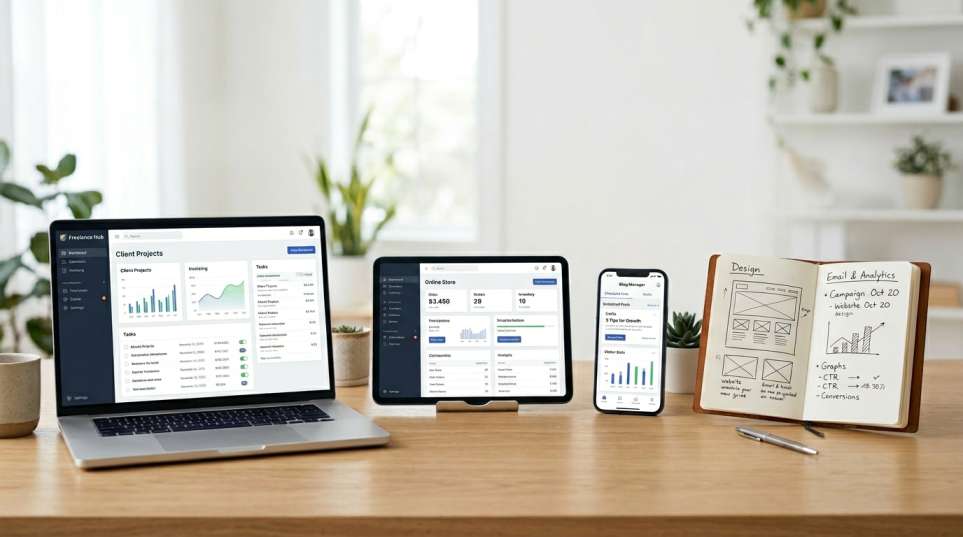
You don’t need every tool on this list. You need the right tools for your chosen method. Start with free or low-cost options, then upgrade as income grows.
| Tool / Platform | Best For | Ease of Use | Cost |
| Shopify | Building an online store | Easy | Medium |
| Etsy | Selling digital products or POD | Very Easy | Low |
| Printful | Print-on-demand fulfillment | Easy | Low (per order) |
| Upwork | Finding freelance clients | Moderate | Low |
| Fiverr | Selling packaged services | Very Easy | Low |
| Toptal | High-ticket freelance projects | Advanced | Low (to join) |
| WordPress | Building blogs or websites | Moderate | Low |
| Hostinger / Bluehost | Website hosting | Easy | Low |
| Elementor | Drag-and-drop web design | Easy | Low–Medium |
| Canva | Graphics and visual content | Very Easy | Low |
| Notion | Planning and project management | Easy | Free |
| Mailchimp | Email marketing | Easy | Free–Low |
| ClickMeter | Affiliate link tracking | Moderate | Medium |
| ThirstyAffiliates | WordPress affiliate link management | Easy | Low |
Pro Tip: Start free wherever possible — Canva, Notion, Mailchimp, and WordPress all have solid free tiers. Upgrade only when a paid feature directly increases your earning potential.
7. Action Plan: Your 30-Day Roadmap to Your First Online Income
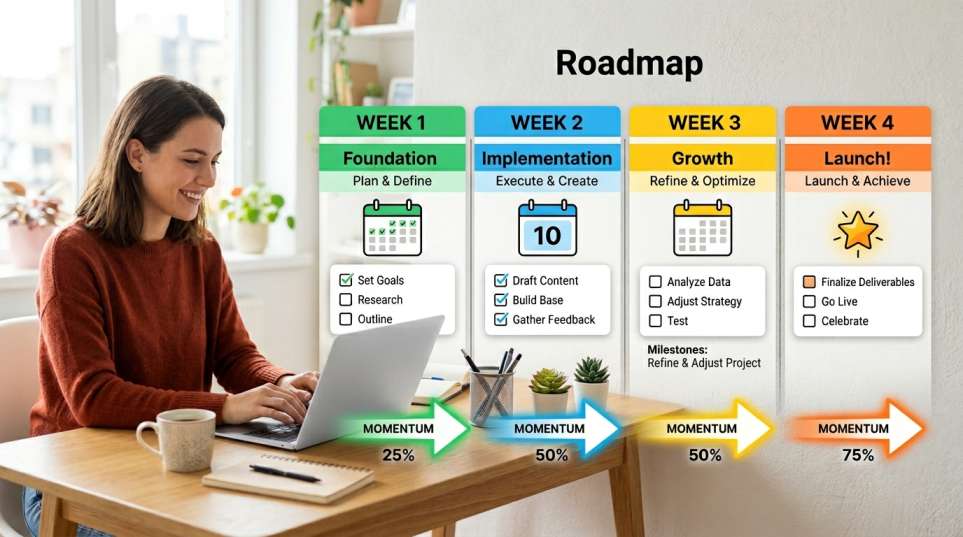
Reading about making money online is easy. Starting is where most people stall. This 30-day plan removes the guesswork.
Week 1 — Choose and Set Up
- Pick 1–2 methods from the 15 that match your skills and time
- Create your profile on the relevant platform (Fiverr, Etsy, Upwork, etc.)
- Set up any necessary tools — Canva account, Notion workspace, Mailchimp list
- Define your income goal for the month — make it specific and written down
Week 2 — Create and Launch
- Build your first offer, gig, product listing, or blog post
- Apply to 5–10 freelance jobs daily, or publish your first piece of content
- Tell your network — friends, LinkedIn connections, social followers — what you’re now offering
- Don’t wait for perfection; launch with “good enough” and refine as you go
Week 3 — Track and Refine
- Review what’s getting clicks, views, or responses — double down on what’s working
- Tweak your gig title, product description, or content angle based on early data
- Engage with any comments, inquiries, or leads immediately — speed builds trust
- Identify one thing that isn’t working and cut or adjust it
Week 4 — Close Your First Win
- Push for your first paid gig, sale, or commission
- Follow up on any pending inquiries or proposals
- Capture the result — screenshot it, note the earnings, and build on it
- Plan month 2 based on real data, not guesses
Pro Tip: Treat week 1 as non-negotiable. The most important thing you can do right now is start — imperfectly, incompletely, but decisively. Everything else builds from that first action.
8. Recommended Tools & Resources to Make Money Online in 2026
This section contains affiliate links. If you purchase through them, I may earn a small commission at no extra cost to you.
These are the exact tools thousands of beginners use to launch and scale online income. Every platform below is legitimate, widely used, and beginner-accessible.
E-Commerce & Store Building
Shopify — The go-to platform for building an online store. Whether you’re dropshipping, selling print-on-demand products, or launching your own brand, Shopify handles everything from storefront to checkout.
Etsy — Perfect for selling digital printables, templates, and handmade products. Etsy brings built-in traffic, making it ideal for beginners who don’t yet have an audience.
Printful — The best print-on-demand fulfillment partner. Connect it to Shopify or Etsy and sell custom products with zero inventory or shipping hassle.
Amazon FBA / Affiliate Program — Two income streams in one. Use FBA to sell physical products through Amazon’s logistics network, or join the affiliate program to earn commissions recommending products you already use.
Freelancing Platforms
Fiverr — The easiest place to start selling freelance services. Create a gig, set your price, and let buyers come to you. Ideal for writers, designers, and virtual assistants.
Upwork — Best for landing higher-ticket freelance contracts. Apply directly to client job postings across writing, development, marketing, and more.
Toptal — For experienced freelancers ready to work with top-tier clients at premium rates. Requires a vetting process but delivers significantly higher pay.
Wise — Essential if you work with international clients. Wise lets you receive payments in multiple currencies with dramatically lower fees than traditional banks.
Blogging & Content
WordPress — The world’s most popular blogging platform. Free, flexible, and built to scale from a personal blog to a full content business.
Hostinger / Bluehost — Affordable, beginner-friendly hosting starting from ~$3/month. Both offer one-click WordPress installation and solid customer support.
Elementor — Drag-and-drop WordPress page builder. Design professional-looking pages without writing a single line of code.
Substack — Build a paid newsletter with zero technical setup. If you have expertise and an audience, Substack lets you monetize directly through subscriptions.
Design & Video
Canva — The most beginner-friendly design tool available. Create social media graphics, YouTube thumbnails, digital products, and presentations — free plan included.
YouTube — Still the most powerful long-form video platform for ad revenue and affiliate income. Start a channel around any skill or interest and monetize as you grow.
TikTok — Short-form video platform with massive organic reach. Use it for UGC brand deals, affiliate promotions, and driving traffic to your other income streams.
Email, Planning & Productivity
Mailchimp — Build and manage your email list for free (up to 500 contacts). Email remains one of the highest-converting marketing channels for digital products and courses.
Notion — Free all-in-one workspace for planning your side hustle, managing clients, and tracking income goals. Replaces five separate apps with one clean dashboard.
Courses & Digital Products
Udemy — Sell your course to Udemy’s massive global marketplace. Great for beginners who want built-in traffic without building their own audience first.
Teachable — Host your own branded course with full control over pricing and student experience. Best for creators who want to own their platform.
ClickFunnels / Kajabi — All-in-one platforms for selling courses, coaching, and digital products through high-converting sales funnels. Premium tools for when you’re ready to scale.
Affiliate Tracking
ClickMeter — Track every affiliate link click and conversion across all your platforms. Essential for serious affiliate marketers who want data, not guesswork.
ThirstyAffiliates — WordPress plugin that organizes, cloaks, and tracks all your affiliate links in one place. Keeps your links clean and manageable as your site grows.
Quick-Reference Comparison Table
| Tool | Best For | Ease of Use | Cost |
| Shopify | Online store | Easy | Medium |
| Etsy | Digital products / POD | Very Easy | Low |
| Printful | POD fulfillment | Easy | Low |
| Amazon Affiliate | Passive commissions | Easy | Free |
| Fiverr | Selling services | Very Easy | Free |
| Upwork | Freelance contracts | Moderate | Free |
| Wise | International payments | Easy | Low |
| WordPress | Blogging / websites | Moderate | Free |
| Hostinger/Bluehost | Web hosting | Easy | Low |
| Canva | Design | Very Easy | Free–Low |
| Mailchimp | Email marketing | Easy | Free–Low |
| Notion | Planning | Easy | Free |
| Substack | Paid newsletter | Very Easy | Free |
| Udemy | Course marketplace | Easy | Free |
| Teachable | Course hosting | Easy | Medium |
| Kajabi | All-in-one funnels | Moderate | High |
| ClickFunnels | Sales funnels | Moderate | High |
| ClickMeter | Link tracking | Moderate | Medium |
| ThirstyAffiliates | Affiliate link mgmt | Easy | Low |
| YouTube / TikTok | Video income | Easy | Free |

9. Frequently Asked Questions (FAQs)
Is making money online in 2026 really possible for beginners?
Yes — completely. Platforms like Fiverr, Etsy, and Upwork are specifically built for people starting from scratch. Millions of beginners earn real income online every month. The key is choosing one method and staying consistent long enough to see results.
What are the easiest ways to make money online without experience?
The lowest barrier options are surveys, micro-tasks (via Swagbucks or UserTesting), and simple freelancing on Fiverr. UGC content creation is also beginner-friendly — brands pay for authentic smartphone videos, not professional production.
How long does it take to start earning?
- Surveys and micro-tasks: same day
- Freelancing: 1–2 weeks
- Affiliate marketing and blogging: 1–6 months
- Strong passive income: 6–24 months
Fast methods pay less. Slower methods pay more. The smartest approach is to do both simultaneously.
Which methods pay the most?
The highest-earning methods for beginners with some skill development are freelancing, selling online courses, and affiliate marketing in high-commission niches like finance and SaaS software. Experienced freelancers and course creators regularly earn $5,000–$20,000/month.
Are there any legit ways to make money online in the USA?
Many. Stick to established, verifiable platforms — Upwork, Fiverr, Amazon Associates, Shopify, Etsy, Fidelity, and Vanguard. All are publicly reviewed, widely used, and fully legitimate. Avoid anything that promises guaranteed income or charges you upfront to start working.
Can I make money online full-time from home?
Yes — but it typically takes 12–24 months of consistent effort to replace a full-time salary. Start part-time, build your income streams, and transition when your online earnings consistently cover your monthly expenses for at least 3 months running.
What are the best passive income ideas for 2026?
Top passive income streams right now include affiliate marketing through a niche blog, selling digital products on Etsy or Gumroad, publishing online courses on Udemy or Teachable, and dividend investing through Fidelity or Vanguard.
Do I need money to start?
No. Freelance writing, affiliate marketing, blogging, surveys, and UGC content creation all start for free. When you do earn, reinvest smartly — hosting (~$3/month), Canva Pro, or an email tool like Mailchimp will accelerate your growth significantly.
What tools do I need to start making money online in 2026?
It depends on your method — but the most universally useful starting tools are Canva (design), Notion (planning), a free WordPress or Fiverr account (platform), and Mailchimp (email). Most have free tiers that are more than enough to get started.
How much can I expect to make monthly with online side hustles in 2026?
Realistically: $50–$500 in the first 1–3 months, growing to $500–$3,000/month by month 6–12 with consistent effort. Income scales with skill, consistency, and the method you choose. Treat early earnings as proof of concept, not a ceiling.
10. Conclusion
Making money online in 2026 is real, it’s accessible, and it’s more beginner-friendly than it has ever been. Whether you want a side hustle that covers your bills or a full-time income you build entirely on your own terms — the path exists, and this guide has laid it out for you.
The most important thing now is this: don’t try to do everything at once. Pick one method that fits your skills and schedule. Commit to the 30-day roadmap. Show up consistently, track your results, and adjust as you go.
Every successful online earner started exactly where you are right now — with zero income, a little uncertainty, and a decision to begin anyway. That decision is the one that changes everything.
Your next step is simple: choose one method from the 15, set up your profile or platform today, and take your first real action before you close this page.
Bookmark this guide — you’ll want to come back to it as you grow, add income streams, and level up. And if it helped you, share it with someone else who’s ready to start.